How do you chronicle the life of a legendary artist whose aura almost transcends the confines of a two-hour film? And most of all, are you ready to do it honestly?
The parallel roads of biopics that prefer to codify all that’s good and spaces of fandom that are not ready to grapple with nuance were always meant to collide at Michael Jackson — whose stature in pop culture resonates just as strongly as it did 17 years after his untimely death in 2009. Antoine Fuqua’s biopic “Michael” knows “Thriller” will continue to be a staple of Halloween playlists and parties to come, and people will keep attempting (and mostly failing) to replicate the lean from “Smooth Criminal.” It knows that some of the audience watching this film are looking to celebrate and revere, rather than look at the essence of Michael and everything that made him with a critical eye.
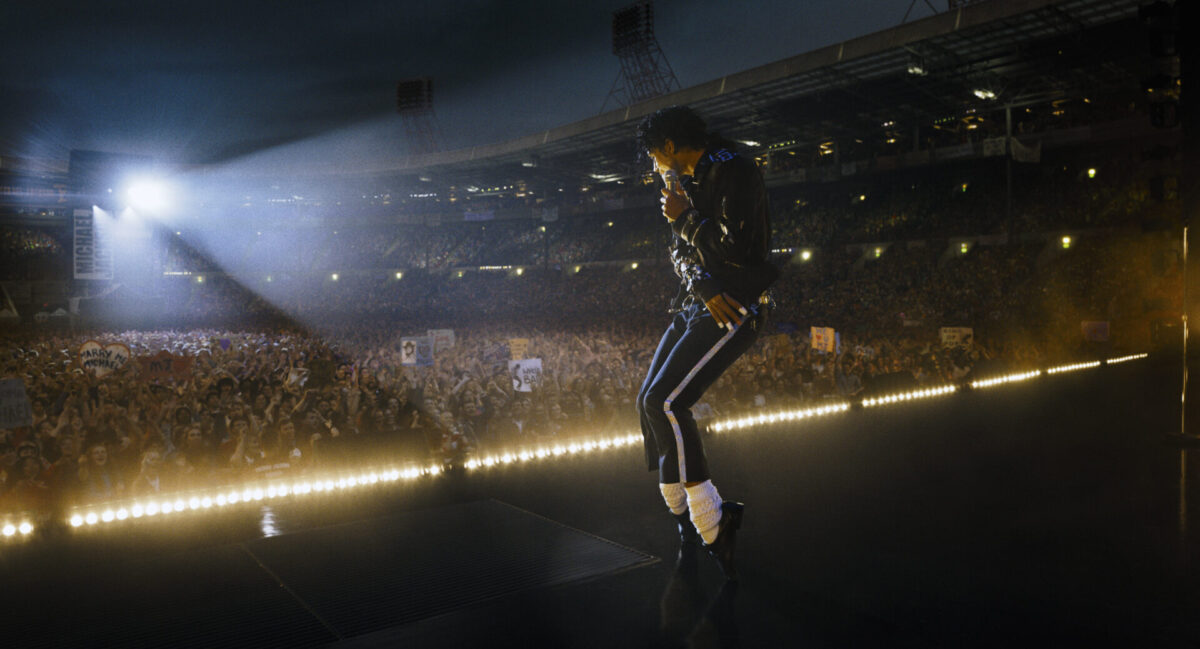
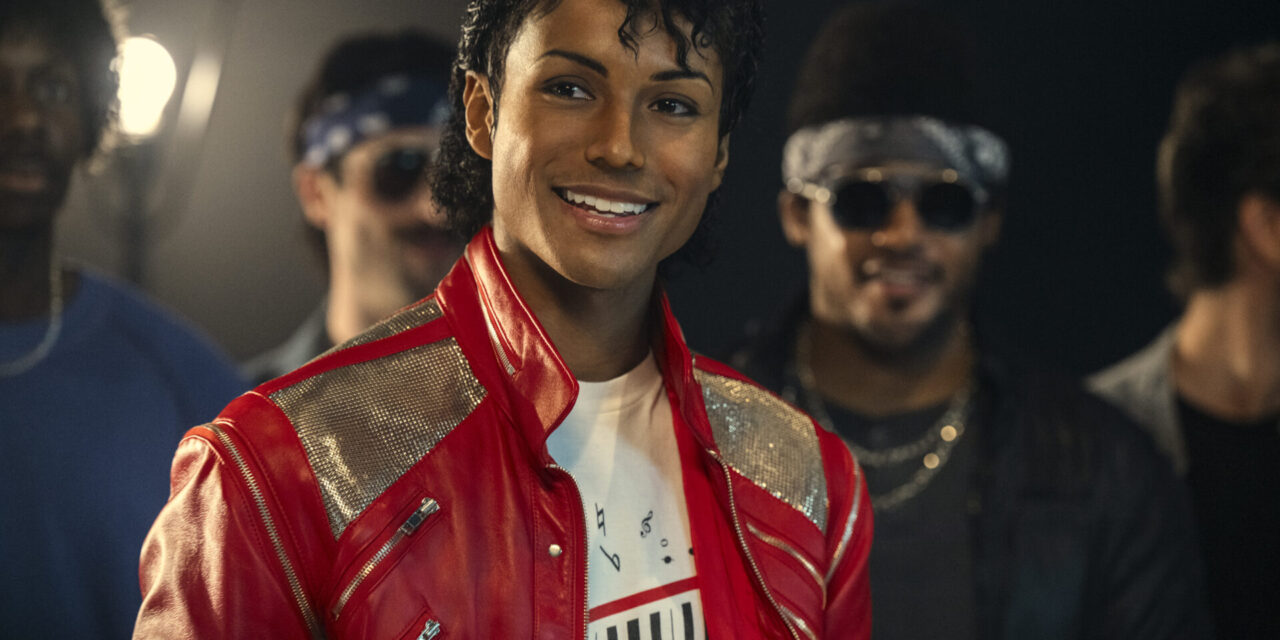
Jaafar Jackson as Michael Jackson in Michael. Photo Credit: Courtesy of Lionsgate
Many will be okay with that as a reward for the price of admission, but given the heavier themes of exploitation, abuse, creative process, and ownership, Fuqua speeds through; it robs the viewer of what could have been a thematically rich and intellectually thorny experience. “Michael” begins at the Jackson family home in Gary, Indiana, where the five brothers painstakingly practiced under the watchful eye of their extremely strict father, Joe (Colman Domingo). They often forgo school because their father has booked gigs in nightclubs and couldn’t fathom having a conventional childhood with friends their age.
At one point at the dinner table, Joe frames their lives as either being “winners or losers” and having to “fight for what they want” unless they would suffer the same fate as their father, resigned to working long days at a local steel mill. The crown jewel of the Jackson 5 was young Michael (Juliano Krue Valdi), filled with a voice and charisma. But the film depicts him as being the child who felt the brunt of Joe’s physical and mental abuses. Michael’s brothers (Marlon, Jermaine, Tito, Jackie) and sister Latoya (Janet asked not to be included) are resigned to being background characters in this story. Katherine (Nia Long), Michael’s mother, is there to encourage him and even serves as a companion in escapism later in the film, but doesn’t choose to intervene in Joe’s harsh physical punishments.
John Logan’s script is a template for how the film handles the many complexities colliding within “Michael” – with a mandate to touch on them and move on quickly. As the film quickly moves to 1988, many red flags arise alongside the joyful recreations of Jackson 5 performances. Less importance was placed on school, and the five brothers would often have to play late into the night at strip clubs. At one point, Katherine asks Michael about meeting kids his own age, where he says, “They don’t treat me like a real person.” Rather than taking a second to capture the totality of what that isolation feels like, the film feels a need to get to the sunnier aspects just as quickly (a persistent flaw).
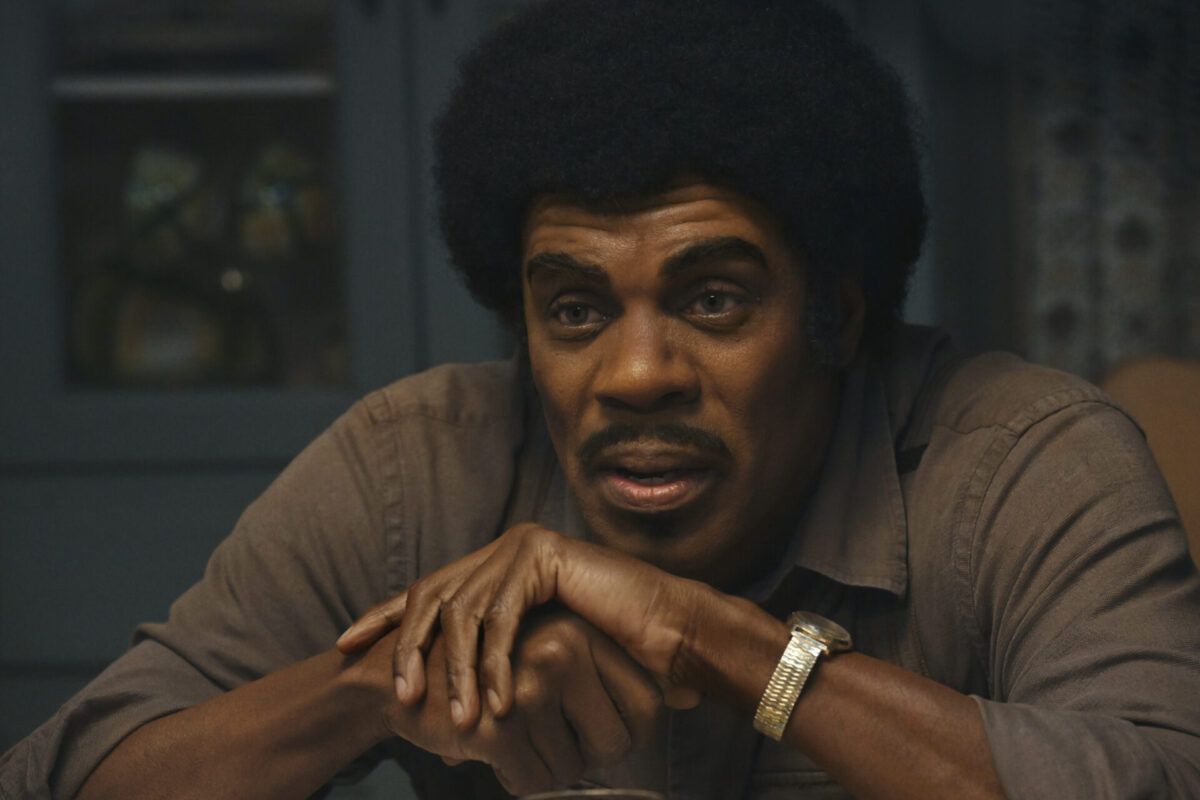
Colman Domingo as Joe Jackson in Michael. Photo Credit: Courtesy of Lionsgate
“Michael’s” main story is the hero/villain dynamic between Michael and Joe. That’s not to say Joe’s militaristic and often manipulative ways to attach himself to his son’s ascent aren’t a worthy thing to interrogate. Much of Joe’s treatment manifests in Michael’s insecurities. But the film builds its entire circumference around this relationship to the point of sacrificing subtlety and complexity. There are many occasions where dialogue choices need to foreshadow “how great” Michael will be and that there is “nobody else like him.” That’s exactly why the audience is here. There are enough scenes of Michael’s creative intuition at work, forming classics in pieces like “Wanna Be Starting Something,” to show rather than tell. It’s as if the film isn’t confident in its own subject’s elevation and steeped in many scenes of random affirmation as a reminder.
In terms of the late singer/songwriter’s precise and unforgettable command of the stage, it’s hard to think someone could get close to depicting what it was like to witness it. But Jaafar Jackson, Jermaine’s son, gets close. He channels not only the exactness of Michael’s choreography but also his charismatic charm whenever the film allows a full peripheral view of the entire performance. During a reconstruction of the “Thriller” video, Michael asks a producer to ask director John Landis to “get the feet” to feel the force of the “choreography,” which feels like a critique of the film’s own cinematography. The camera rarely stands still or sticks to showing Michael’s legendary performances in totality. Rather, there are too many jump cuts showing the crowd going crazy, along with a variety of close-ups of the performances themselves. It distills the crucial part of what made Michael Jackson rise to the “king of pop” moniker: not only in his voice, but in the art of his approach to performance.
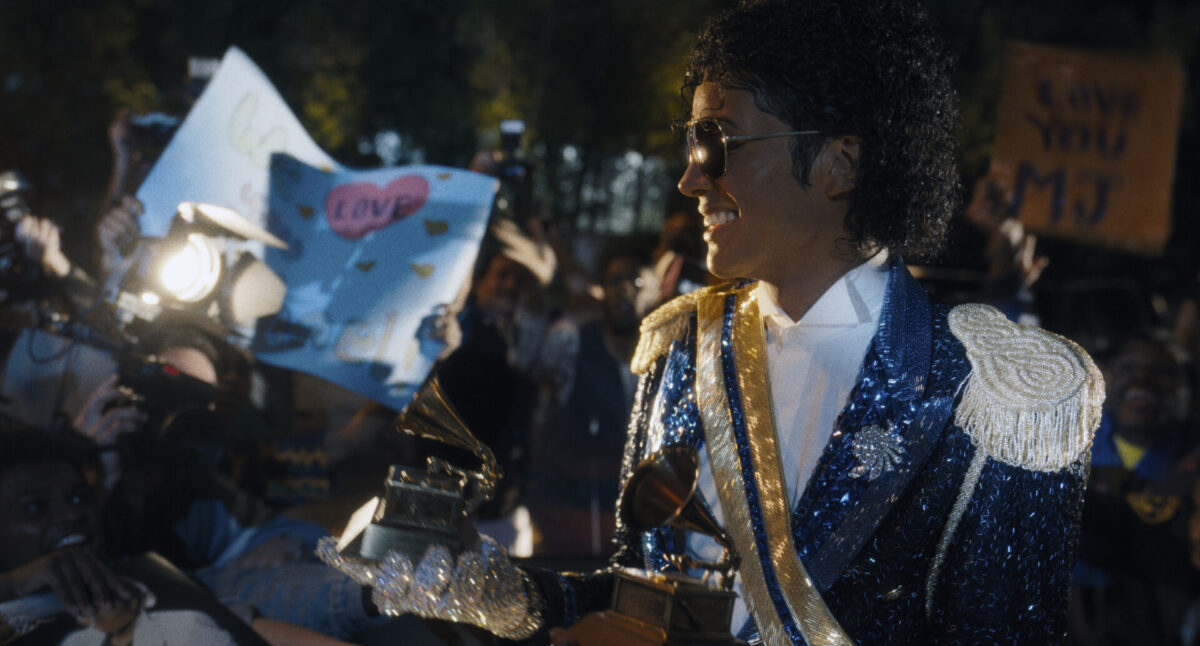
Jaafar Jackson as Michael Jackson in Michael. Photo Credit: Courtesy of Lionsgate
When he’s not on the stage, Jaafar depicts his late uncle’s shyness and unbounded optimism in what he can do with his gifts. When Fuqua allows him, the first time, the actor embodies Michael’s mortality in being trapped in a childlike state of mind. Again, the film comes across as heavy-handed with that message, rather than letting its actors play it out. The book “Peter Pan” and the concept of “Neverland” appear many times in this film, often in an unwarranted manner. Michael asks to play a board game with his brothers, and it’s clear they are at a different stage of adulthood than he is. It’s a lonely place to be, and it feels like Fuqua is trying to get at the heart of the matter. However, the inclusion of Bubbles the monkey appears as more of a jovial easter egg than a sad realization that a man has to retreat to pets for any kinship.
Fuqua alludes to possibly diving into more of Michael’s personal issues in a forthcoming second film. The 1984 Pepsi incident, where he sustained third-degree burns and likely developed an addiction to prescription drugs, is a big hook in the third act. Random points occur where the pop star visits sick kids to cheer them up, while one scene in particular may hint at the legal troubles to come. It is well chronicled that his film had to undergo extensive reshoots to rework the ending. The film was set to end with Michael beginning to deal with the ramifications of the alleged victims of child molestation. Legal agreements with the estate prevented that, and “Michael” chooses to encase it’s subject in gold with an emancipation and stage performance that follows. But much of this film is uneasy with the fact that its subject’s giant personality will cast a shadow and sunshine at the same time.
Growing older is the ability to see that the gods of our youth are indeed human. Sometimes you won’t like what you see, but you did, in fact, see it. “Michael” gazes at the legendary singer’s difficulties and chooses to retreat to a time so they can unsee them. Even the singer’s struggles with getting his videos played on the early days of MTV, because they didn’t play Black artists, is lightly touched on for a cheerful moment – even as Michael himself will struggle with identity later in his career. For a once-in-a-lifetime figure, “Michael” doesn’t approach the pitfalls with the same weight as the performances, the moves, and the fans who fainted the moment he appeared.
The totality of what “Michael” embodies robs us of an essential conversation we need to have that shouldn’t stop with this film. Are we capable of holding space for both loving pieces of art and recognizing that the artists themselves are indeed imperfect? It’s not an easy conclusion to come to. Yet, in the construction of this film, it’s the audience that gets shortchanged. Ending the film in a way that feels like a highlight reel to send the crowd home happy, it robs the viewer of that choice. The film keeps the profitable vision alive for another day, punting the thorns on the side of the rose to another time and place. Viewers should ask for more.