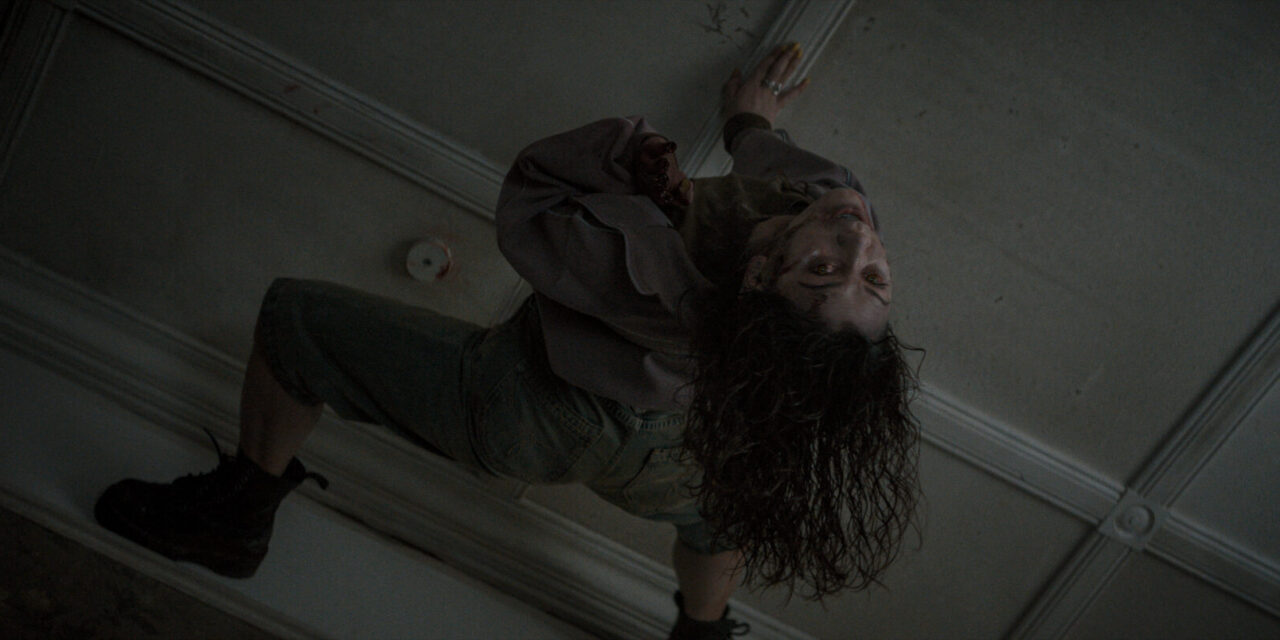
Bring Me The Horizon’s 2010 album, “There Is a Hell Believe Me I’ve Seen It. There Is a Heaven Let’s Keep It a Secret,” chronicled a war between good and evil within a single person. The last three iterations of the Evil Dead franchise not only have seen hellfire and brimstone, they’ve bought land and taken up residence in it. Heaven is but a word. The 2013 reboot “Evil Dead,” 2023’s “Evil Dead Rise,” and now “Evil Dead Burn” operate within a three-quadrant story structure: confined spaces, a connective thread of lore with a hardship, and brutality with some humorous elements. The two previous installments tackled themes of addiction and (somewhat) the difficulties of parenting.
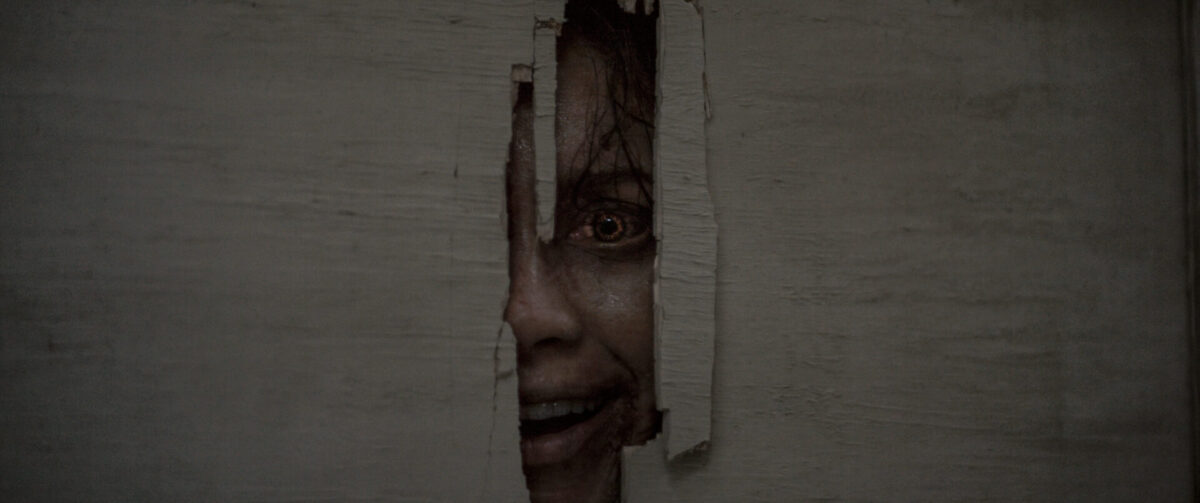
Writer/director Sébastien Vaniček uses Sam Raimi’s Deadite playground as a conduit to tell a story of abuse: both spousal and familial. It’s that subject matter which forges the path for this installment to go out in terms of dourness, despair and gore. “Burn”s opening scenes return us to the lake where “Rise” began; this time, two unsuspecting fishermen are ripped apart by fishing hooks and skin boiled to string by a mischievous deadite. It’s not to say Vaniček doesn’t try to inject some of Raimi’s comedic sensibility, but this film runs on an engine ingesting fuel to punish the characters inside of it. “Burn” wears its New French Extremity inspiration on its sleeve, and that could be damn well exhausting for some viewers. Taking a step back, Vaniček’s chosen style, along with co-writer Florent Bernard, speaks to how bleak a discordant relationship can feel through the broken, vessel-like lens of the recent “Evil Dead” films.
Evil Dead Burn | Photo Credit: Warner Bros Pictures
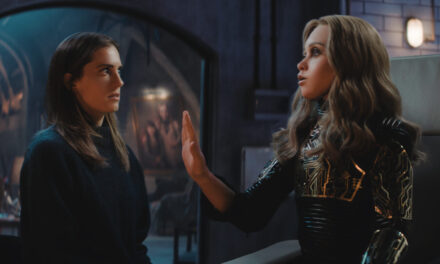
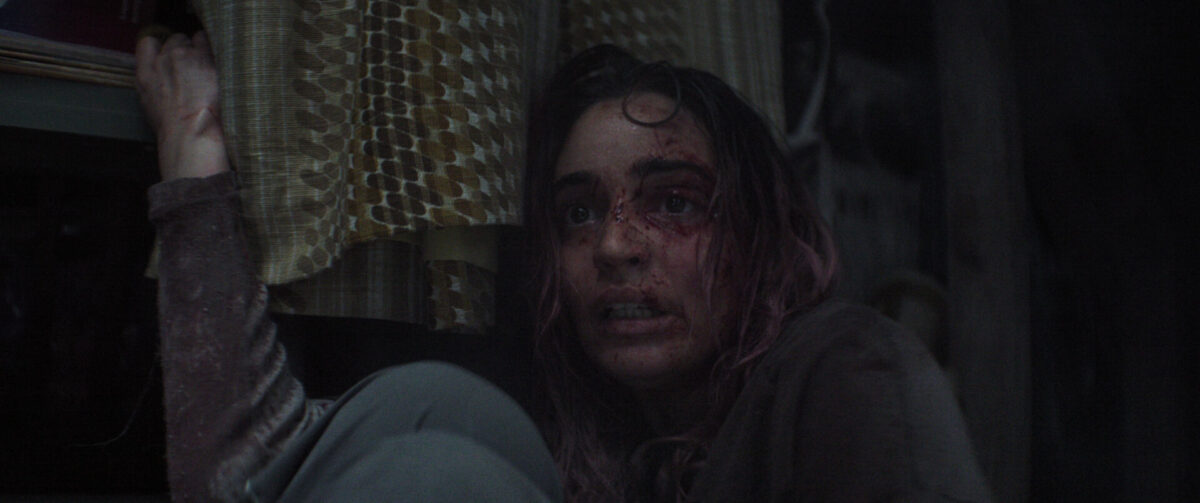
Alice (Souheila Yacoub) is a French photographer who is in an unhappy marriage to restaurant owner Will (George Pullar). On the night they are celebrating Will’s younger brother Joseph’s (Hunter Doohan) birthday with his girlfriend Thya (Luciane Buchanan), the discord in this marriage comes to the forefront. Will, well, he’s one of the “you need to be a proper mother to our eventual child” types of guys. It’s Alice’s assertiveness that makes him feel small (and, unfortunately, be physically and verbally demonstrative). As fate would have it, Will leaves and goes on the last drunken joy ride of his life. A run-in with a deadite causes an extreme car accident, and Will is burned to death.
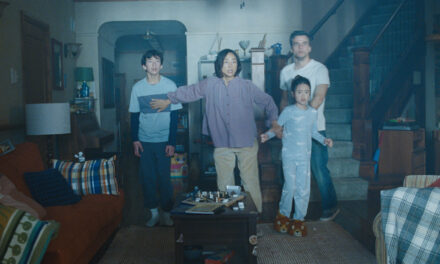
Flash forward to the funeral and usher in the rest of Will’s dysfunctional family unit. He and Joseph’s father, Edgar (Erroll Shand), carry around a very harsh energy in his quietness. That has worn down their mother, Susan (Tandi Wright), the caretaker of Grandma Polly (Maude Davey), who is battling dementia. Alice’s presence is not necessarily welcomed. If anything, the somewhat “olive branches” are really cloaked in nasty sarcasm. Edgar and Susan just reduced Alice to this tool to keep Will’s business legacy alive. Once the festivities are over, everyone moves to the house where Will and Alice got married. It’s tumbledown, dank, and in various states of disrepair both inside and outside (an obvious metaphor for their marriage).
Evil Dead Burn | Photo Credit: Warner Bros Pictures
Surely, everybody can just chill out for a second. But no. Vaniček begins “Burn” with Joseph frantically looking through his grandfather’s notebooks and listening to his recordings speaking about demons and Evil Dead lore. The problem (as it always is) is the Necronomicon; oh, how nobody heeds the warnings of reading it. Yes, the evil spirits inhabit these people one by one, by hook or by crook, and sometimes by blunt force trauma, but in Vaniček’s film, the unpleasantness radiates from the characters on screen. This isn’t exactly the Brady Bunch. Susan harbors deep resentment toward her father for leaving her to care for her mother. The “family is everything” line feels like a smokescreen for the broken dreams caused by her marriage to Edgar.
Joseph certainly feels like he’s the opposite of Will in character, but there’s a cowardice to him in instances that comes off as insidious. Alice is in a place where she knows Will’s true character, which runs up against what his family feels about him. All of these elements are a breeding ground for the endless runway of broken limbs, bones, dismembered fingers, skulls with bullet holes in them, and a parritge in a pear tree. Philip Lozano tries to make the one-location format distinct by focusing on one character’s point of view and by the fluidity with which it moves through the madness. If “Burn” set out to be the mayor of bloody bludgeonville, it’s earned the mantle.
Where “Burn” falters is in its lack of confidence, as it feels the need to remind the audience of the film’s main theme. At various points, there are flashbacks of Will’s treatment of Alice – something we can glean from the context clues “Burn” shows us already paired with the absolute grindfest that occurs after his death. A third-act set piece almost upends the film’s malevolent tone with a brief moment of unintentional silliness. But there’s something to be said for these “Evil Dead” films living on in installments, fortified by a particular vision. Vaniček has a love of the franchise’s history, particularly how a particular artifact is folded into the conclusion of this story. The best parts of “Burn” hit their marks, getting the film past its slower points and some shakiness as it tries to put a definite stamp on its central problem.