What is the use of a beat-by-beat video game adaptation when the medium is cinematic already? Is it really worth it to turn the cinematic experience into a “hey, I remember this” scavenger hunt when you can fire up your console or watch someone play through it on YouTube? By the reaction to 2021’s “Welcome To Raccoon City,” the answer is a resounding no. You can include the names of famous characters and duplicate the set design of the franchise’s hallmarks, but it falls apart if you can’t invoke the feeling of entering that world.
Zach Cregger’s fantastically lean, kinetic, and gory recontextualization of the long-running, successful Capcom franchise understands that you have to instill the feeling of playing the video game first and worry about the winks later. Cregger’s film scratches the itch of a question horror fans have asked themselves time and time again: would I actually survive a zombie apocalypse? Then, the director fine-tuned it for this specific franchise, where you get a lot of easter eggs, but they are not the star of the show. Rather, it’s a simplified story that revolves around the exhilaration, frustrations, and overall euphoria of playing the game for the first time. It’s also for the people who get emotionally involved from a distance; those who shout at the screen at every protagonist error and wince at the notion of something nefarious lurking around a closed door.
‘Resident Evil’©Sony Pictures/Courtesy Everett Collection
Bryan (Austin Abrams) wants to go home after a long day’s work as a hospital courier. He’ll soon wish someone had the urgency to sign off on his delivery of a prized organ sooner because there’s one last job to do. It’s double his usual rate, so why not? All Bryan has to do is deliver a green bag containing something important to a hospital in Raccoon City. Piece of cake, right? Well, our protagonist has a big life issue as well. His girlfriend, Michelle (Sara Paxton), is pregnant, and he goes back and forth about whether he wants to be a father. That’s the extent of what Cregger and co-writer Shay Hatten give as far as Bryan’s backstory. It works in “Resident Evil’s” favor because the phone arguments the audience hears and the need for a potential resolution give urgency to the cavalcade of messed-up things the main character faces.
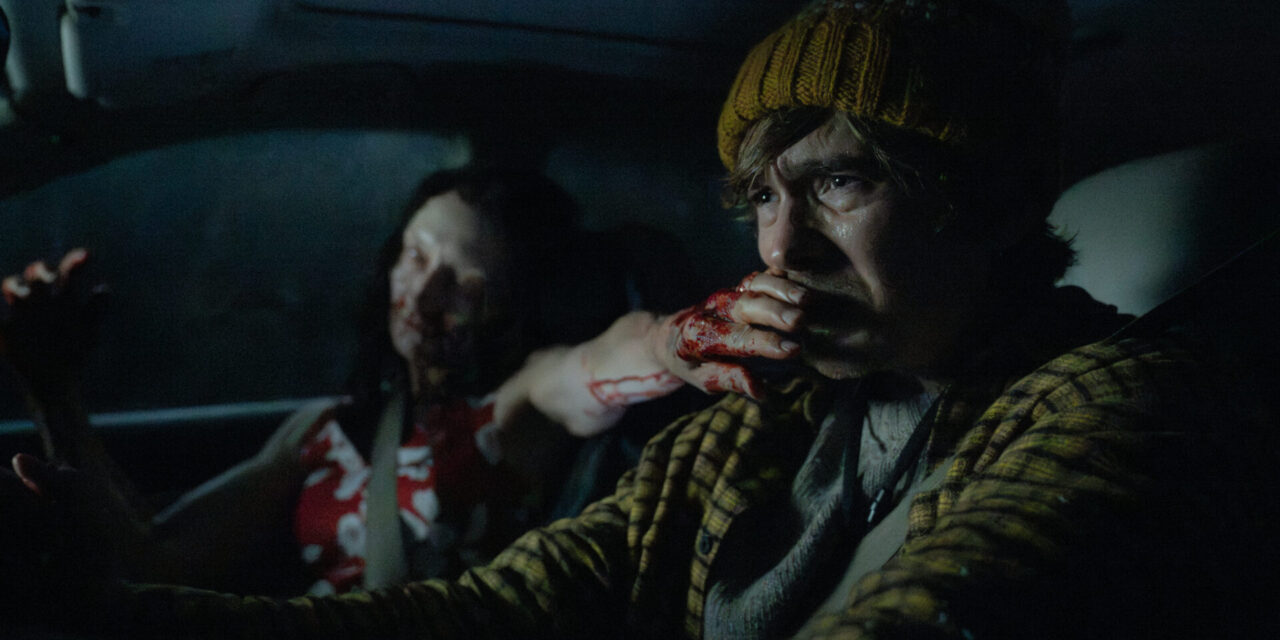
It’s snowy, and Bryan’s car isn’t exactly equipped to drive through it. Out of nowhere, a bloodied, disoriented woman appears in the road, and Bryan hits her by accident. When he places the woman in his car and buckles her seatbelt to take her to the hospital, you can tell something is not right. Funny enough, this is the most even-keeled Bryan’s night going to be as he faces wave after wave of the craziest mutant concoctions you can think of. For a good portion of this film, Abrams is by himself. He’s the main star who exhibits a wide range of emotions; the unintentional humor is the most successful. Creeger sets the table for a wide variety of nuances that Abrams delightfully shows in Bryan.
‘Resident Evil’©Sony Pictures/Courtesy Everett Collection
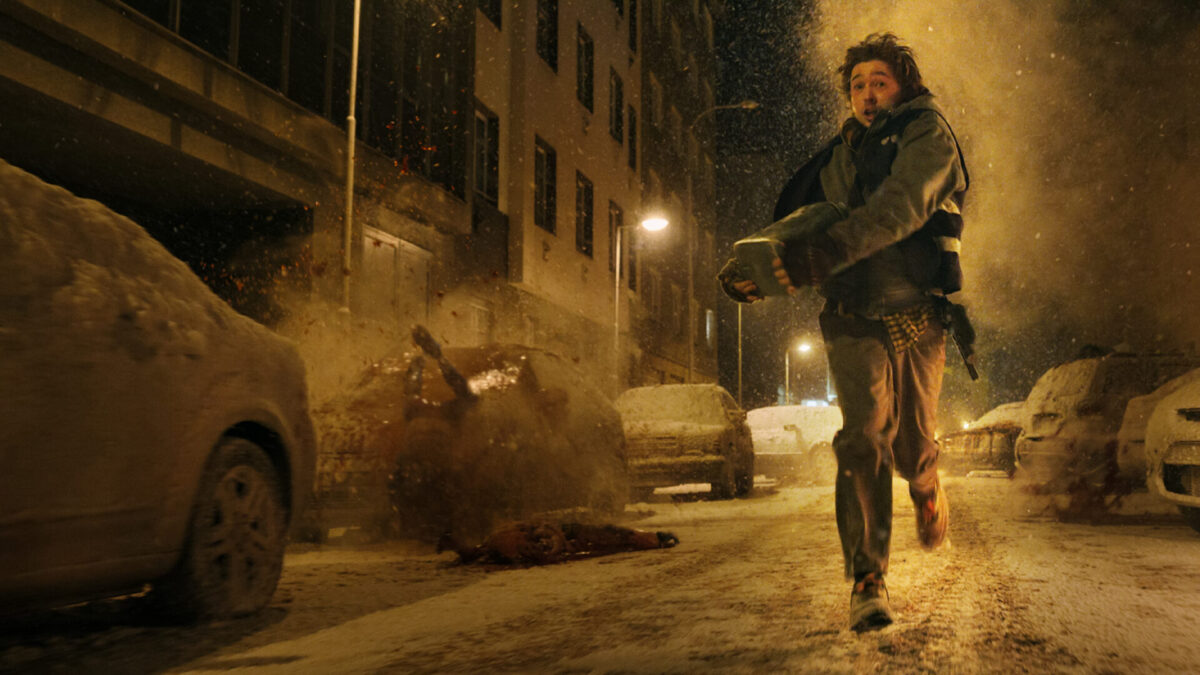
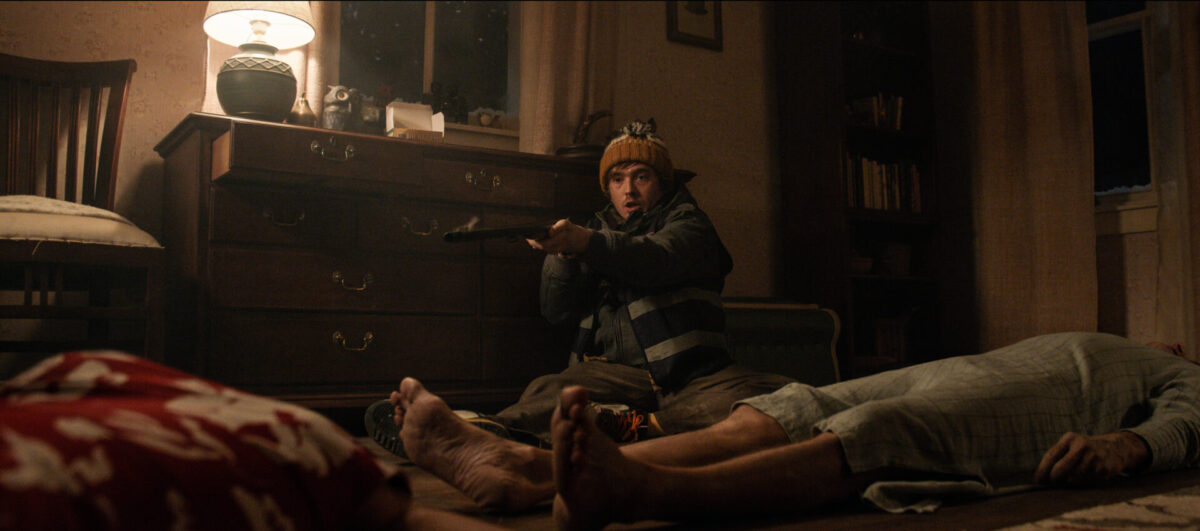
When Bryan finds a gun, he’s no John McClain, but he knows how to hold it. But he forgets to take the safety off at first and then wastes bullets while fighting off a zombie. In the cockiness of escaping a rabid dog in a barn, he discards a ladder way too soon, which he needs to get down on the other side. You’ll find yourself being both very annoyed at how wasteful Bryan is, but also wanting him to succeed all the way towards the end — like watching a person play the game for the first time. Creeger doesn’t make this easy, electing to throw the literal kitchen sink at his protagonist, from spider babies to a massive zombie composed of rats, and other gross atrocities that have to be seen to be believed.
After a while, you’ll ask the film, “Can’t this guy get a break?” Creeger not only rebuffs that request, but turns up the heat. Throughout the Resident Evil game franchise, you’ll find notes from non-playable characters who aren’t full of the combat know-how of a Claire Redfield or a Leon Kennedy. They’ll chronicle Raccoon City’s descent into hell and maybe even recount the lives they lived before meeting a terrible fate. (The original 1996 game has diary entries of a character slowly turning into a zombie.) Who would have thought that approaching a piece of IP that frees itself from just appealing to one perspective of fandom would be a winning formula? It’s not a prerequisite to have played the games to enjoy Creeger’s take, but the craft and the appreciation for using this story in a fresh way get at the enduring, reinventive heart of the Resident Evil franchise as a whole.