Think about it. If you were on a road trip and saw someone standing on the side of the road, my guess is you would probably drive on by. This would go double if it’s at night while you’re venturing down the sparsely populated backroads of America. André Øvredal’s “Passenger” plays into the nondescript, creepy hitchhiker theme, with a supernatural twinge on top. Blowing out a tire in the middle of nowhere with no house or civilization is scary enough, but imagine if you had to deal with a relentless entity on top of that.
The basis on which Øvredal builds his eighth film is initially fun in a classic, let ’s-put-the-cards-on-the-table way. Two friends are venturing down a dark road on a road trip when one says the thing you don’t want to hear when you’re trying to get somewhere: “Pull over. I gotta use the bathroom.” What is supposed to be a quick detour turns into a nightmare when something attacks them both. Is it a ghost? Is it somebody who has been out of that part of town, looking to pick off people? Øvredal constructs the fun sequence to invoke mystery and put the audience on its heels. But there are a lot of ingredients added to what “Passenger” is trying to do – at times, weighing the experience down. Writers Zachary Donohue and T.W. Burgess are caught between developing a love story between two protagonists who are trying to find their way, conveying the intensity of fighting a relentless stalker, and building the lore behind what’s happening.
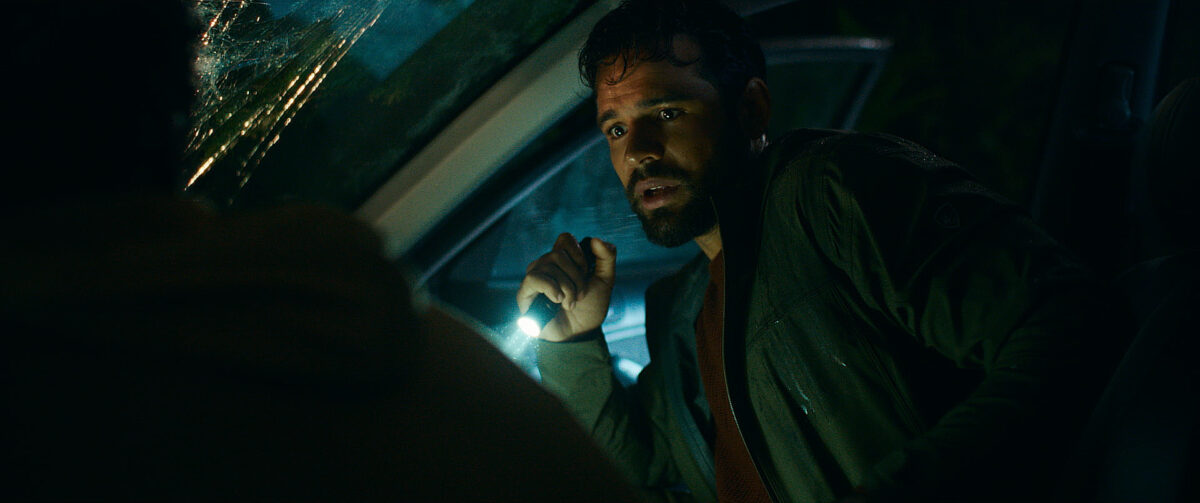
Jacob Scipio as “Tyler” in Passenger from Paramount Pictures.
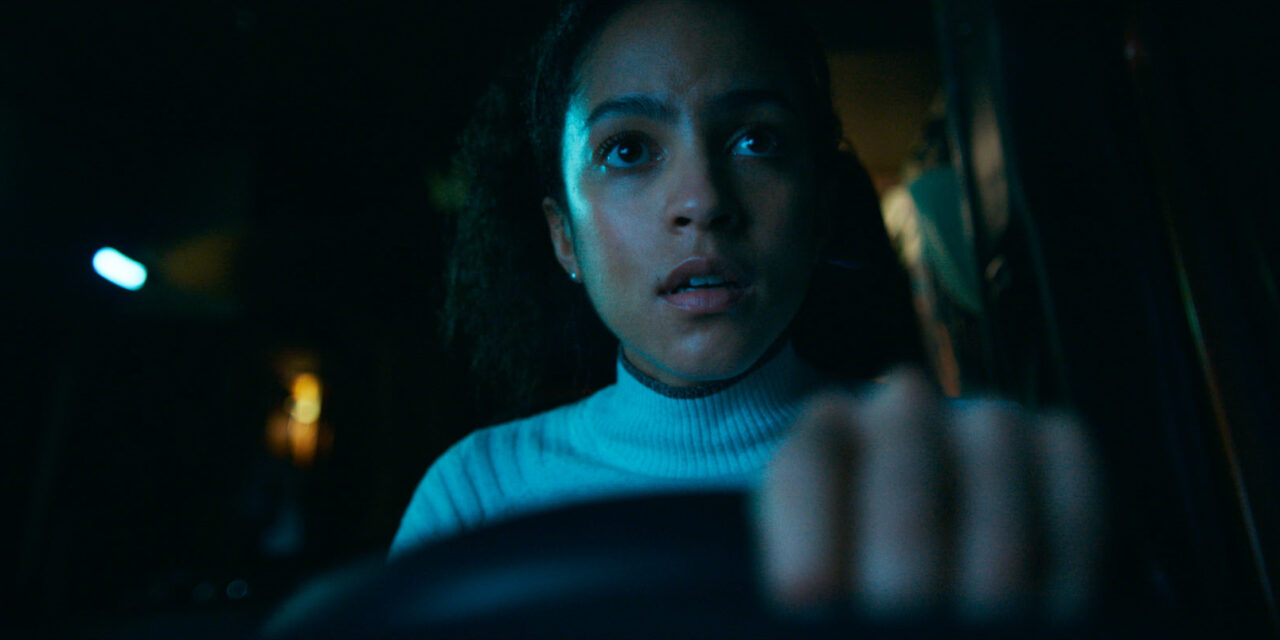
When the film is this kinetic, sleight-of-hand, tense, and sometimes funny, it’s good within that element. The problem is the noise of world-building beyond simplicity, and not having enough time to flesh it out further. Tyler (Jacob Scipio) and Maddie (Lou Llobell) are looking to embark on a brand new frontier on the open highways beyond their recently sold New York apartment. They have elected to live in a spacious, modern van and travel the country. Tyler seems more jazzed about the prospects, while Maddie is trying to figure out whether this lifestyle is for her. “Passenger” makes note that both characters have their own source of discontent within their own family lives, but doesn’t expand upon that. Maddie puts a Bob Ross bobblehead on the dashboard, and Tyler does the same with his St. Christopher pendant. One of these things develops more as a part of the story later.
What we do know is that this couple deeply cares for one another, and Scipio and Llobell display the chemistry to pull it off. After a quick six-week time jump, it seems as though everything is going relatively peachy. That’s until one night, when an encounter with a totaled car sends Tyler and Maddie into a tailspin. They aren’t so much picking the places where the best barbecue is, or the best “Van Life” meet-ups are, but rather trying to stay alive. What the hell is this presence stalking this couple, and why?
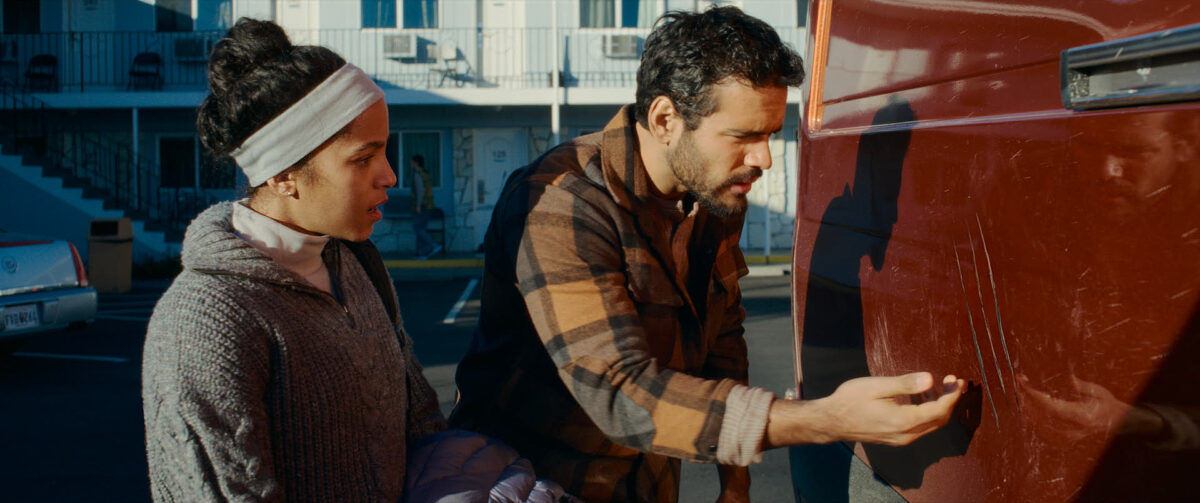
Lou Llobell as “Maddie” and Jacob Scipio as “Tyler” in Passenger from Paramount Pictures.
Øvredal and cinematographer Federico Verardi know how to stage an intense set piece, and “Passenger” contains a few of them. Camera techniques that disorient the depth of view and wrap around a character’s perspective serve to keep the audience on edge. “Passenger” ensures you perceive things at the level the characters do. Classic horror scenarios aside, Øvredal puts the van’s cameras, a film protector, and technology to creative effect. The director has a flair for using his environment to the benefit of the type of horror film he’s built. With 2019’s “Scary Stories to Tell in the Dark,” he gave those particular Alvin Schwartz short stories their own moments in the sun, each with its own style. In 2023’s “The Last Voyage of the Demeter,” the director used the decaying backdrop of a late-1890s ship as a feast for Dracula. “Passenger” loses its scary sensibilities when it tries to explain why the antagonist exists or show it to the audience. The ghastly being works better as a specter.
To the film’s credit, it tries to tie the nomadic lifestyle and “hobo code” into the exposition. But it all comes down to internet searches and formulaic horror rules: don’t stop driving and definitely don’t drive at night. The film shows an apprehensiveness in picking a definitive theme (or themes) to settle on. Tyler and Maddie are searching for something in this new lifestyle, but that’s not fully explored to connect with. A faith-based problem and solution presents itself that is too vague to connect to the main story. Is it the power of togetherness that will save this couple from a relentless, demonic presence, or is it seeking salvation in a spiritual sense? “Passenger” goes on autopilot, rather than leaning into one direction and leading its obvious overtones to drift into the darkness.
There aren’t enough scares, illusions, or anxious escapes to complete the unpaved roads of story and show how everything works together.