Louis Leterrier’s latest film, “The Last House,” at best scratches an itch about our fears surrounding restricted movement and our reluctance to confront some hard truths we’ve been running away from. It’s why the peak of the COVID-19 pandemic is so jarring to look back on. There was the separation of the lives we knew and the face-to-face contact with the people who made it full, along with the threat of death from an airborne virus. This Sci-fi thriller seems unsure about which aspect it’s supposed to lean into the most.
Are we supposed to feel for the main characters as resources dwindle? They always find a way to solve those problems. Is the audience supposed to be frightened of an at-first unseen Lovecraftian enemy whose origins are left to a small expository scene? The scenes meant to build tension are either too few or move too quickly to convey any impact. Beyond communication from writing boards and cutouts, there is no real sense of scale to suggest that (what we have to believe) is a wide-ranging worldwide catastrophe.
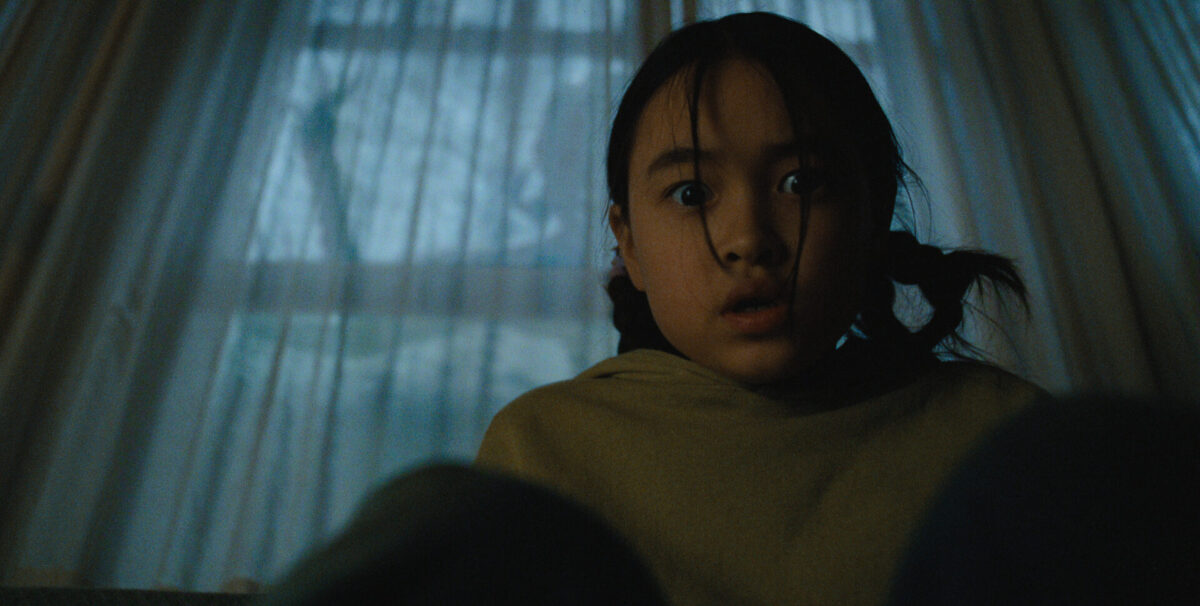
The Last House. Riley Chung as Ruth in The Last House. Cr. Courtesy Netflix © 2026
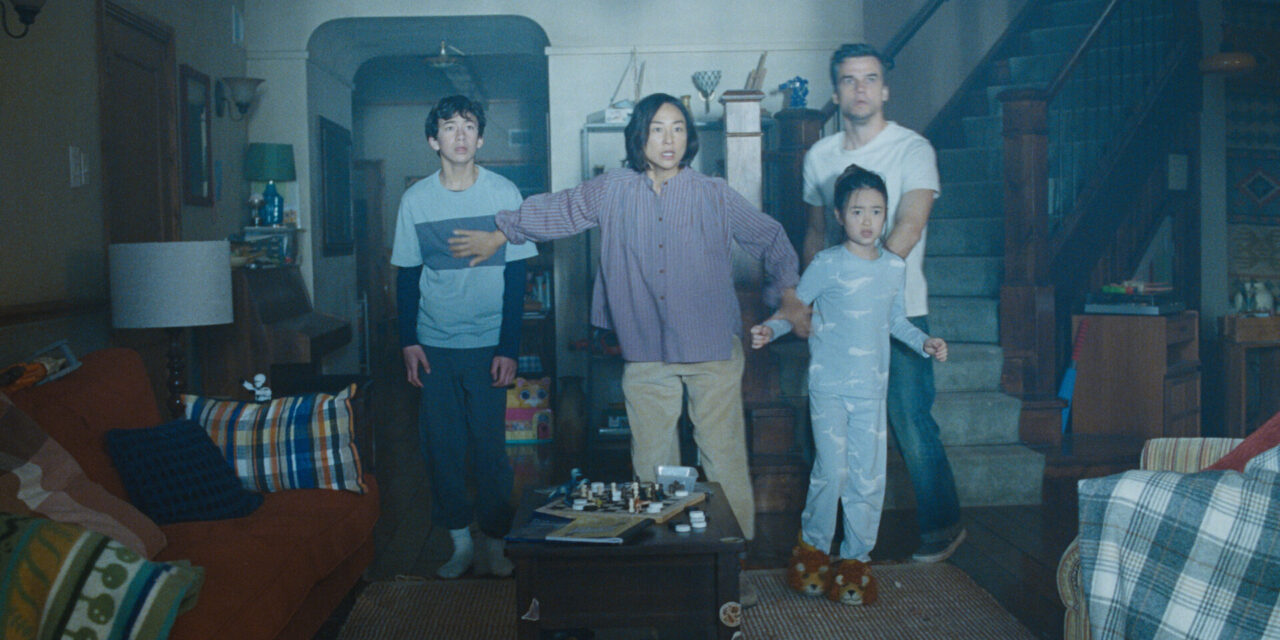
Jason (Wagner Moura) is an unemployed engineer who has become a fisherman while he contemplates his next move. While going out on a less-than-successful fishing venture, he notices a big storm is coming. Jason retreats to his home, which is slowly sinking into the ground with its cracked foundation, with his wife Ann (Greta Lee) and their two children, Ruth (Riley Chung) and Graham (Noah Alexander Sosnowski). There’s the usual banter between the kids and Anne’s reassurances to her husband about his job status, which has been weighing heavily on him. When it’s time for the family of four to go out and get a Christmas tree, they find out the front door is sealed shut — not only that, but every window and even the rickety garage are unable to be opened. The rain, which has a mystical power, is causing this phenomenon and taking down every mode of communication.
From there, “The Last House” turns into a waiting game of seeing if this particular family can pull it together long enough to survive whatever the elements are. Except, there is very little tension either with each other or with the eventual dwindling of resources. For the first hour, writer Matthew Robinson, a family having very little trouble adapting to their new normal. They watch movies together, follow some homeschool curriculum, and everybody has their own specialty. Anne is efficient in gardening, and even as the house proves to be a barrier to doing that, she finds a way after a slight inconvenience. Jason puts his engineering skills to the test by building contraptions to catch animals for food. Ruth is really into art and Graham dives right into learning the family piano.
It’s a quiet period in the film where the audience feels the slightly under two-hour length, followed by a whiplash moment that creates an urgency to express discontent. A neighbor, one of the few people caught outside, speaks about something dangerous taking over everywhere. Jason takes on this mantra of “having to be responsible for the family,” even though the narrative contradicts it. “The Last House” is very much about a family against all (monster) odds, with little insight into the antagonist’s motivation. Are these octopus-like beings arising from the ocean to attack humankind because we are being wasteful? Are they locking characters inside their houses in order to teach them a lesson that the daily rigmarole isn’t worth it? With more questions than answers, Leterrier’s latest doesn’t do enough to accept the utopian conclusion the narrative lands upon.