Rick Power’s (Paul Rudd) song composition doesn’t exactly tap into the pulse of modern rock. If anything, you’d probably find his throwback style on a station with bands like Air Supply and Hall and Oates. But you can’t say the core of his music isn’t heartfelt or meaningful. The main ethos of John Carney’s dramedy ‘Power Ballad’ is the power of music as a quick read. What the writer/director is really insisting is that in a world of controlled virality and algorithmic construction, those methods will never be true to the core of art. If you don’t believe in what you’re performing, is it really true at all?
Over in Ireland, Rick is making a good living as a lead singer and guitarist of a wedding band. He makes a good living, but there’s still something inside of him that yearns for the big stage. Much to the dismay of his fellow band members and pal Sandy (Peter McDonald, also ‘Power Ballad’ co-writer), they’ll deviate from being “human jukeboxes” to playing an original song of his. Perhaps those days of Rick wanting to play a song to a full stadium have passed him by; that’s, until a totally superfluous thing happens. It just so happens Rick’s band plays for a married couple who have Danny (Nick Jonas) as a guest.
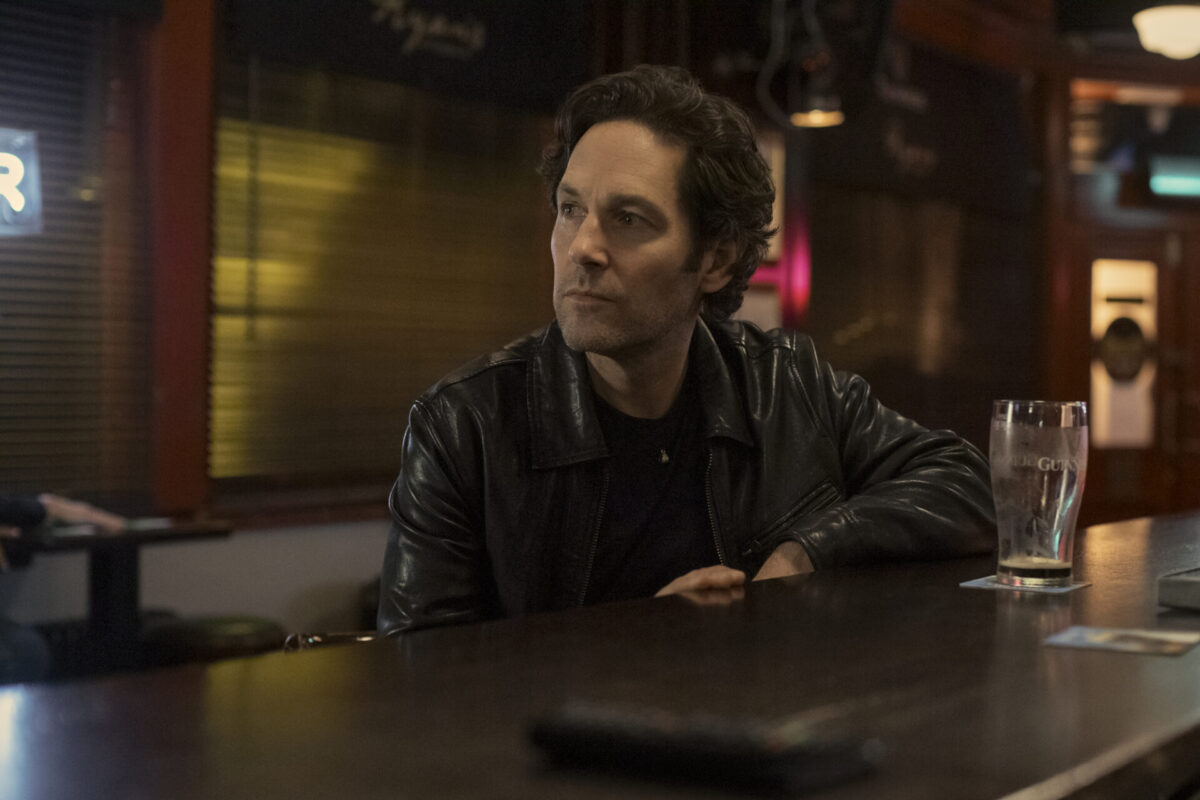
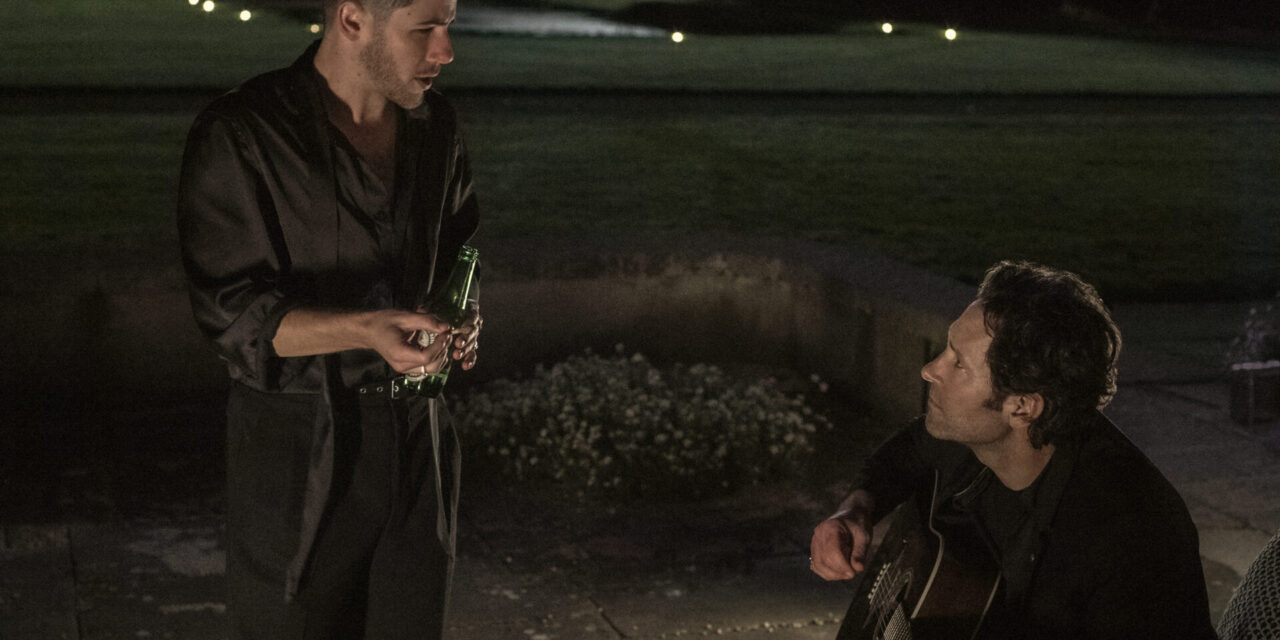
Paul Rudd as Rick in Power Ballad. Photo Credit: David Cleary
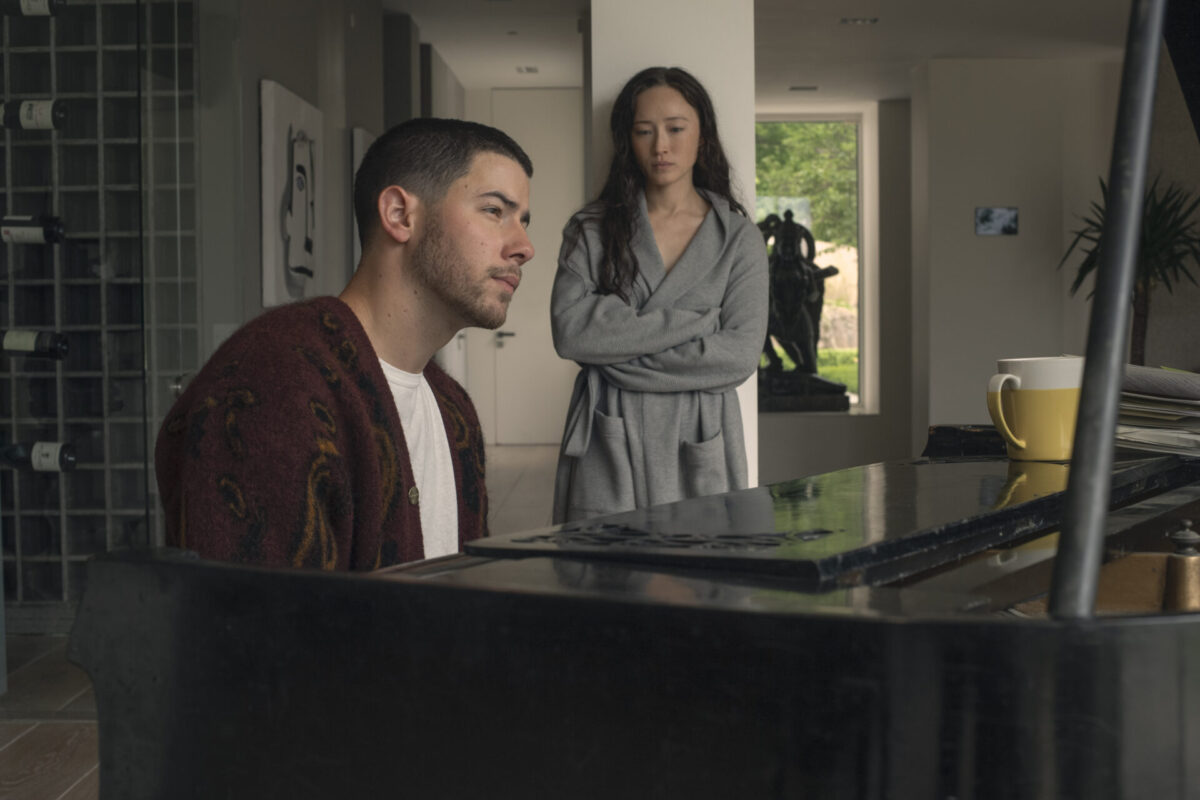
The current pop star is in a bit of a creative rut. See, Danny was a part of an extremely popular boy band years ago, but hasn’t found his footing as a solo artist. (funny considering Jonas himself has found success on his own while being in and out of a family band trio). He needs a career revival. After an impromptu duet of Stevie Wonder’s classic, “I Wish,” Rick and Danny strike up a friendship. That night, they have a few drinks and start workshopping some song ideas. There’s the one in particular that Rick has held close to the chest, one he plays for Danny. Six months later, to his dismay, Rick hears “How to Write a Song (Without You)” without his voice, but with Danny performing it. Not only is Rick robbed of hitting the big time, but the original meaning (which I won’t spoil) has been stripped all in the service of career revival.
Carney and McDonald paint a picture in terms of the contrasting worlds in which Danny and Rick both exist. In Los Angeles, everything is bright and all about “what’s the next thing.” At one point, Danny tries to turn in a select number of songs for an album, only to be told they aren’t up to par. His manager, Mac (Jack Reynor), is also feeling the pressure as his star wanes. Here today, gone tomorrow, right? Danny gets his golden goose, but it’s clear that the only connection is on a superficial level. He only makes the connection to his on-again, off-again love interest, Marcia (Havana Rose Liu), flippantly.
In contrast, Rick has a wife (Marcella Plunkett) and a teenage daughter (Beth Fallon) who anchors everything he makes. Carnet makes a point of showing the audience how important family is to his lead character, but only a limited amount of time is allotted to see it from their perspective. Rick’s blast radius of not finding success in the way he sees it impacts those around him.
Nick Jonas as Danny and Havana Rose Liu as Marcia in Power Ballad. Photo Credit: David Cleary
Much of the second half of “Power Ballad” follows Rick’s quest to gain credit for something that was stolen from him. The template finds traction because of Rudd’s sincerity, coupled with playing off McDonald as a ride-or-die best friend duo. Yes, the cadence of Carney’s film has some conventionality to it, and there’s a question of whether “How to Write a Song (Without You)” would take off in modern times (even with Nick Jonas singing it). But you could see it as a pillar of someone’s anniversary. However, “Power Ballad” speaks to the essence of creativity and the source of where it comes from. In another life, maybe Danny could pull from his own trials and tribulations and make a hit people won’t stop singing – perhaps even resonating within their own experiences. The machine at play not only makes it possible but also creates the environment in which he doesn’t feel guilty about stealing from the little guy.
That’s showbiz, baby, or in this case, the music biz. More than ever, the concept of song has been broken down into digestible formulas like jingles in a fast-food commercial. But with any creative medium, the cream still rises to the top. Slop can’t quantify the emotion inside a three-minute song about a breakup. Where do you draw the line between collaboration and theft? Carney takes care to show that Rick and Danny’s paths of adulation and later contention are the result of circumstances beyond their grasp. It would be simpler if people like Rick and Danny were rewarded for their genuine love of music making, but that’s not to be.
“Power Ballad” strikes a balance between hopelessness and hope, leaning into the notion that while choruses and words can be duplicated, the heart of the matter can’t be.