Los Angeles indie festivals are transforming the live music experience by elevating every aspect of their production, from sound design to lighting and video. Small festival teams now compete with mainstream events, drawing on meticulous planning and innovative technical integration. This behind-the-scenes evolution is helping indie festivals stand out as leaders in immersive and high-quality productions.
In recent years, indie festival production has rapidly advanced, particularly in cities like Los Angeles where competition is fierce and audience expectations are high. Local crews, including Alliant Events audio visual services, work alongside festival organizers to create seamless, dynamic shows that impress both fans and artists. The push to level up production value means independent festivals are investing in collaborative planning, state-of-the-art technology, and flexible workflows. With challenges unique to LA, like strict noise ordinances and ever-changing weather, these events demonstrate how smaller festivals are keeping pace with industry giants while preserving their independent spirit.
Strategic planning transforms indie festival production
At the heart of every successful indie festival is a detailed planning process that can take shape months in advance. Organizers juggle technical riders, site logistics, and artist requirements while managing local regulatory demands. In Los Angeles, securing permits for amplified sound at venues near residential areas poses additional complexity, forcing festival teams to coordinate closely with city officials and neighborhood representatives. This early collaboration leads to festival operations that are both compliant and creative, setting the foundation for smooth show days.
Indie festivals rely on adaptive schedules and constant communication among technical leads, artists, and local crews. Teams must adjust quickly to last-minute artist changes, inclement weather, or unexpected setbacks. The demands placed on indie festival production call for streamlined protocols, like concise cue sheets and run-of-show plans, that ensure music, lights, and video remain perfectly in sync. This approach gives smaller events a professional edge while allowing them to personalize the experience for their unique audiences.
Beyond logistics and permits, strategic planning now incorporates comprehensive risk assessment and contingency mapping that accounts for every potential disruption. Festival producers develop detailed backup plans for power failures, medical emergencies, and severe weather scenarios, ensuring that each department knows exactly how to respond without halting the entire event. This level of preparation includes pre-negotiated relationships with local vendors for emergency equipment rentals, standby generators, and alternative stage configurations. The investment in thorough planning pays dividends when unexpected challenges arise, allowing indie festivals to maintain their momentum and deliver uninterrupted experiences that build audience trust and loyalty year after year.
Innovative system integration enhances the audience experience
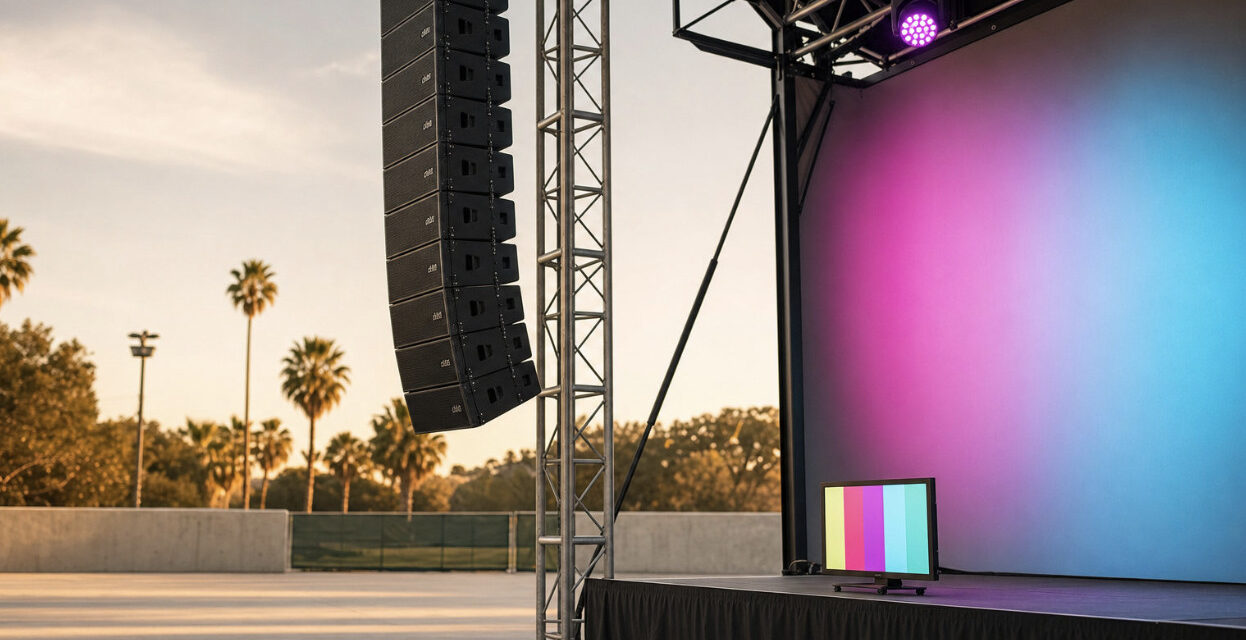
Technical integration distinguishes modern indie festivals from their earlier iterations. Behind the scenes, expertise in system design, real-time sound adjustments, and lighting programming is crucial to creating a cohesive, immersive show. Audio engineers use advanced PA arrays and delay towers to provide clear sound coverage from front to back, even at irregular or open-air LA venues. Lighting designers synchronize color palettes and effects with specific musical moments, ensuring performers remain visible and mood transitions are seamless.
Video teams bring fans closer to the stage with IMAG screens, live feeds, and pre-recorded content, even in sprawling spaces. For Los Angeles events, additional care is taken when working in venues with RF congestion or environmental challenges such as humidity and wind. The ability to fine-tune technical elements in response to these variables represents a new standard for indie festival production, directly impacting both safety and quality for attendees.
Modern indie festivals are also leveraging networked audio systems and digital mixing consoles that allow multiple engineers to collaborate simultaneously from different positions throughout the venue. This technology enables front-of-house engineers to monitor stage sound while monitor engineers fine-tune individual artist mixes, all while maintaining perfect synchronization. Wireless control surfaces and tablet-based mixing apps give technical teams unprecedented mobility, allowing them to walk the venue and make adjustments from the audience’s perspective. The integration of these sophisticated tools with traditional production elements creates a hybrid approach that maximizes both technical precision and creative expression, resulting in sonic experiences that feel intimate even in large outdoor spaces.
Communication and flexibility drive on-site performance
Effective communication is the backbone of indie festival production, especially as teams adapt to evolving conditions in real time. From the front-of-house engineer balancing crowd noise with artist needs, to the lighting director responding to unexpected daylight changes at LA’s outdoor parks, each role depends on nimble problem-solving and clear workflows. Dedicated comms channels connect every department, allowing rapid coordination for changeovers, set transitions, or on-the-fly troubleshooting.
The close-knit nature of indie festival teams encourages creative solutions, such as quickly rerouting power during sudden rain or reinforcing video supports when wind picks up. This flexibility enables the festival to keep running smoothly, even as show requirements shift or technical issues arise. Audiences may never see the backstage action, but these rapid adjustments are essential in delivering the polished, immersive production they experience from the crowd.
Successful indie festival teams also establish clear escalation protocols that define decision-making authority during critical moments, preventing confusion when seconds matter. Stage managers coordinate with production leads through standardized hand signals and coded language that cut through ambient noise and radio chatter, ensuring messages are understood even in chaotic environments. Regular pre-show briefings and post-show debriefs create a culture of continuous improvement, where crew members share observations and suggest refinements for future events. This structured yet flexible communication framework empowers every team member to contribute to problem-solving while maintaining the chain of command necessary for safe, efficient operations throughout long festival days.
Overcoming unique LA challenges and setting new standards
Producing standout indie festivals in Los Angeles means facing challenges like power fluctuations, government-restricted frequencies, and strict curfew regulations. Teams prepare with backup plans for every scenario: dedicated RF technicians monitor wireless mics to avoid interference, and sound crews program volume fades to comply with curfews in dense neighborhoods. Outdoor events are further shaped by weather: coastal fog, heatwaves, and wind all demand quick adaptation in equipment and programming. For many organizers, indie festival production in this environment requires technical discipline paired with creative decision-making.
Through practical documentation, regular production meetings, and shared troubleshooting, indie festival teams in LA have set a benchmark for creativity under pressure. By continually refining their approach, embracing integrated systems, and maintaining transparent communication, they prove that independent events can rival larger productions, and often do so with more agility and authenticity. The evolution of indie festival production in Los Angeles shows how these events are not just keeping up, but redefining what’s possible for audiences, artists, and the city’s thriving festival culture.