
The band chatted about performing at When We Were Young Festival, their reunion, and more
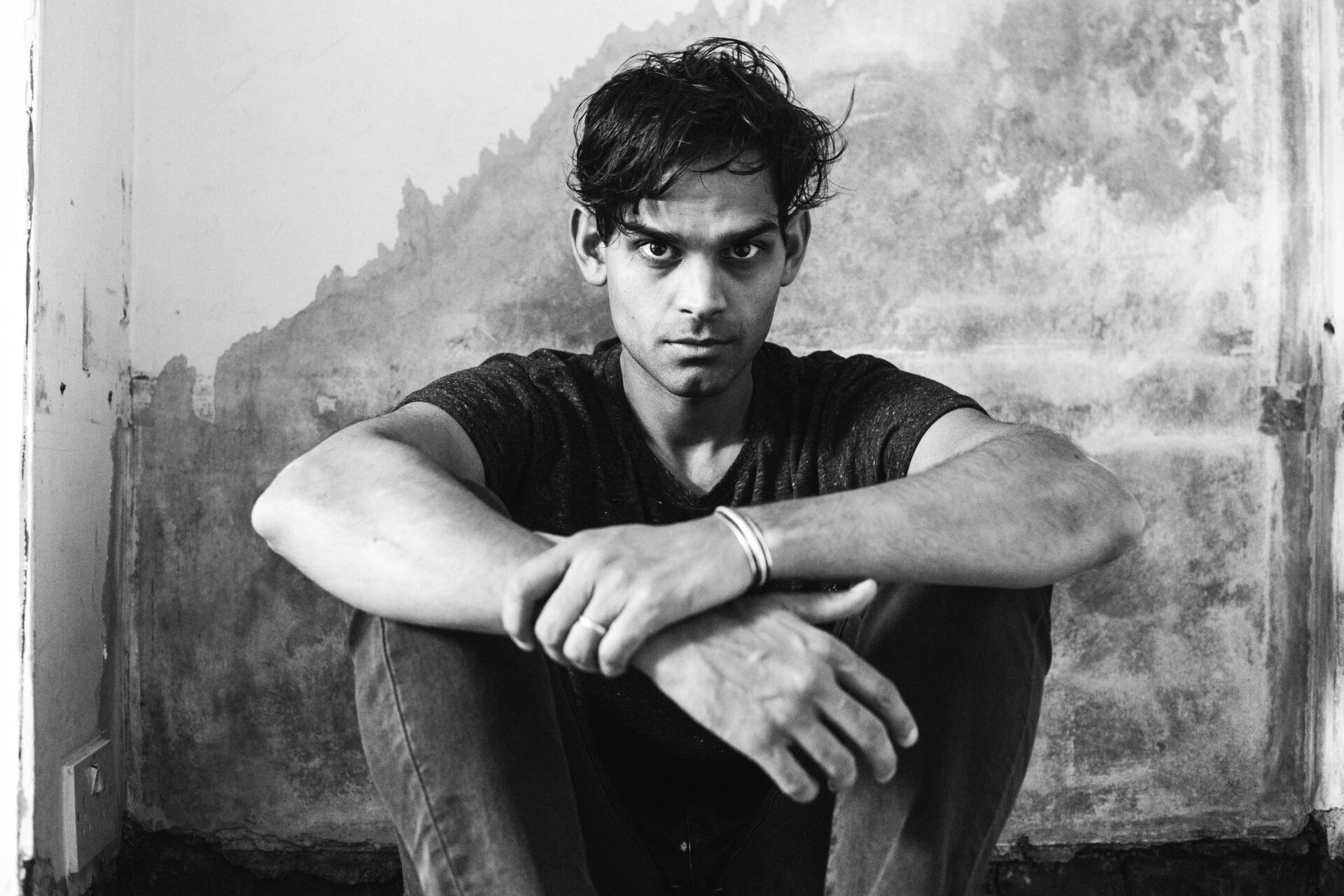
Punk band Letlive— the members are comprised of Fever 333 vocalist Jason Alalon and fellow Letlive members and founders, guitarists Jeff Sahyoun and Jean Nascimento— came roaring back after a hiatus during rousing performances at the epic When We Were Young Festival in Las Vegas on October 18th and October 19th. Reuniting for a global farewell tour titled “Sincerely Yours” that stretches across the world from June until November , their first outing since 2017, the band kicked off a sideshow performance at the Fontaine Bleu and both sets at the music festival on the weekend of October 16th with energy, heart, and electricity. Between going into the crowd that had formed a mosh pit, making heartfelt speeches on manhood and having empathy and understanding for the marginalized, and throwing microphones and cans around during the performance at the Fontaine Bleu, the crowd was treated to a fun mix of punk, metalcore, and rap in the environment that felt like an intimate dive bar rock show. Concertgoers who had not heard of the band before were pleasantly surprised by the enthusiasm and intensity of the show. However, fans of the band know that Aalon and company have always put their hearts on their sleeves. Letlive’s music has always been a vessel for being the language of the disempowered.
Formed in Los Angeles, CA, the groundbreaking soul punk group Letlive predates Aalon’s later project, Fever 333, but carries similar themes of healing from anger, progressive politics, and spotlighting issues that affect everyone. Letlive’s smash hit record titled Exhaustion, Salt Water, And Everything In Between, introduced the band’s unique take on genre blending and punk rock to the masses. Since then, the group has amassed a dedicated following with their addictive mix of pop-punk, metalcore, and post-hardcore rock. This current iteration of the group sees the musicians embracing a new chapter, one that folds in their life experiences as individuals, parents (Aalon has two children), and artists, coming back to something that was built through grassroots efforts in the rock scene.
Backstage in the press lounge, Letlive chatted with Substream Magazine about their reunion tour, performing at the rock festival, and making music that is energetic as they grow older.
Your band’s performance at Fontaine Bleu, like every performance, was so energetic. How do you do it?
Aalon: “To be completely honest, it’s a lot of the repressed energy or feelings that I am not able to express otherwise without being institutionalized. It’s really honoring that space and that time that we get to perform and express ourselves on stage. That’s the commitment we’re making when we perform.”
Sayhoun: “It’s collecting the same energy and trying to keep up with my brother here. That’s where that comes from.”
Now that the band has reunited, what has it been like to perform these songs now as opposed to when they were written?
Aalon: There’s that old adage of distance makes the heart grow fonder and you don’t know what you have until you lose it type of shit. With the level of intimacy that we’ve shared in our art with our friends and fans, we get to look at that from a whole new perspective. I believe that I can say we’re all more healed individuals still playing songs about healing and knowing that there’s still space for us to do more. We get to approach it from a new perspective and we’re able to witness the power of the songs versus being overcome with emotion and feelings as much.”
“The big idea is just opening a space to be whatever you need to be at that time and feel whatever you need to feel safe and being encouraged to do that. I think that we live in a world where that is extremely restrictive and we’re full of restraint and there are misogynist forces that tell us we can’t and I don’t buy it. I don’t believe in can’t and I think our performances are like a physical representation of that idea of liberation. It’s possibly grandiose or whatever, but it’s what we believe and we engage the way we do with our performance and our art and with each other.”
How does your own journey of healing and trying to feel your feelings get included into your music?
Aalon: “The biggest challenge for me personally when we picked the band back up was finding a way to healthily engage with the songs again and make sure that I wasn’t falling back into old patterns that were hazardous for me. I’m also a father now, so I look at my two sons and say ‘How would I like to be an example to them?’ ‘How do I demonstrate the proper behavior even when feelings can feel so big and almost out of control?’ How do I show them a way to be vulnerable?’ That’s where I am with the project right now.”
Sayhoun: “ I think it’s getting to revisit everything in this era of our lives is a beautiful thing. It’s taking notice of things you did when you were younger and laughing about it because you have a different perspective of it and how you approach it [is different]. We have more patience and we’re just better versions of ourselves.
Nascimento: “It’s been great to reconnect with the fans after so many years and I’m just grateful for that.”
What is it like to perform at the When We Were Young Festival this year?
Aalon: “ I think we all might have different feelings about it. I’m happy to see that this music was able to sustain and make its way this far. What I do hope for this scene and this music is that we commit to the things we said we were going to do in our 20s, 19, 17, 15, 12, whatever. Really commit to the idea of progress and being progressive and alternative and remember that we said that and we meant that and we could still mean it now as we get older. I think that would be quite helpful for the rest of the world if we were to do that.”
Sayhoun: “ Everything he said.” (laughs) It feels good. Of course we’re excited and very thankful to be here but it’s just like any other performance of ours. We’re excited to do what we do and be here with everyone and share our art. We’re stoked.”
What does being a band that is part of a diverse representation in rock mean to you?
Aalon: “ Environmentally, this is just how it happened. We were just around each other and we always looked and we always had one white person in the band and the rest were not. So for us, to be real, the level of cultural representation, rhythmic representation, and ideological representation, to be able to have that varied representation in a band is so important. I think it’s so important in a white, male dominated scene. I know that people feel some type of way when we say that but that’s a you problem. We’ve had enough to deal with and just to feel like we can be in a scene and feel like ourselves and be represented, that’s the least we should be asking for.”
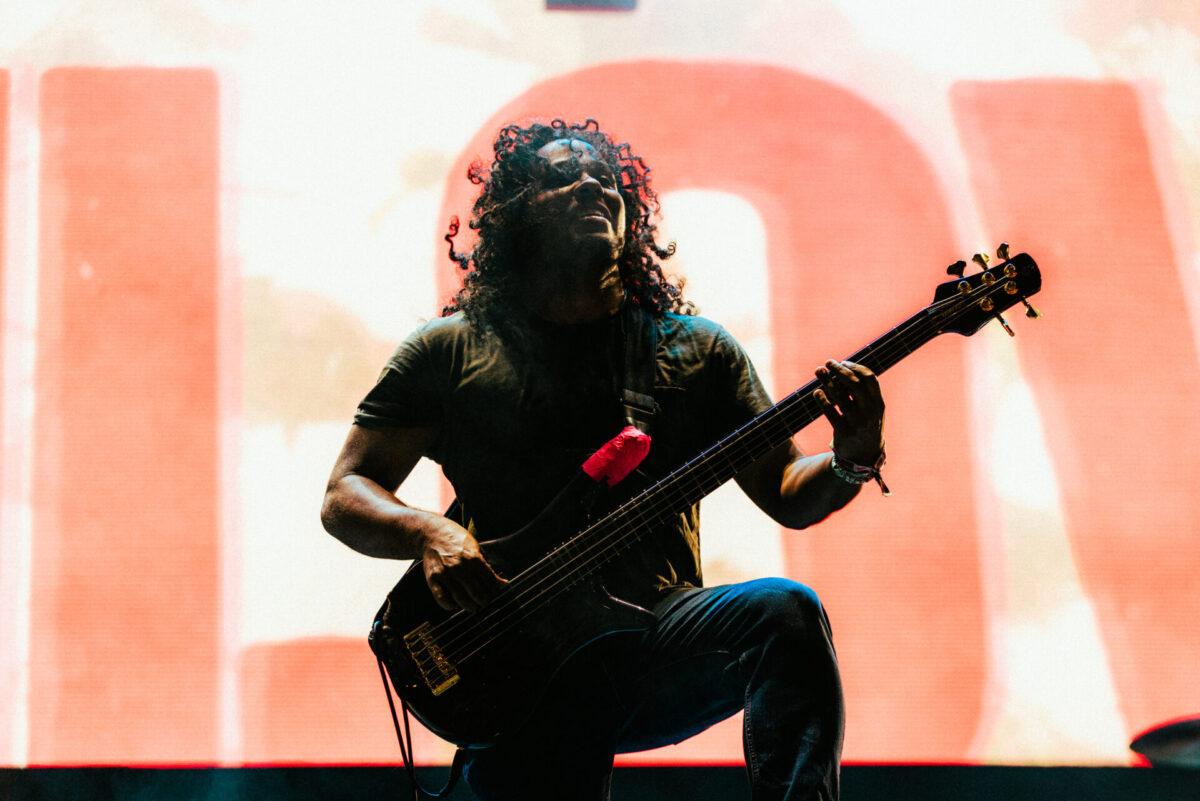
Letlive performs at the When We Were Young Festival.