What’s creepier than a single, non-descript picture of a yellowed, hollowed-out furniture store dropped on a forum and left to the masses to dissect and conjure up origin stories for? Let me tell you about the endless labyrinth called the human brain. It’s fascinating and frightening. This single organ contains a multitude of memories, thoughts, and images that shape who we are.
But through time, they get warped, frayed, and change shape. A comfort bedtime story could morph into a nightmare, snarling under your bed under the right circumstances. The viral phenomenon of ‘Backrooms’ and its fable-esque virality, coupled with our perception of memory, form the foundation on which first-time director Kane Parsons develops his film adaptation of his successful web series based on the 2019 creepypasta. The film works best when it acts as a mystery box, making the audience sit with the uneasiness of scant explanation and allowing our minds to race with the wildest of outcomes.
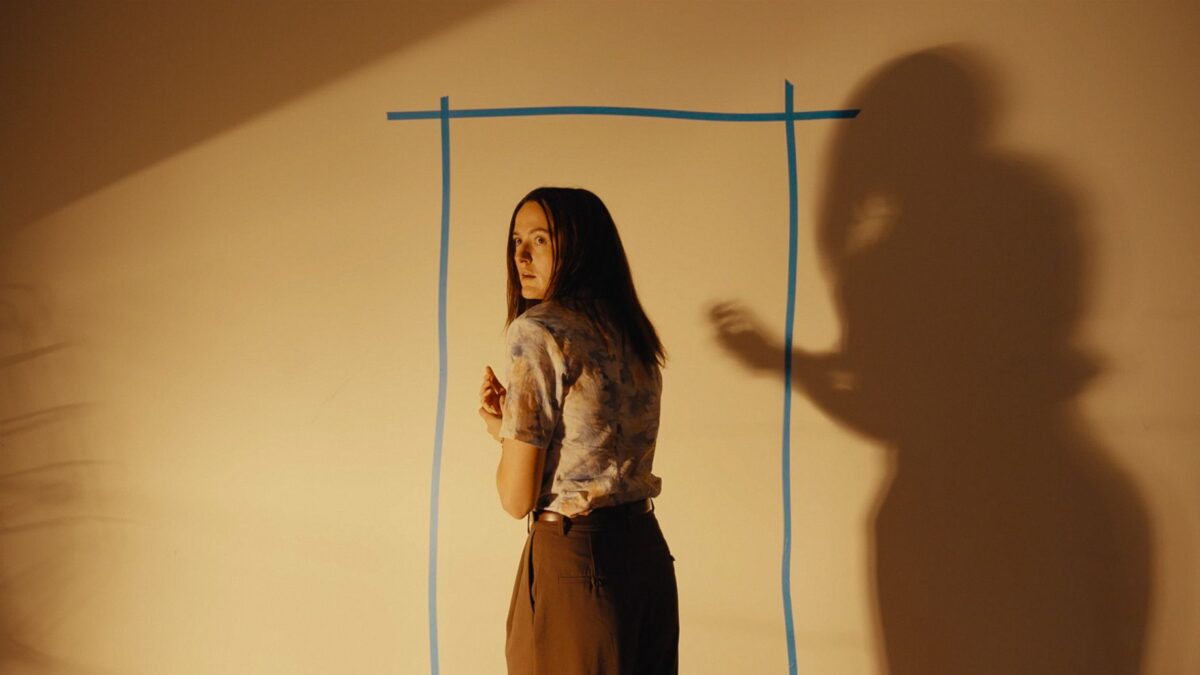
Backrooms / Photo Credit: A24
Rooms that lead to more rooms, doors that vary in size, and objects stuck in floors that shouldn’t be there in the first place. How do you explain that without coming to some nefarious conclusion? The intelligence of Parsons’ series of videos lies in giving the audience breadcrumbs to elevate their own questioning and discussions.
Definition is something Hollywood and the big screen almost requires. ‘Backrooms,’ at times, is fighting against its own aura of mystery in the service of accessibility. Parsons displays a connection to films like 2008’s “Lake Mungo,” nestled within Blender-crafted found footage of an abstract place beyond what seems humanly possible. But conventional horror setups and the need for quantifiable scares are pulling at the film’s fabric — especially in ‘Backroom’s latter third — where the need for recognizable jumps threatens to reveal the magic behind the curtain. It’s in the great performances of Chiwetel Ejiofor and Renate Reinsve that this conceptual piece is more realized than diluted for the sake of commonality.
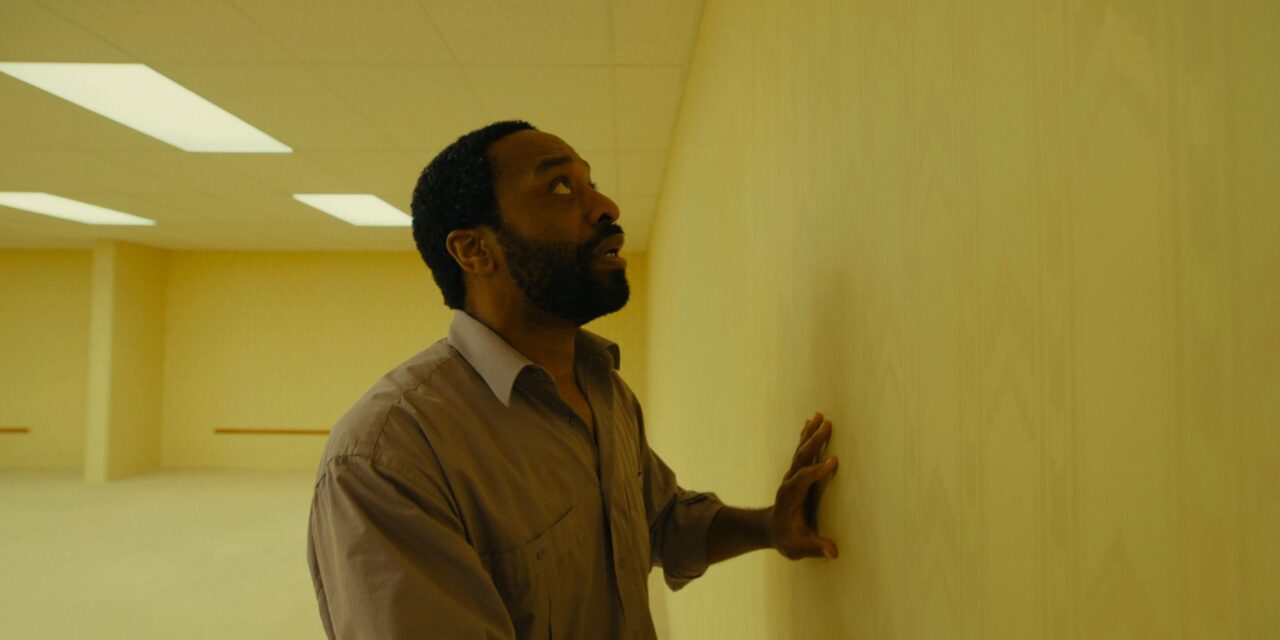
Backrooms / Photo Credit: A24
Clark (Ejiofor) is caught within his own backrooms of sadness, anger, and regret. The discount furniture store he owns, Cap’n Clark’s Ottoman Empire, is not doing well. Instead of being overrun by customers who might want a cozy love seat, it’s inundated with past-due notices. While dealing with the downfall of his business, Clark is also grappling with the ramifications of a divorce and the realization that he will not realize his dream of becoming an architect. His mental state and drinking have gotten so bad that he’s seeking the help of a therapist named Mary (Reinsve). She’s wrestling with her own childhood trauma, given through a series of flashbacks and winks to a particular object throughout the film.
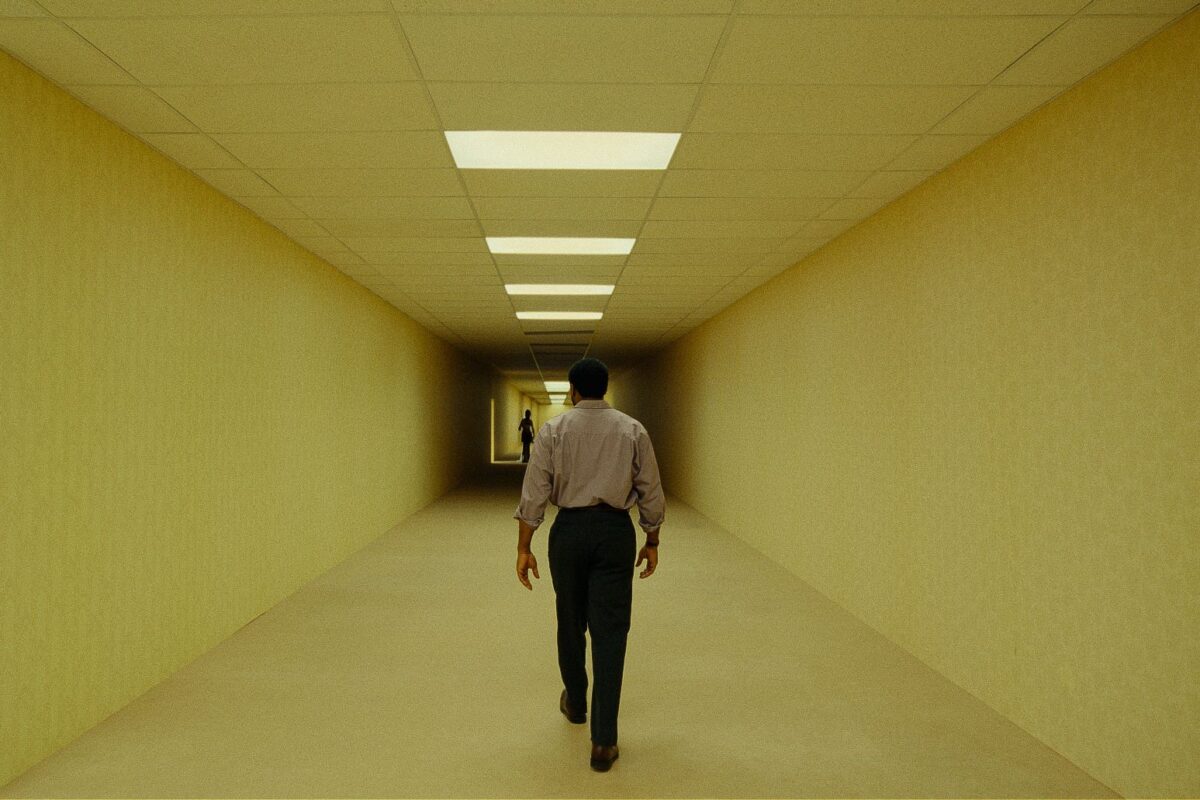
Their therapy sessions are…chaotic. Clark is a bull in a china shop, too filled with rage to perhaps realize the part he played in the construction of his current life. Something is about to break him out of the current torturous loop of his life. While sleeping at the furniture store because he has nowhere else to go, Clark notices the power going on and off. While messing with the breaker, he accidentally discovers there’s a literal portal in one of the walls. He finds himself in a series of rooms that have no destination – a confusing funhouse draped in fluorescent yellow. In one room, there’s a stack of chairs and desks. Inside another is a door half its size with three handles. How the hell does a place like this even exist? Other than an allusion to a fictitious research facility named Async (where Mark Duplass’s character is a representative of), we don’t know.
Honestly, it’s better not knowing because that’s where the heart of uneasiness lies. Parsons and writer Will Soodik try to provide a metaphorical context for what The Backrooms could be – but it’s best to let our imaginations run wild. There’s a discussion about loops, perhaps born of a traumatic experience, that we constantly find ourselves in. Without doing the work of pattern recognition and a willingness to forge a new pathway, we just constantly run in circles until madness grabs us and never lets go. Maybe the 90s aesthetic and its sterile, random underpinnings speak to our hunger for nostalgia to the point where we’ve stripped it bare. Or maybe it’s just nothing, the scariest part of Parsons’s film. It could be that this place is above meaning and thus terrifying to know that our minds will never know what’s behind the crawl spaces or doors.
When the film looks back into an exploratory parking space, I got perturbed. But then it decides to keep driving past a pit stop, even winking at our appetite for understanding in its final moments of questioning. At the age of 16, Parsons began constructing his version of ‘Backrooms’ lore at a time when theoretical storytelling in places like 4chan and Reddit gave a singular image a life on its own – a digital campfire third space. In the service of game algorithms and walled-off entry points, these places have also become empty shopping malls or museums, hinting at something we’re trying to remember – but not quite getting right every time we attempt to. This film shows the satisfaction of imagination taking over, thus overcoming the urge to pin impact on reaching a fixed endpoint.