
A palpable and perpetual state of societal bleakness resides within the first stories of Stephen King’s extensive writing career. Amidst the classics of “Carrie” (1974), “Salem’s Lot” (1975), and “The Shining” (1977) (a hell of a beginning three-peat if I do say so), there were the tales written under his pseudonym Richard Bachman. Rather than chronicle the psychological effects of a family of three coming apart while caring for a haunted mansion, some of the “Bachman” novels spoke to societal decay that rings rather eerily. 1976’s “Rage” is a story about a school shooting (which has become so prevalent in modern-day that King allowed it to fall out of print), and 1981’s “Roadwork” is about what a single midwestern man would do when he is stripped of everything.
But “the master of horror” also spoke to the capitalist blood lust of the well off and powerful, using the underprivileged as entertainment fodder in 1979’s “The Long Walk” and 1982’s “The Running Man.” – the latter will get its second adaptation for the big screen by director Edgar Wright in November. In the case of “The Long Walk,” it’s a highly bleak and simplistic premise that almost feels unfilmable in feature length. Yet director Francis Lawrence – someone who knows his way around adapting a dystopian series with “The Hunger Games” films – tackles this with success.
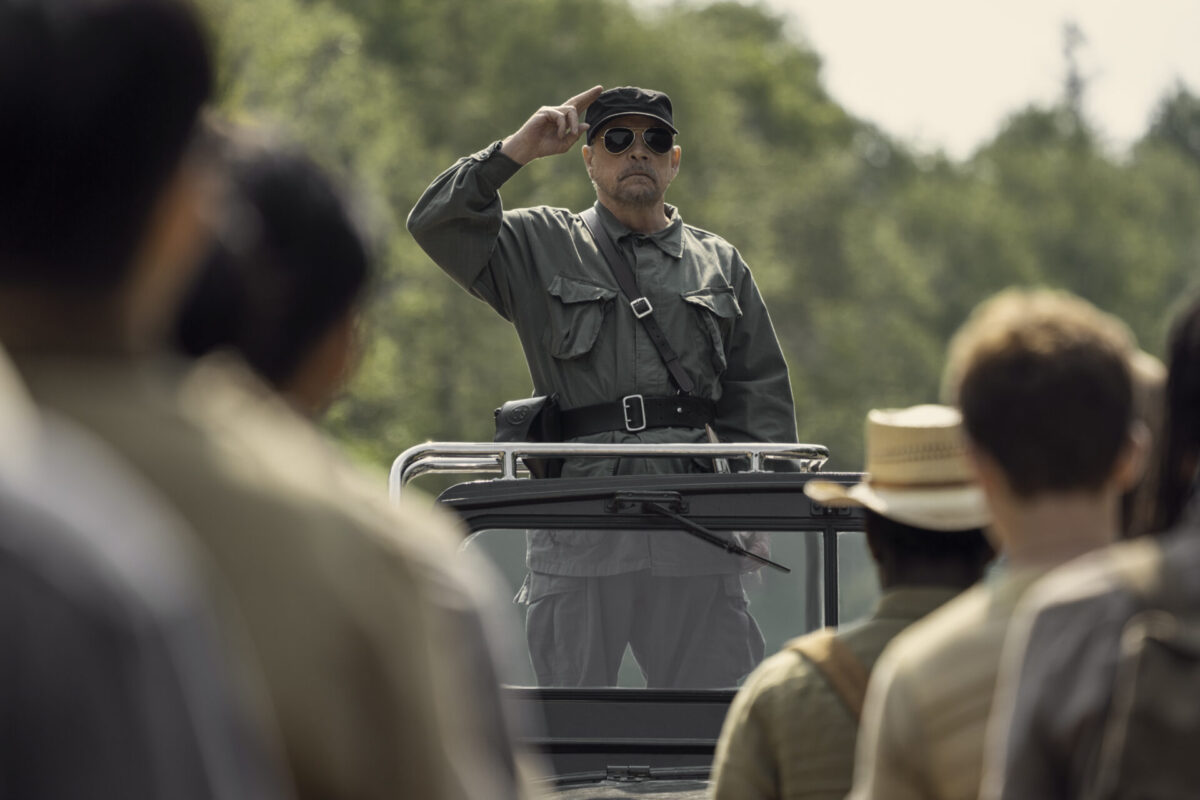
Mark Hamill as The Major in The Long Walk. Photo Credit: Murray Close/Lionsgate
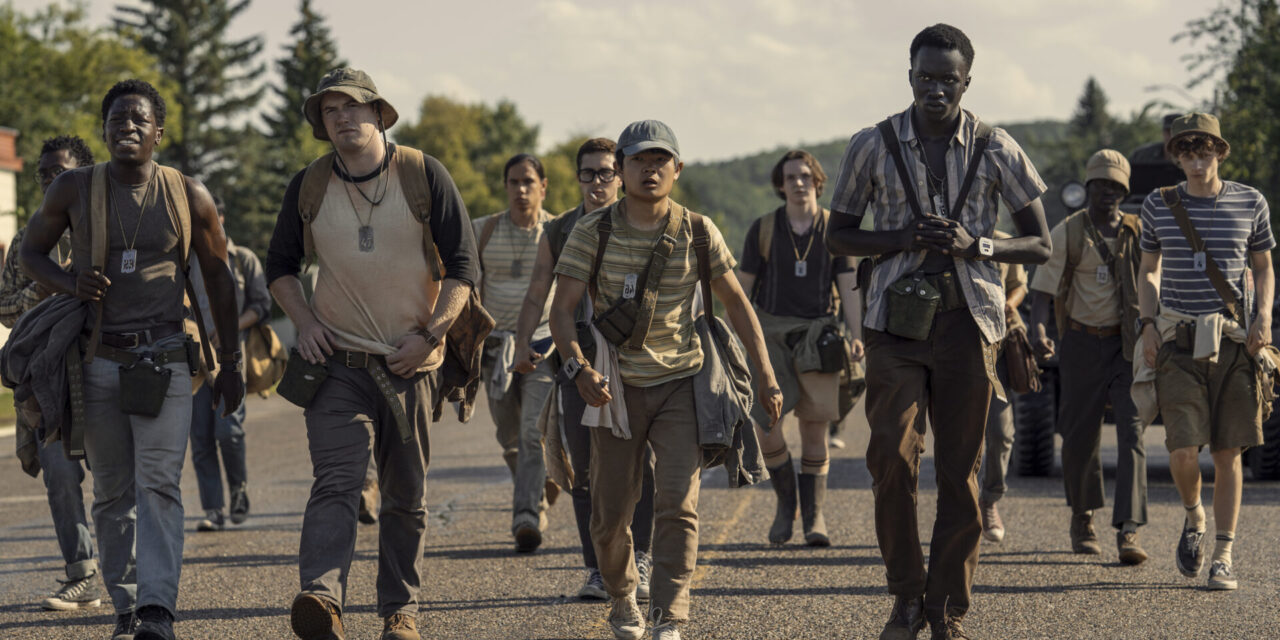
In this world, American society has been ripped apart by a massive war. Hopelessness and poverty are felt by almost the entire population, aside from the authoritarian regime that’s taken over. There is one beacon of hope (if you want to call it that)—a competition of sorts, in which 50 young men from each state are given the lucky privilege of being drafted into. If you constituted this “event” as the speed walking competition from hell, you wouldn’t be far off. Each participant is expected to maintain a walking pace of at least 3 miles per hour until only one person remains standing. To the winner is the promise of riches beyond belief and one wish. If you lose, you die – first, with three warnings and then executed by one of many trailing soldiers for a live audience to witness.
It’s an absolutely grim set of events, and Lawrence doesn’t shy away from displaying how ruthless and unrelenting each step or bellowing, robotic insistence to keep going as an M16 is raised to a young man’s head. Yet, JT Mollner’s story strikes a balance, displaying a sense of camaraderie between the participants that hits the audience much harder as the body count starts to pile up. At the beginning of “The Long Walk,” Raymond “Ray” Garraty (Cooper Hoffman) arrives at the starting line, much to the dismay of his mother (Judy Greer). While he assures her everything is going to be okay, it most likely won’t be. There’s so much that could go wrong, and limits to what the human body can go through. The person you once knew is gone, even if they survive.
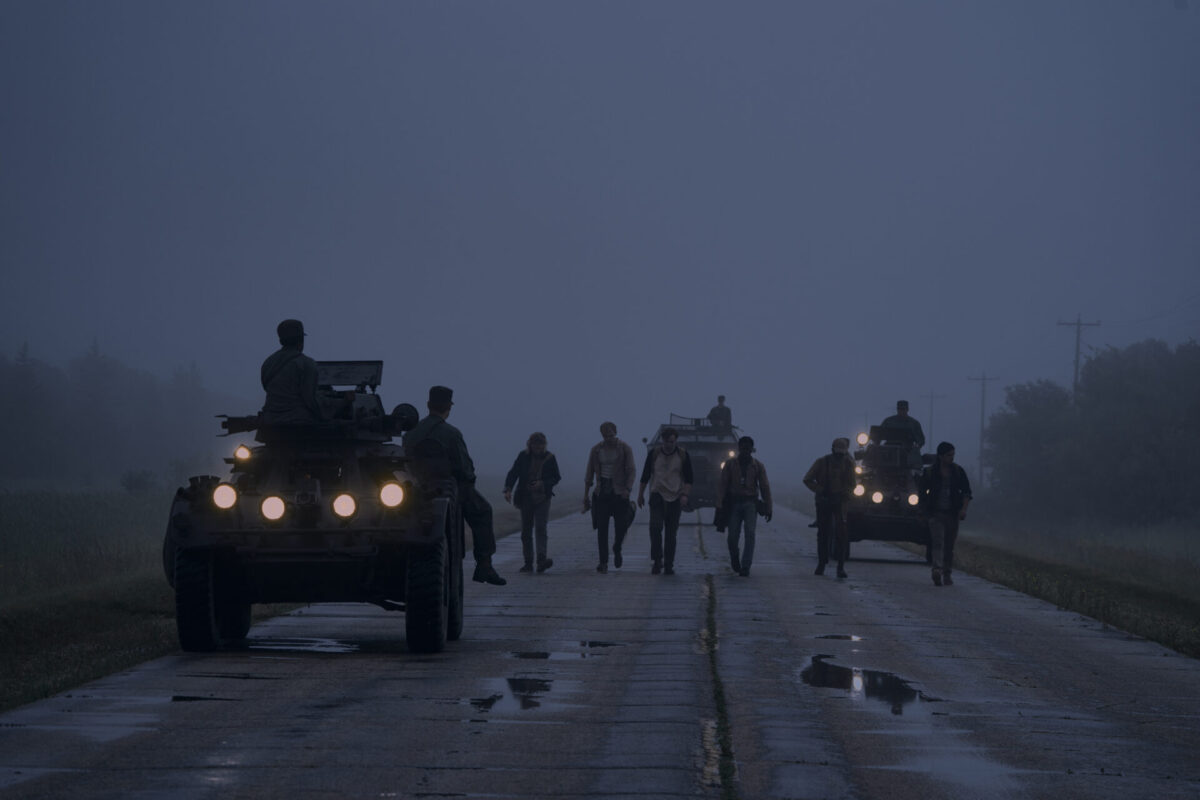
Charlie Plummer as Barkovitch, Garrett Wareing as Stebbins, Cooper Hoffman as Garraty, David Jonsson as McVries, Tut Nyuot as Baker, and Joshua Odjick as Parker in The Long Walk. Photo Credit: Murray Close/Lionsgate
Lawrence and Mollner highlight certain characters out of the many we are going to lose. With Raymond, he quickly develops a friendship with the motivational McVries (played by the charismatic David Jonsson). The film moves like a dark cloud, but McVries’ endless amounts of pep and lightheartedness in the face of hardship serve as the sunshine break people need. Olson (Ben Wang) is present for quirkiness and off-color jokes, Stebbins (Garrett Wareing) is in the best shape of all 50 men and has a mysteriousness to him, and Barkovitch (Charlie Plummer) is the annoying, nagging bully (if this task wasn’t challenging enough). Disagreements exist between the contestants, but “The Long Walk” centers around a brotherhood forged inside this unattainable situation.
It’s fitting that King wrote the story based on the horrors of the Vietnam War and the unnerving feeling of the draft. The overall dour feeling of the film will have you wondering why we continue to create a world in which young people/sons are sent off with a high chance of never returning home again. Lawrence doesn’t shy away from showing the causality of carnage. In some instances, the executions are shown in close-ups. There are no breaks, so the contestants have to resort to using the bathroom on the way, risking the use of all their warnings. They trudge through rain, sickness, and micronaps that give us a small glimpse of what life is like within this hellscape.
You see limbs get run over by tanks with the beckoning of The Major (played by Mark Hamill) echoing as a crude, nationalistic megaphone, trying to convince the men what an honor it is to compete. In Lawrence’s adaptation, he utilizes Jo Willems’s cinematography to convey the show’s portrayal of how bad things have gotten. Every once in a while, the men will walk by a forlorn and stoic-looking family sitting and watching in a landscape reminiscent of the 1930s Dust Bowl.
Nobody is truly prosperous during this time, and that’s the point. One of the pitfalls “The Long Walk” falls into is the lack of imaginative scenarios on this journey. While it manages to portray the bodily trauma which comes with walking for four days straight, the methods in which a long, winding stretch of highway starts to wear thin. One would have to think they would come across bridges and potholes – something else that causes an impediment on their journey. However, it’s the performances of Hoffman, Jonsson, and co that deliver in a way in which you will find yourself rooting for all of them to survive somehow. It’s the story of the few versus the many, where David’s slingshot is not quite long enough to reach Goliath. There’s a version where the outcome would be inspiring, even triumphant. However, Lawrence levies his blunt force reality in “The Long Walk” that even the purest of souls might not escape being tainted.