It’s easy to see why the zombie sub-genre has endured for as long as it has — frankly, because the animalistic impulses serve as a mirror. The irony of “The Rage Virus” is that scientific conquest only exacerbated humankind’s walk backward into a simplistic order of react, kill, and eat. In 2002’s “28 Days Later” and 2007’s “28 Weeks Later,” the virus is without an established order, consuming until there is nothing left. As I watch more of these stories of the undead (or, in this case, infected) coming back to life, ravenous and snarling, I wonder, as shown in Nia DaCosta’s “28 Years Later: The Bone Temple,” if the zombieism is undressing the evil tucked away by intelligence and persuasion.
In Victor Halperin’s 1932 “White Zombie,” based on Richard Seabrook’s 1929 novel, “The Magic Island,” the slow-moving, lethargic mannered zombies were a metaphor for worker exploitation, colonialism, and control. It leaves open the notion that humans are just as bad, if not worse than, the bloody, thirsty, violent figures that would shape nightmares for decades. Danny Boyle’s “28 Years Later” spoke to recontextualizing a small island (or a family of three in particular) as a small subset of society starts over after calamity. Yet, we can’t get enough of our rituals, where a manhood rite of passage involves killing the infected as if there were deer. Boyle and writer Alex Garland give voice to the evolution among the infected, as if nature is acting as an equilibrium.
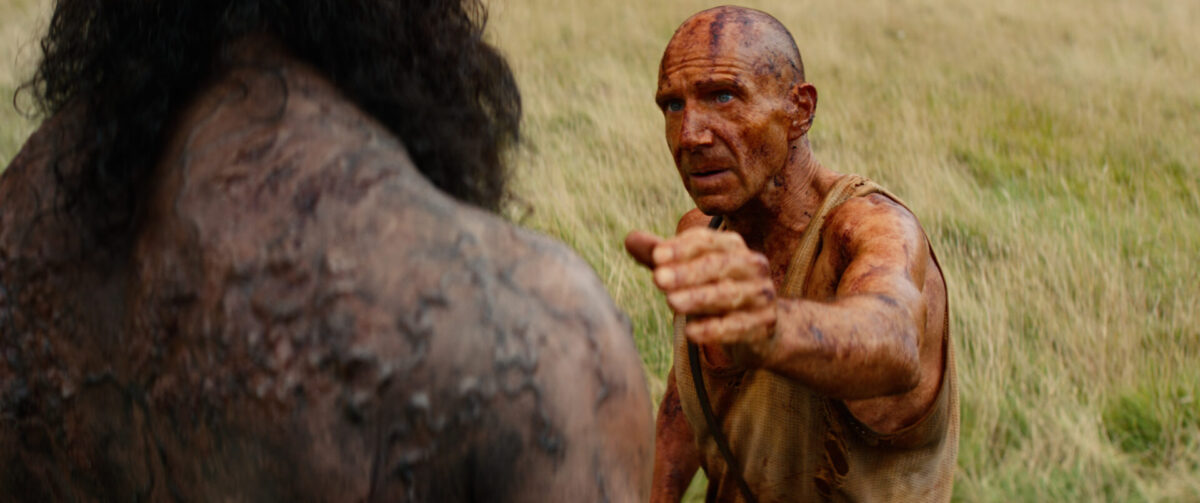
Dr. Kelson (Ralph Fiennes) in Columbia Pictures’ 28 YEARS LATER: THE BONE TEMPLE.
© 2025 CTMG, Inc. All Rights Reserved.
But even on the small Lindisfarne island shown in the first film, there are still laws and understandings that keep things in a natural balance. DaCosta’s “The Bone Temple” is unrelenting in showing how zealots and cults are just as dangerous as a viral mutation. Where “the rage virus” renders you into a constant state of anger, the villains in this film have been warped by one man’s vision to carry out depravity in the name of religion – filtered through a disturbed narrator. On the flipside, DaCosta and Garland provide science with a creationist redemption story. Although not inherently responsible, Dr. Kelsin (Ralph Fiennes) has to see the result of his credo – a country in ruin, which renders him suspended in fear and remembrance. The eventual collision of these two ideologies provides a frightening and somewhat experience.
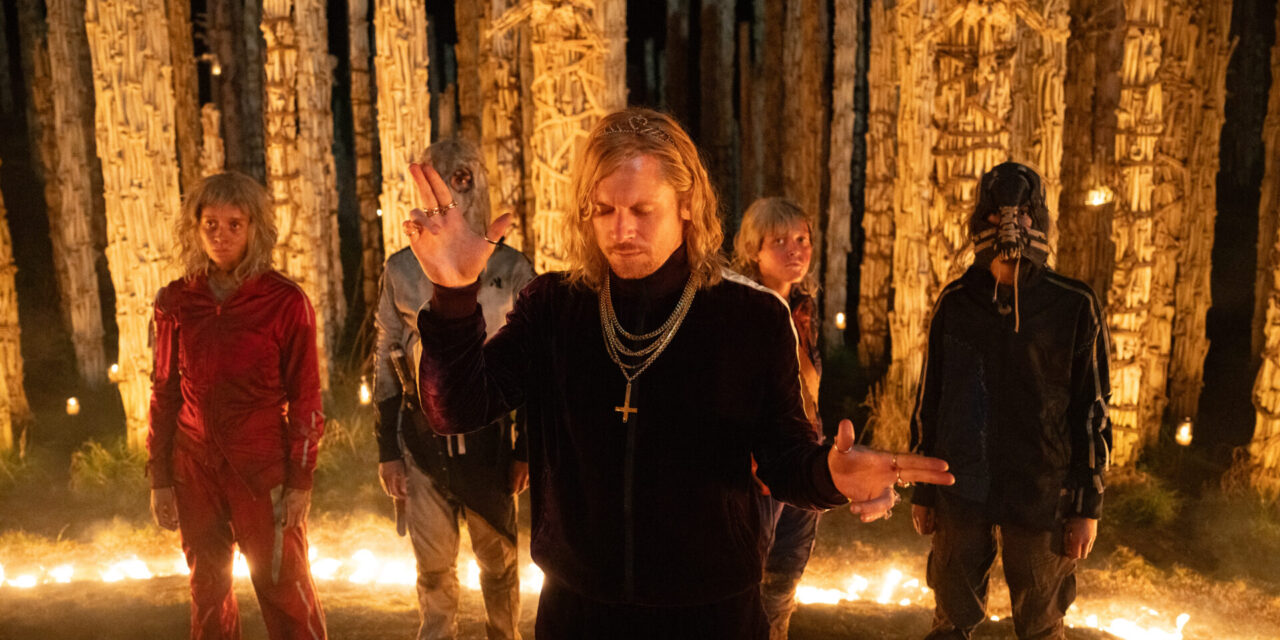
Resuming where the 2025 film left off, Spike (Alfie Williams) is in trouble in the hands of the Jimmys, a cult of survivors modeled after the deceased British host and predatory sex offender, Jimmy Savile. Their leader, Sir Lord Jimmy Crystal (Jack O’Connell), is as sadistic as they come. Informed by his experience seeing his family torn apart by the infected at a young age, O’Connell’s character is stuck in his eight-year-old self, making many references to the Teletubbies and even having one of his young followers perform the dance on cue. The message from his minister father, believing the virus is a method of cleansing, has grown into something more sinister.
Jimmy Crystal is a full-on Satanist who exerts control over his followers to carry out his depraved teachings. There’s a moment in the film where an unsuspecting family incurs The Jimmys’ wrath with brutality similar to how the infected tear people apart. Jimmy Ink (Erin Kellyman) provides somewhat of a helping hand to Spike. But as the film progresses, Kellyman provides nuance to her character, showing that ambition is a dangerous ingredient in cult structures.
Dr. Kelson is still in the routine of upkeeping his extensive bone temple memorial. This film doesn’t provide extensive detail about his backstory, but there are pictures of loved ones in his bunker, and a wind-up record collection with Duran Duran records that give enough of a sense of who he is, pre-outbreak. He longs for friendship, and it unexpectedly comes from the hulking, imposing Alpha infected he names Samson (Chi Lewis-Parry). It’s not willingly. The Dr. has to tranquilize the Alpha with morphine darts. While Samson is in a state of euphoria, Dr. Kelson treats him as if there’s a chance he will be cured. A fleeting bit of hope, I know.
“The Bone Temple” still has a semblance of the “28 Days Later” cinematography style, using iPhone cameras, small digital cameras, and drones. However, DaCosta’s film is firmly on the periphery of capturing humanity in its darkest moments. Cinematographer Sean Bobbitt helps present two sides of the coin, with Jimmy’s crusades portrayed as more rugged and fixated on graphic violence. Meanwhile, the scenes with Dr. Kelsin and the Alpha are more naturalistic and dream-like, given their hallucinogenic states.
O’Connell and Fiennes work together in their respective sectors as opposites on a land left to their own devices. While the film is encased in nihilism, there are some hilarious moments, with well-placed dialogue and dance numbers (yes, you heard right), that brighten the hue.
’28 Years Later’ Is A Funeral Pyre To A Certain Kind of Post-Apocalyptic Landscape
While their methods are DRASTICALLY different, both Dr. Kelsin and Jimmy Crystal are frozen in their respective generations and seek to influence the present. The Dr. has experiences beyond the outbreak, whereas Jimmy Crystal was directly molded by it at a young age. DaCosta and Garland encapsulate the impact of tragedies, longing, and how they bloom in different people. While the core of science is based on empirical evidence, its tools can be used for the betterment of society. Religion is supposed to incorporate togetherness and faith, but in the wrong hands and minds, it becomes a weapon rather than a respite.
It’s one thing to say humans are the real monsters and leave it be. It’s another to reflect the current time like a puddle. George Romero’s 1967 “Night of the Living Dead” indirectly reflected the tense racial climate at the height of the Civil Rights Era. I couldn’t help but draw parallels between our post-truth, fertile zealot-sprouting moment and DaCosta’s statement that rotting reanimated corpses hide the real boogeyman.
“The Bone Temple” thoughtfully investigates the methods in which society or figures of power use idolatry as an infection within itself. The battle is not merely between Gods and monsters, but truth and diseased testament standing on opposing sides. In the film, there are wide shots of foliage engulfing the countryside – taking its rightful place- as the infected roam. But one thing to fear in “28 Years Later: The Bone Temple” is the idle, untreated minds of the people who rip and tear just because.