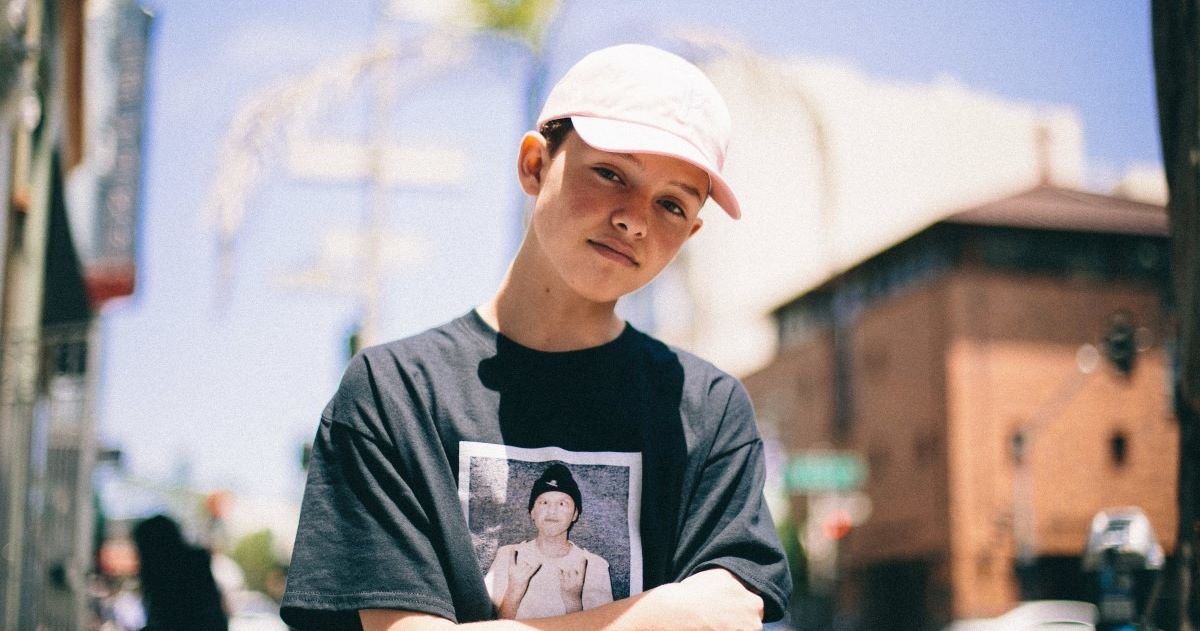
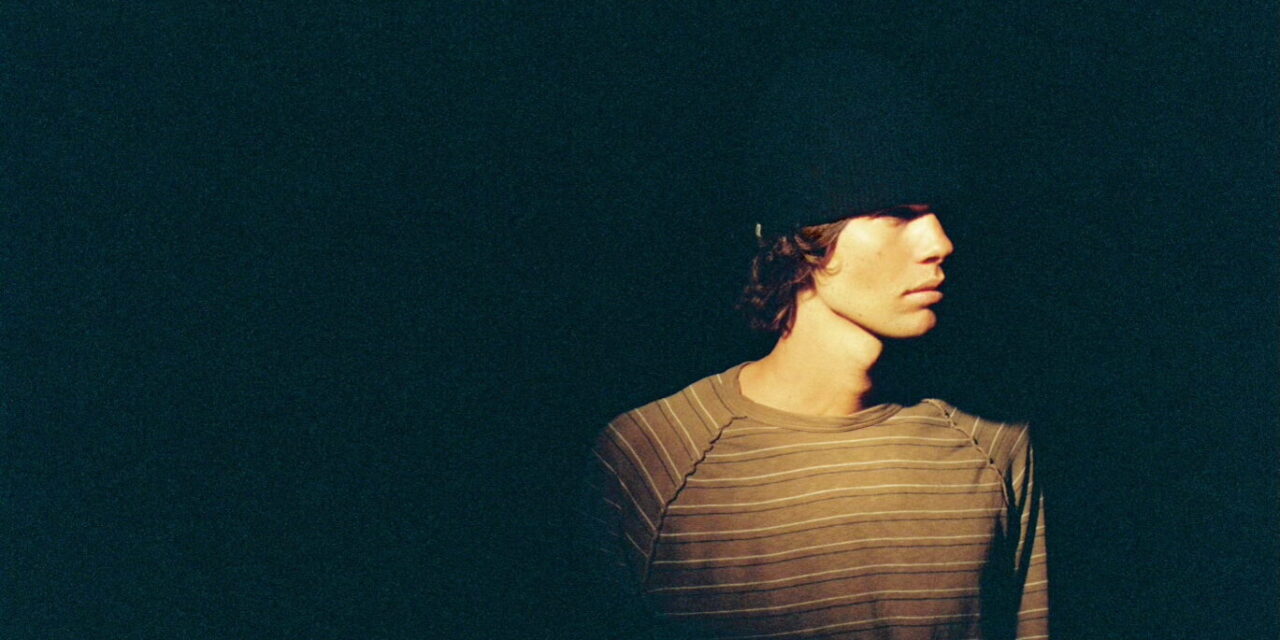
It’s 11:30 a.m. in rainy LA, and Will Swinton is calling me from his home. His Zoom background is unexpected, a tabby cat peering dramatically over hills of purple blankets, two piercing eyes staring at us intensely. “Oh, yeah. That’s my cat from back home. I forgot how to change that,” he says when I point it out. “I hope it’s not distracting.” As the edges of his form fade in and out against the photo of the cat, I wonder what context he had originally chosen that background for.
He’s just got back from a wedding this weekend, he tells me— his manager’s, which he performed at. “It was so epic. It was the most insane wedding I’ve ever been to.”
Swinton and his manager are no stranger to sharing formative, shaping moments together; there were times when it was just him and Will hunkering down, spending entire nights recording songs, entire mornings meeting with labels, just “being completely delusional” about it all. They were together for most all decisive moments of his career, from meeting Machine Gun Kelly at a random bar in Idaho (and hanging with him at his sold-out home show in Cleveland), to signing his first record deal. On our Zoom, Swinton is happy to wax poetic about the moments they’d shared, from sleeping on his couch to going into debt with each other, to leaning on him almost entirely when he was moving to LA and had zero dollars to his name. Performing at his wedding was par for the course.
Born in Auckland, New Zealand, Swinton had humble beginnings as a drum and bass DJ— a terrible one, he says himself— and never expected his music career to look this different. His penchant for making music happened somewhat by chance, after seeing a DJ set at a music festival he particularly enjoyed. “I originally wanted to be a DJ. I went to this festival in New Zealand and saw RL Grime play on stage, and I remember thinking, that has got to be the best feeling in the world. I bought all the musical equipment, all the software on my laptop, and spent the week on YouTube learning how to make this drum and bass song. I showed it to my friends that next weekend, and it did not hit. My friends were like, this is not it.”
Perhaps it was a blessing in disguise that his DJ career fell out of the window, or the world may never have had the chance to hear his unique voice, which he himself seems to have stumbled upon by chance. Delivered in a gravelly register with a deep rasp, it is in itself an instrument, adding a reverberating depth to songs that even a guitar couldn’t recreate. In the wake of his crumbling DJ career, it was the perfect consolation prize.
“I’d already spent this money on the software, so I bought a shitty USB microphone from JB Hi-Fi, and started singing over guitars and making songs.” I asked if he had grown up playing music. “[Not] until I started really trying to do music, which was towards the end of high school.”
Discovering gems by chance, taking risks, having happy accidents and making the right mistakes are the things that seem to define Will Swinton’s career. Growing up, music was a constant, casual companion while skating or riding with his parents in the car— “My mom listened to Madonna, lots of James Blunt and my dad was into Kings of Leon and rockier-sounding things”— but making it was never the goal. He lived a stable, quiet life, finished school, and had a normal, good job, at a trampoline park which he loved.
Music, though, had other plans.
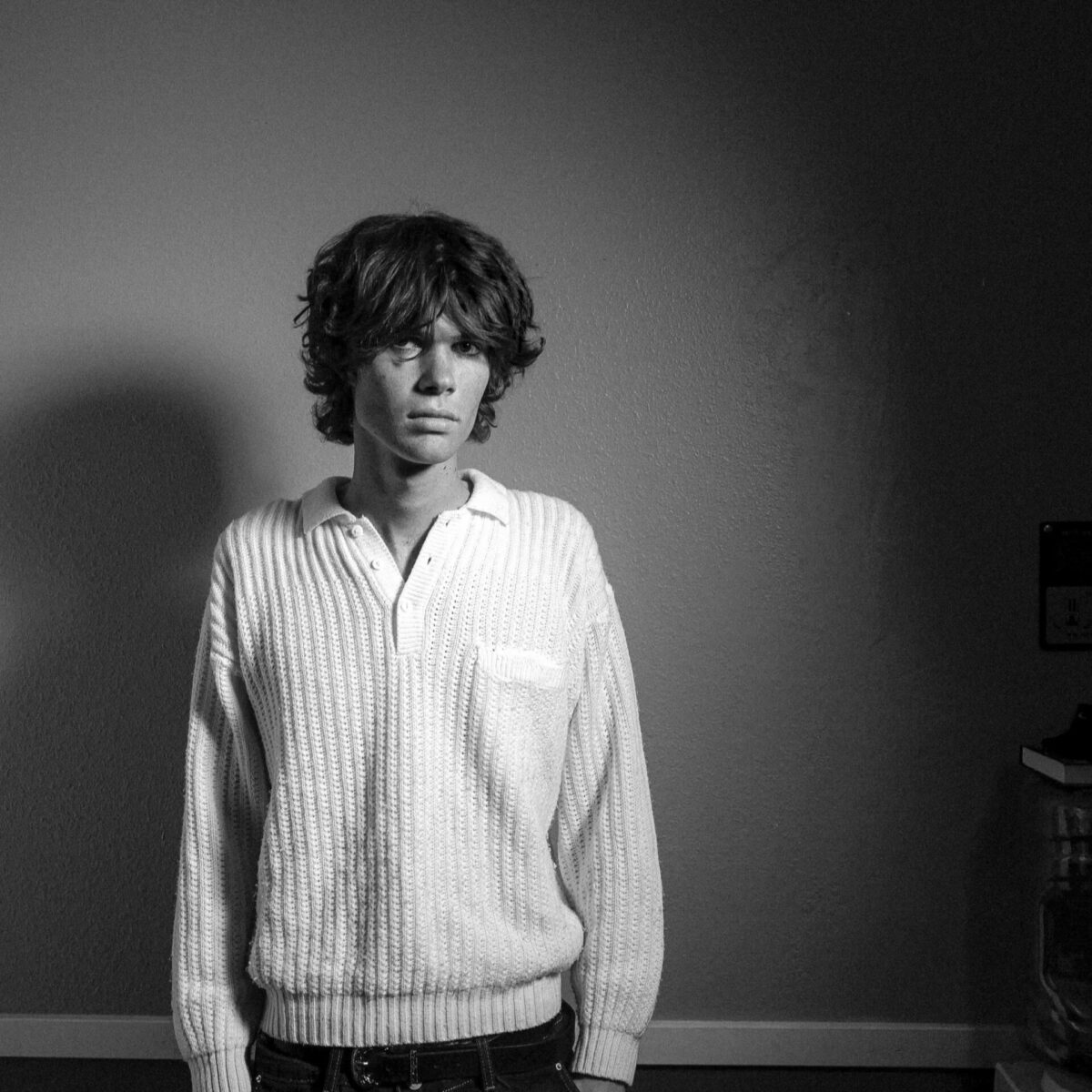
“For the longest time I’d get home from work and I would just make a song. I got into making beats and learning how production works, and I made it a goal to make a song every single day. I got addicted to it. I loved learning more about how to mix vocals and how to produce a song. They were all shit, but I was just so obsessed with it.”
The decision to move to LA and pursue a music career didn’t come until much later, and he was still making songs at home and sharing them with friends when a repost from a music blog set off a chain of events that led to his first visit to LA— for a meeting with his current manager, Ryan. It would take a few years for Will’s dream of living in LA to become fully realized, but once the decision was made, they were both all in. Swinton sold his car back home and quit his job at the trampoline park, keeping his schedule open so he could flip-flop back and forth across continents— “I didn’t have a visa at the time, so I could only stay for up to three months at a time”— sleeping on his manager’s couch and recording his debut EP, Better Days, in the living room of his tiny apartment.
Still, it was all a big risk: “It was just me and my manager, and we were still making all of these songs in his one-bedroom apartment. When I had to first convince my parents that I was going to LA, my dad was super against it. He’s like, no, you need to get a normal job, get a real job. It brought a bit of weird pressure. Like, shit, this needs to work out, because I had literally sold my car and quit my job. Within the first month of [staying] in LA, I had no money. Zero money left to my name. Luckily I found Ryan, who believed in me and basically fronted me, and went into credit card debt for me until we signed a record deal.”
The importance of community seemed a reoccurring theme. The same friends that were honest about his DJ career encouraged him at songwriting. “If I didn’t have my pals, my buddies from New Zealand, I don’t know what I would do,” he points out. They really liked my music and were supporting it before I had any [external] validation, which kept me thinking maybe this is good enough to do.”
Amongst his friends, Swinton began garnering an audience. After he scrapped DJing, his music grew more melodic; he was singing over YouTube instrumentals and making his own guitar riffs, and his friends were enjoying every second of it. “It felt good. It was validating. Like, okay, this is something I could really try and pursue properly. It kept me going.”
And it paid off. In the last three years alone, he’s been a mainstay on the NZ charts, opened for Myles Smith and Dermot Kennedy, garnered attention when Kelly Clarkson covered his song “Flames”, and grown his fanbase into a mainstream following that stretched far beyond New Zealand, quickly going from flopping DJ to a genuine star.
Take the video for Swinton’s “Flames,” a melancholy but rousing narrative on childhood, addiction, and parental neglect, told through the lens of a grieving son. In the visual, a young boy is hurled mournfully through the ups and downs of his father’s alcohol and pill addiction, forced to fend for himself emotionally as his father slips further away. It ends optimistically, though, as a deus-ex machina character, played by Will himself, appears towards the end.
Much like the song, the video is weighted with the type of creative metaphors that tug at the heartstrings. But the origins of the two are entirely different. “That song has a very obvious story to me, which I haven’t really [told publicly], but my video director, Brandon Chen, saw a completely different story in it and wanted to make a music video based on that. Even though that was not my story, I loved how he interpreted it. That music video has been nominated for so many music video awards.”
His lyrics do this well: they’re deep enough that it feels ardently personal, but vague enough to allow the lister to rationalize their own feelings in relation, like a plug-and-play. It’s comforting and familiar and somewhat enveloping, centering around the biggest feelings in the world with the quiet calm of a candle-lit, late-night conversation.
It’s for that reason, he says, that he’s especially hesitant to classify his work or describe any lyrical meanings, for fear of muddling the interpretations that come when the listener’s mind is left to wander. Had he insisted on running with the song’s original story, he and Brandon Chen might not have made the video they did. He never tells me what the original story is, but its power is in its ambiguity, in its giving the audience room to wrestle with the story themselves.. “There’s been so many songs that I’ve listened to where I kind of relate my own story to it, or take whatever story I get from it, and then I find out it’s about something else and I go, ‘Oh, that kind of spoiled it.’ I like it to just be up for interpretation. I know I’ve got my own story from it, but someone else might be able to interpret it a whole different way. So I’ve been a bit weird about spoiling it, almost.”
We don’t have much time to chat about his online presence, but I get glimpses of his close relationship with the internet from other questions, from growing up online to being quasi-TikTok famous now. After all, he is part of the generation for whom the presence of the internet has played some role in defining their lives, reared against a backdrop of niche internet communities and the cultural offerings that came with it.
“I was an internet kid. I loved being online,” he tells me when I ask about the local New Zealand music scene growing up. He wasn’t very much a part of it; while he hung out with friends and was active in the local skating community, he much preferred branching out and finding music from other places, seeking out sounds from places beyond his backyard. “There were a bunch of cool artists from New Zealand [at the time], but I wasn’t really listening to too much of that music. I was just listening to whatever I found from all around the world.”
It was the mix of very online-ness and his love for skating that led him down the Soundcloud-rap rabbit hole. “Around high school I had this period where I was only listening to the most underground-sounding trap music, [tracks] that sounded like they were made in a garage. I wanted the shit that no one else had ever heard of. There’s this guy popping into my head… GuapMizzle. He had this album called Phantom of the Gwapera. It’s lowkey hard. That shit was underrated. I liked having that stuff on while I was skating. Makes you skate harder.”
I wondered if he had taken inspiration from these rappers, in any capacity. Musically, it’s up for debate, but a Soundcloud rapper’s tenacity for releasing music time and time again, going long periods without any commercial success, seemed significant. GwapMizzle never quite stretched beyond the underground, yet when we look him up together, we find he has just released Phantom of the Gwapera (Deluxe). There’s a lesson in persistence to be learned there. “There was a long period of me making similar music where I didn’t have any sort of exterior validation. It was good to get that [when I did], but there was a long period where I was just kind of being a bit delusional and going without it, which I think is just as important. You’ve got to be able to believe in yourself.”
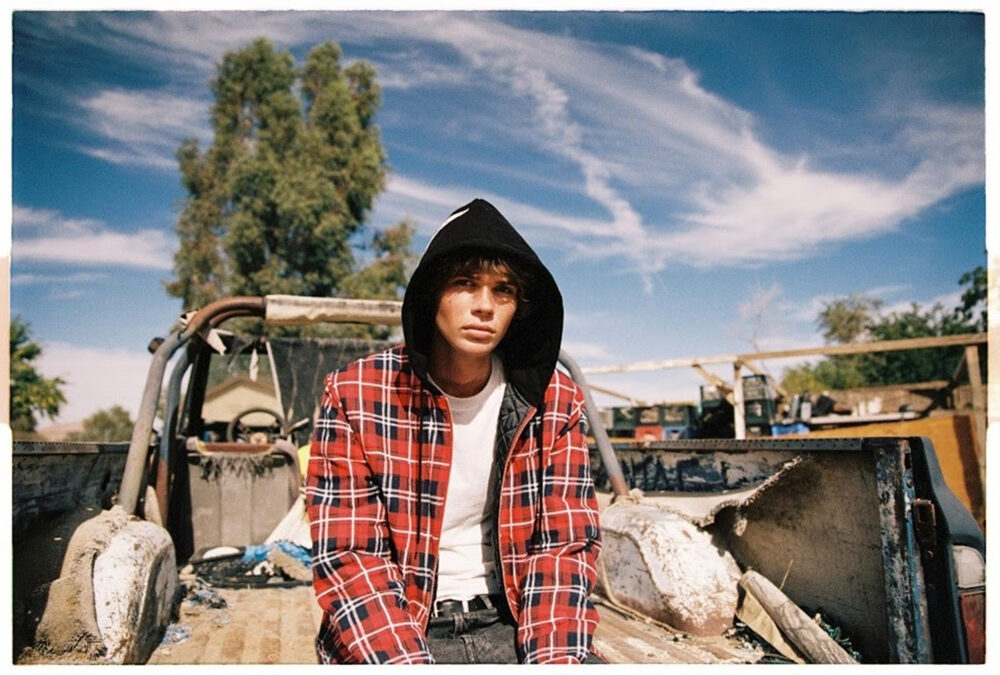
Commercial success, nonetheless, came pretty early for Swinton, but the self-assurance, and the trusting oneself to take to multiple sources of inspiration and meld it into something worth listening to are two skills that are hard won. Yet, he seems to have mastered both. You can hear a little of Kings of Leon in “Find a Way” and a little Madonna deep in the chorus of “Daydream.” It all arrives with the brooding intensity of a ‘90s ballad and the lightness of a GuapMizzle lyric. It’s a juxtaposition, much like his music taste.
“I cannot shuffle through my playlist in front of people because it’ll go from fucking GuapMizzle to Miranda Cosgrove, and they’d be like, what the hell is this? I listen to all different types of things, get inspiration from everywhere. There’s times where I’ll be watching a movie in the theater and a cool score will come on, and I’ll just voice memo that and go, this is a cool thing [to take inspiration from].”
“Enrique Iglesias,” he adds after a while. “You know who that is?”
I laugh. I do.
He doesn’t elaborate.
Early 2025, Will Swinton arrived at a turning point. After years of unabated music-making— at one point he was making a song a day—he started to exhibit signs of burnout. It took him a few months and a trip to Mexico with his producers to realize he was jaded. He found no joy in most music around him. When he looked back at his catalog, he found he was indifferent to it all.
“At the start of this year, I had this weird feeling where I was questioning my taste a little bit. I wasn’t in love with every song I had out, and I wasn’t in love with any song that I was listening to.” Most of 2025 passed with no releases. “I felt a little bit jaded, almost. I was trying to think, what is my taste? What do I really want to listen to, and what do I really want to make?” That self-questioning gave way to a dramatic self-reflection, and a months-long musical transformation followed. “My producers, Paul and Ethan, and I went to Mexico for a couple weeks and just locked in and just had no exterior inspiration. I just wanted to bring my taste into physical form via song. For the first time in his career, he spent time stepping back, slowing down to fine-tune his work, figuring out what he wants to put into the world. “We made a bunch of songs that are similar [to my latest], in the aspect that they are just a perfect representation of what my taste is.”
By October, Swinton had finally released a song, “Find a Way”, a propelling rock ballad built on soaring guitars and driving percussion, an entirely new style for him. It was the most significant one born out of the surprise trip to Mexico— a trailblazer for the rest— hinging itself firmly still on the sonic depth of his voice, but swapping wintry acoustics for arrangements you can drive down a summer highway with. “Find A Way definitely feels to me like my sound. That’s what I want my sound to be. When people find out that I make music and I have to show them one song, it would be “Find a Way.” I want that to be what represents me [as an artist].” He speaks with excitement about the future. “These next couple songs are songs I’m so obsessed with, because I made them to sound exactly like what I want to listen to. I absolutely love them. I just wanted to make something that I loved.”
I ask him if he would ever go back to drum and bass, now that he knows how to produce well. There’s power in revisiting something you were once bad at, nicking elements from them and seeing if you’re better now than before. But his drum-and-bass days are long over.
“No, I wouldn’t do drum and bass anymore. I still can do DJing, if I’m at a party, but nothing as part of a song. Drum and bass, no. That belongs back in New Zealand.”
Will Swinton’s latest single, “Find a Way” is out now on all platforms.