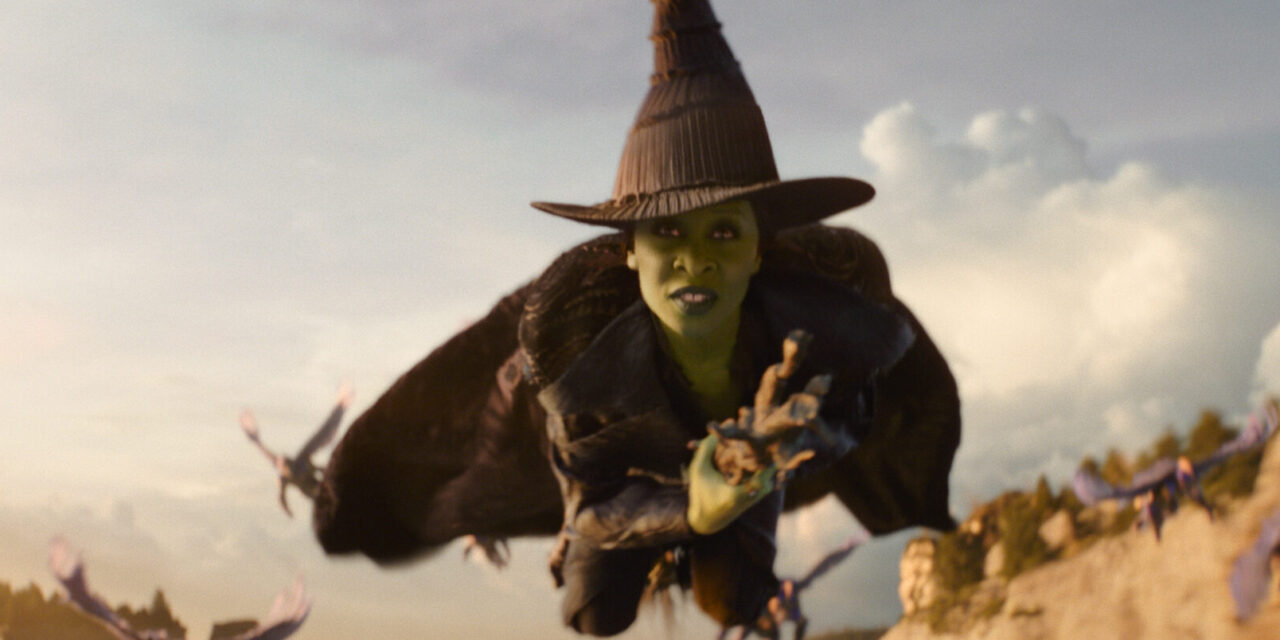
“Wicked: Part One” ended with a bold declaration of independence in the face of a vast conspiracy. Cynthia Erivo’s outstanding vocal performance singing the final words of “Defying Gravity” is undeniably emotional and defiant. (so much that the vocal run has entrenched itself within pop culture for the past year). A crescendo of a person who was once an outcast, discovered their own power, and has chosen to follow it – even if it means separating themselves from everything they love. The main challenge is sustaining those emotional stakes, not only in splitting the original play in half, but also in lengthening the run time considerably.
The first part of the theatrical part of “Wicked” works, where “Wicked: For Good” falls short. It becomes apparent that this experience would have worked better if it had been condensed into a single narrative. Ending on such a high note may have been an incentive to get the audience back into the theater, but it did no favors for the story’s stakes. Broadway show runs for 2 hours and 45 minutes (with an intermission). It’s able to gloss over the weaker points in the second act because it’s constantly moving. Whereas director Jon M. Chu’s “Wicked: For Good” not only has to fill in time, but the film also has to rely a little bit more on alluding to Victor Fleming’s 1939 “The Wizard of Oz.”
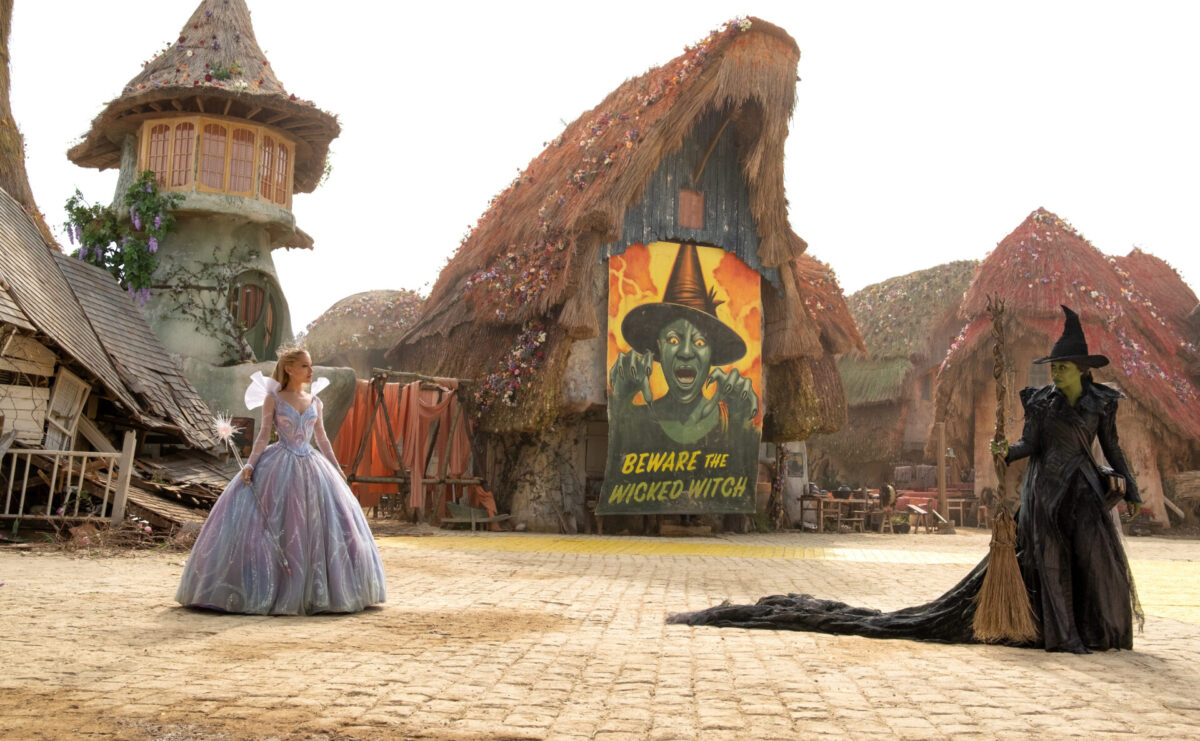
L to R: Ariana Grande is Glinda and Cynthia Erivo is Elphaba in WICKED FOR GOOD, directed by Jon M. Chu.
Parts of “Wicked: For Good” coincide with the famous girl-from-Kansas-and-adorable-dog story. That was going to happen. However, the film’s momentum pauses at points, as if it’s a tour guide showing you the landmarks of a classic story you’ve grown up with. If you look toward the left, here’s the Yellow Brick Road. That type of foreshadowing not only undermines the internal conflict of Glinda (Ariana Grande), missing her best friend while being a de facto feel-good figure of the state of Oz, but it also makes you wonder if they really wanted to make “The Wizard of Oz” at the same time.
Elphaba (Erivo) is in complete exile, resigned to living in the woods while dropping in to undermine projects of Oz that are using animals as slave labor. The lie of how dangerous she is, concocted by Madame Morrible (Michelle Yeoh) and the (not so wonderful) Wizard (Jeff Goldblum), is in full swing with the townspeople. But they need a figurehead, and that’s where Glinda the Good Witch (Grande) comes in. Although she doesn’t hold any magical powers, illusions are in place for her to keep the good times rolling. “Wicked: For Good” shifts the characterization towards Glinda, and Grande does a good job of showing a variety of emotions (when the film allows her). There’s a void within Glinda, given her lack of magical skills, that she fills with her likability. That’s her superpower. It’s cost her a lot.
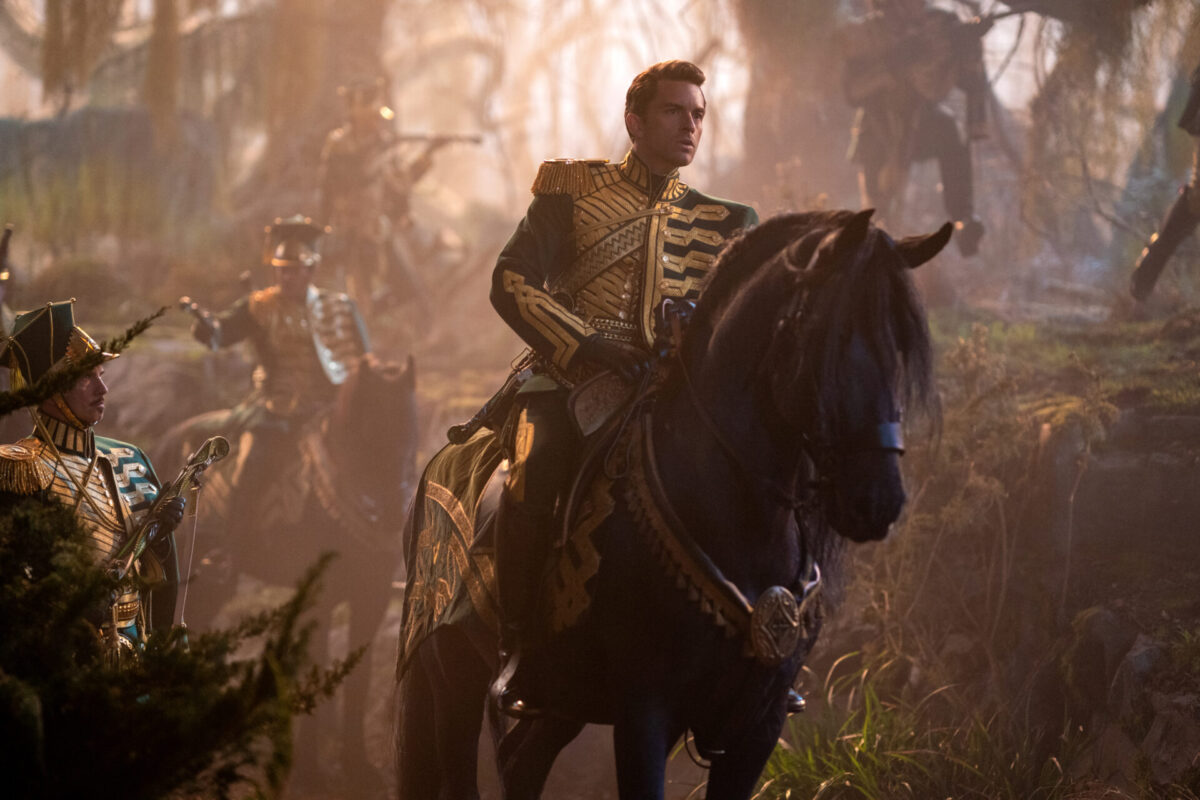
Jonathan Bailey is Fiyero in WICKED FOR GOOD, directed by Jon M. Chu.
As a semi-mirror, the story of Nessarose (Marissa Bode), now the governor of Munchkinland, and Boq (Ethan Slater), her reluctant lover and servant. His heart is with Glinda, although he’s never confessed that to her. Nessarose becomes a semi-tyrant, trying to keep him for herself against his will. In terms of Elphaba, it feels like “Wicked: For Good” tries to turn down Erivo’s performance as seen in the first film. For most of the run time, she’s muted and not as angry as she should be.
It’s only when one of “For Good’s” big musical numbers, “No Good Deed,” comes to play that we see the fiery side of Elphaba again. In fact, the film undercuts everyone’s emotional high point and doesn’t feel a need to balance them. Just when Glinda is feeling the weight of the world, “For Good” snaps her out of it. When Elphaba and Fiyero see each other again, there’s no underpinning of how much they love one another. It’s as if “For Good” is operating from the stage’s perspective, but forgetting it has more leeway to flesh out motivations.
“For Good” explores the corrupting nature of power, whether wielded or in its proximity, particularly in Glinda and Nessarose. It heightens and illuminates the desperation within you. On a bigger scale, there’s a fascist-like movement against “the wicked witch” complete with pamphlets, displays of power, and the obfuscation of the truth. Like the first film, there’s an exploration of the mechanisms put in place to turn citizens into tools of the state against what is perceived as a common enemy – all in the name of a charlatan like Oz. The sequel fails to capture what this means on a smaller scale; there’s a natural inclination to move on to the next thing. Something insidious occurs within Nessarose and Boq’s story that is dropped almost immediately, and a continuation of Boq’s arc that gets overassured in the service of something else.
Given that “Wicked” is set in a fantastical world, the color scheme remains extremely muted, with a strong brown saturation. Not only does it detract from the costumes, but it also keeps the audience from fully immersing in Oz itself. Movements from contentious sets to all CGI backgrounds remain pronounced and jarring. If the film had focused on showing the audience why we should care about these interconnecting stories, reunions, and alliances, it would have justified the existence of this other half. The song” For Good” is supposed to be the summation of Elphaba and Glinda’s sisterhood through the trials and tribulations of what they’ve been through. Given that their strife over loving the same person and being on opposite sides of what’s right and wrong is so glossed over, it’s merely just a beautiful vocal duet from Grande and Erivo.
It speaks to the overall disappointment bound within this year’s wait decision. The story of “Wicked” is beloved by many. They deserve that same love back. It’s an instance where fantasy can show the dangers of reality and how you ultimately combat that. But “For Good” makes the case that nobody wins with pasted-on adaptations, slightly elongated to capitalize on a devoted fandom.