We live in an era where privacy is a luxury and surveillance is accepted as a necessary evil to perceived safety. If you walk down a random street in a suburban neighborhood, there’s a very good chance that a Ring camera is recording you. Take a nice stroll into the city, and if it isn’t the massive amount of law enforcement tech that identifies you, a random stranger will gleefully take up that mantle.
Stephen King’s 1982 novel, “The Running Man,” written under his Richard Bachman pseudonym, captures the Orwellian spirit of “1984,” but also highlights the danger of a totalitarian government using society’s desperation in a crumbling world as a gamified method of class warfare. Paul Michael Glaser’s 1987 film adaptation, starring Arnold Schwarzenegger, opted for a more action-oriented, comedic style (remember Dynamo, the opera-singing assassin), rather than the darker tone of the book.
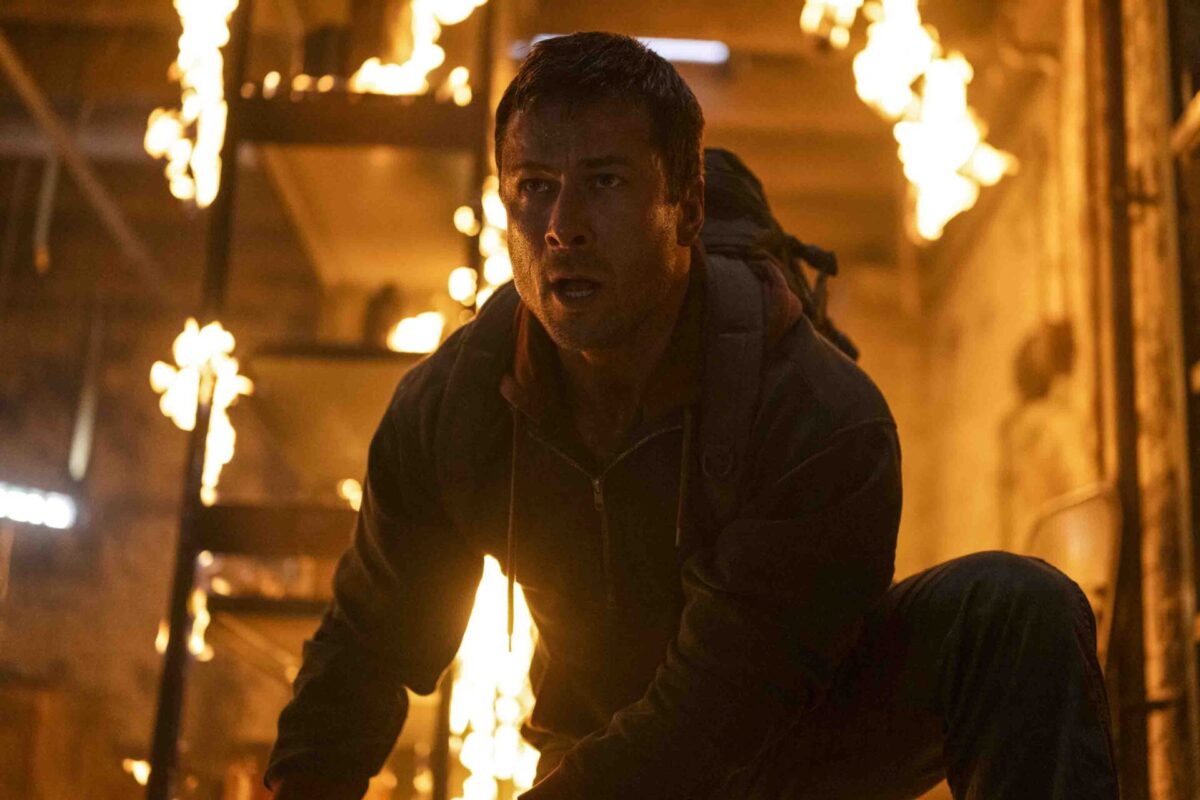
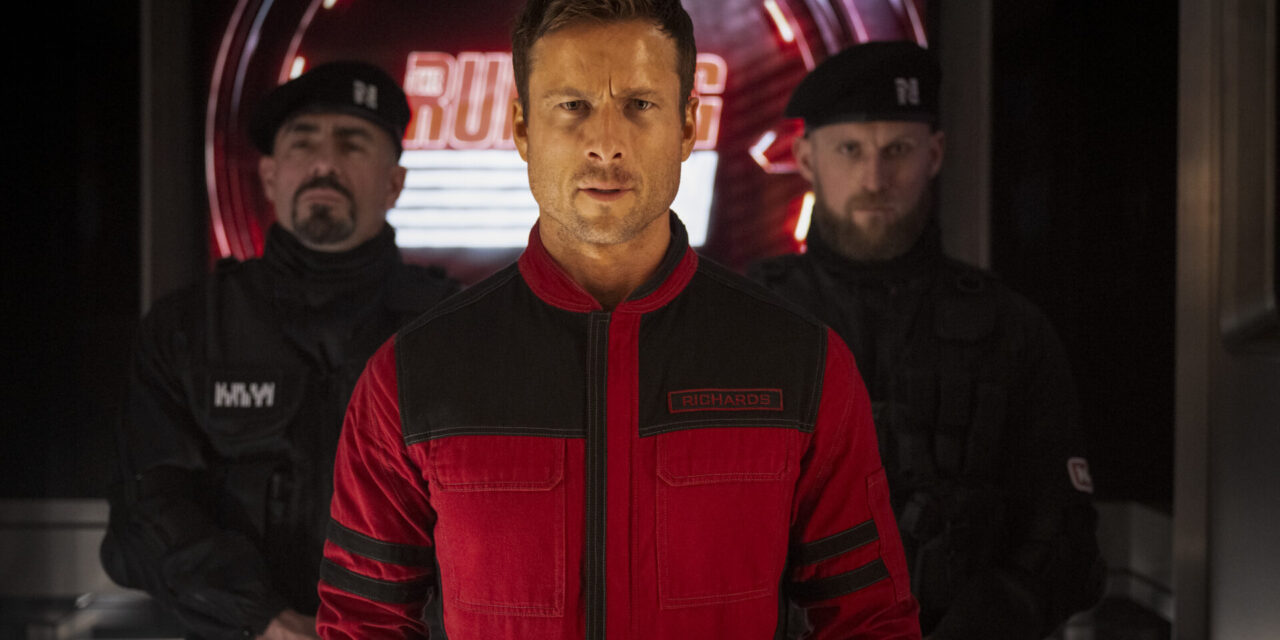
Glen Powell stars in Paramount Pictures’ “THE RUNNING MAN.”
But it’s not as though we are lacking an abundance of series inspired by King’s original novel. “The Hunger Games,” “Squid Game,” and even this year’s adaptation of another Bachman story, “The Long Walk,” have all captured what it’s like when authoritarian regimes strip rights from humanity and pit them in an updated version of Roman Colosseum barbarism for kicks. Edgar Wright’s 2025 version of “The Running Man” was flying into headwinds already, considering the target audience has seen multiple versions of this story, seen it be commoditized into their own reality show spinoffs, and, oh, living in their own pocketed versions of what science fiction and historians were trying to warn us about.
Wright’s theatrical take has more of a loyalty to King’s text, but also embodies the whimsicality of Glaser’s 1987 film. The result is an enjoyable first half with nowhere to go after. The problem with using a big tent to depict all the ways an oppressive government entity is hurting the people they’re supposed to serve, while trying to make a conventional, energetic action movie, is that the roads eventually have to converge. At some point, all of these ideas have to amount to a central thesis. This version of “The Running Man” suggests that things are bad for a variety of reasons, and perhaps one person can change it, without providing a full-circle reason as to why they become a template of hope.
Ben Richards (Glenn Powell) is a very angry man, with every reason to be. Because he just so happened to consult a union rep over the dangers of radiation poisoning, he is blacklisted from getting a regular job. His daughter Cathy (Alyssa and Sienna Benn) has been running a fever for a week, but conventional medicine is just too high a price for him and his overworked wife Sheila (Jayme Lawson) to buy. They live in the slums of Co-Op City, where the working class is confined to ideal living conditions. The government, run by a ruthless media corporation, gives FreeVee to pacify them. It’s just a continual broadcast of violent game shows where people either bet on or are contestants. Or you can choose to watch the overt Kardashian-satire, “The Americanos.” The prompts are damn near impossible and almost always result in a player’s death. But hey, that’s showbiz!
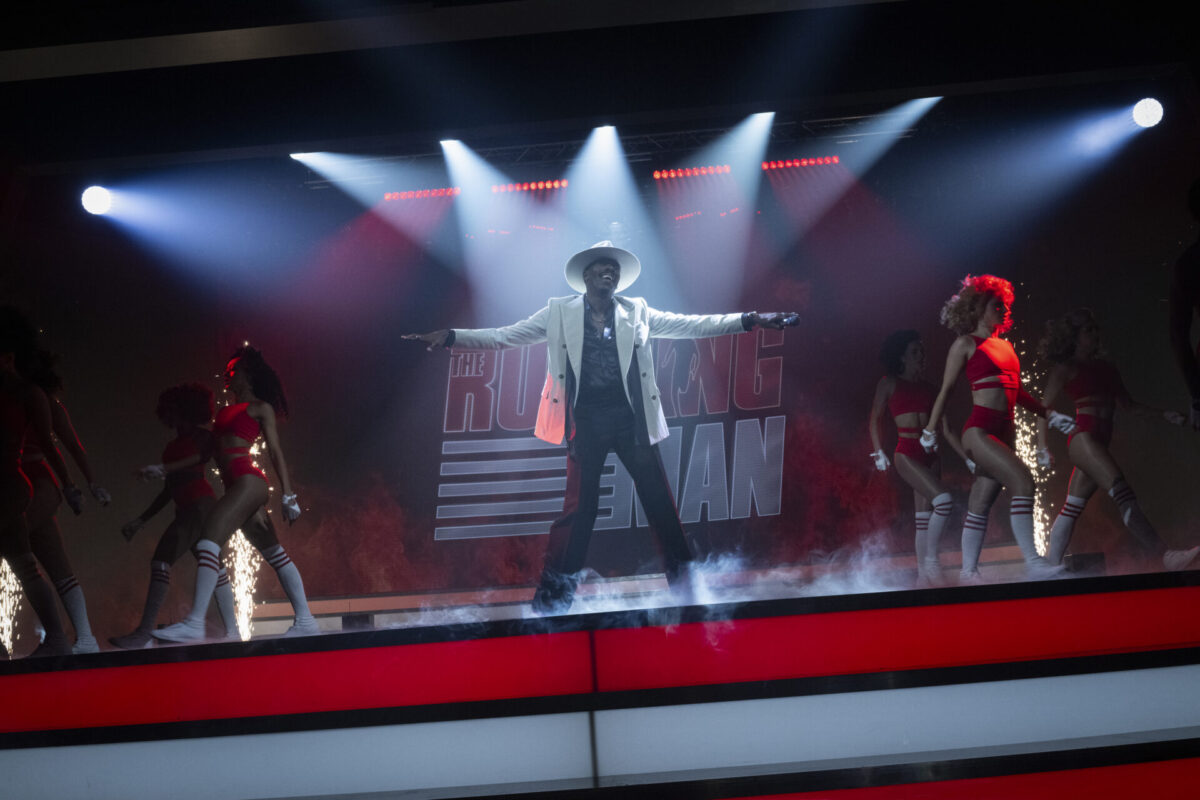
Colman Domingo stars in Paramount Pictures’ “The Running Man.”
The most prolific one of them all is “The Running Man.” All you have to do is survive for 30 days, and you will have one billion dollars. There are some caveats, though. For starters, you will be continually chased by “The Hunters” led by mask-wearing, catchphrase-saying Evan McCone (Lee Pace), complete with a full assortment of artillery and drones. Ordinary citizens are also encouraged to report their location when they see you, in exchange for a small fee. Ben is not on board with this at all, but at the behest of slimy, charismatic show producer Dan Killian (Josh Brolin), he reluctantly agrees. It’s off to the races with fellow players Jenni (Katy O’Brian) and Tim (Martin Herlihy), who we don’t get to see much of.
Wright and co-writer Michael Bacal do get the pomp and circumstance of the show aesthetic down. That resides in Colman Domingo’s enjoyable portrayal as The Running Man host, Bobby T. He really plays up the over-the-top pageantry of how this show is glossed up like it’s an NFL primetime game. Glen Powell possesses a natural charm that permeates the film itself. However, the film subjects Ben’s character to numerous tonal twists and turns, and doesn’t allow his motivation to be rooted in settling. Initially, he is a father trying to do everything in his power to provide for his family. In another instant, Ben is rightfully pissed at the work and the circumstances he’s subjected to for doing the right thing. There’s a way in which you can tie both of those things together to fully develop the “revolutionary figure trope ” that “The Running Man” is trying to mold him into.
This is even more evident with Michael Cera’s character, Elton (Michael Cera), a rebel wholly against the Network’s deeds, who lets Ben know he has become a resistance figure. Even as “The Running Man” informs the audience, Ben’s character is willing to sacrifice himself for a greater cause, but it never feels like he buys into it. A brief subplot where Ben hides out with a Black family of an anti-network counterpropagandist. Bradley Throckmorton (Daniel Ezra) frequently releases videos debunking the “free” nature of The Running Man. He has a sick sister who developed cancer from the radiation Ben fought against. Yet, the film quickly moves past this point.
To Wright’s credit, there are some impressive action sequences reminiscent of the bombastic practicality of the 1980s. Additionally, the Network’s use of deepfakes and AI technology to manipulate Ben’s daily transmissions is concerning, given the unchecked tech dominance we are experiencing. The note of regular citizens willingly allowing themselves to be a component of the surveillance state to feel as though they are not being oppressed by it is not only poignant, but a scary truth. However, it’s the method by which that happens that undermines a current issue. Critiques of reality television often seem dated. Where “The Running Man” could have narrowed its focus is on how the internet has become weaponized. Social media platforms have become ground zero for radicalization, piling on, and outright manipulations of facts with little checks or balances.
If the government were to choose to move people to a specific Zeitgeist, it wouldn’t be by the means of primetime network television. It will be through YouTube, TikTok, or Instagram. There won’t be a season finale; it’ll just be on a continuous loop because there’s no quenching the thirst of exploitation. We are currently treading the line of how far we’ll go concerning these reality competitions. We can be the means of our own salvation, but we may also be the source of the problem. Wright sees this point on the horizon, but shies away from it. The 2025 iteration puts the spotlight on all of it, but also takes on the spirit of spectacle it’s hoping to damn.