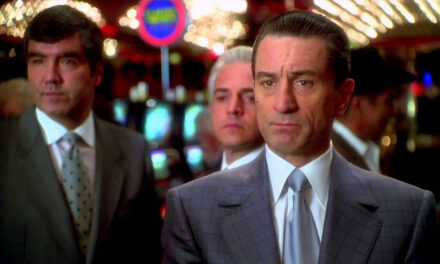
Few settings in film history capture the dual allure of danger and glamour as effectively as the casino. The spinning roulette wheel, the tense silence before a card turns, the glittering chandeliers above a sea of hopeful faces—these have become visual shorthand for both risk and reward, decadence and downfall. From the smoky casinos of Casablanca to the neon-lit excess of Casino and the slick heist fantasies of Ocean’s Eleven, Hollywood has long been fascinated by the world of gambling. The cinematic casino is not merely a backdrop; it’s a metaphor for life’s ultimate gamble—the pursuit of fortune in the face of uncertainty.
The Early Days: Glamour and Escapism
Hollywood’s love affair with casinos began in the Golden Age of cinema, when films like Casablanca (1942) introduced audiences to the romance of gambling. Rick’s Café Américain, though more nightclub than casino, encapsulated the mystique of chance. It was a place where love, politics, and luck intertwined, mirroring the unpredictable chaos of wartime. Early casino scenes were less about gambling itself and more about atmosphere—settings for intrigue, seduction, and moral ambiguity.
By the 1950s and 1960s, Las Vegas had become America’s new playground, and Hollywood followed suit. Films such as Viva Las Vegas (1964), starring Elvis Presley, painted the desert city as a neon dreamscape—an oasis of excitement and possibility. This was the era when the casino symbolized freedom, excess, and the American promise that anyone could strike it rich with a single roll of the dice.
The Antihero and the House: A Darker Turn
As cinema matured, so did its portrayal of gambling. The casino evolved from a site of aspiration into one of obsession and downfall. In the 1970s and 1980s, films began exploring the darker underbelly of the gaming world. Martin Scorsese’s Casino (1995) stands as perhaps the definitive statement of this shift. Based on true events, the film exposes the brutal mechanics beneath Las Vegas’s glitzy façade—the corruption, greed, and violence that power the illusion of luck.
Here, the casino becomes a character in itself: seductive but merciless, offering the illusion of control while ensuring the house always wins. Robert De Niro’s meticulous casino manager and Joe Pesci’s volatile enforcer embody the tension between order and chaos, mirroring the unpredictable forces that govern both gambling and life. This theme—man versus fate—runs through many of Hollywood’s most enduring gambling films, from The Cincinnati Kid (1965) to Rounders (1998).
The Heist Fantasy: Outsmarting the System
In the 2000s, the genre evolved once more with the resurgence of the casino heist film. Steven Soderbergh’s Ocean’s Eleven (2001) and its sequels transformed gambling into a game of intellect and strategy. These films celebrated charisma, teamwork, and ingenuity—the fantasy of beating the system rather than being crushed by it. The casino, once a site of personal ruin, became a playground for cool-headed masterminds.
Unlike Scorsese’s gritty realism, Soderbergh’s Las Vegas was polished and stylized, embodying postmodern irony. Audiences no longer feared the casino; they wanted to conquer it. The allure lay not in chance but in control—an appealing fantasy in an age increasingly defined by systems and surveillance.
Beyond Vegas: The Global Casino Myth
Today, casinos are cinematic shorthand for any environment where stakes are high and outcomes uncertain. Whether in the Monte Carlo sequences of James Bond films or the cyber-gambling dens of futuristic thrillers, the casino continues to symbolize humanity’s relationship with risk. It’s not confined to Las Vegas anymore; it’s an idea—of temptation, hope, and the thin line between triumph and disaster.
In a broader sense, Hollywood’s enduring fascination with casinos reflects a cultural truth: we are all gamblers, wagering time, love, and ambition against the odds. The casino remains a perfect metaphor for that universal tension between control and chaos, destiny and desire.
The Digital Spin: Casinos in the Online Era
Just as Hollywood embraced casinos on screen, real casinos have migrated online, bringing the same themes of chance and excess to the digital realm. Many platforms now offer free spins with no deposit to entice players to try their luck without initial investment—a modern echo of the old Vegas welcome bonus. (See, for example, “free spins no deposit for existing players” offers at sites like https://casinosanalyzer.com/free-spins-no-deposit/for-existing-players.)
The cinematic casino continues to intersect with real gambling culture: players increasingly expect theatrical experiences, dramatic design, and immersive storytelling even when playing from their smartphones.
The Final Bet
From Vegas to Hollywood and onward into the digital age, casinos have evolved from glamorous playgrounds to psychological battlegrounds to virtual stages. They mirror our shifting values—our yearning for success, our fear of failure, our eternal hope that luck might just turn in our favor. In cinema, as in life, the dice keep rolling, and the game never really ends. The casino’s enduring power lies in that promise: that risk itself is the reward.