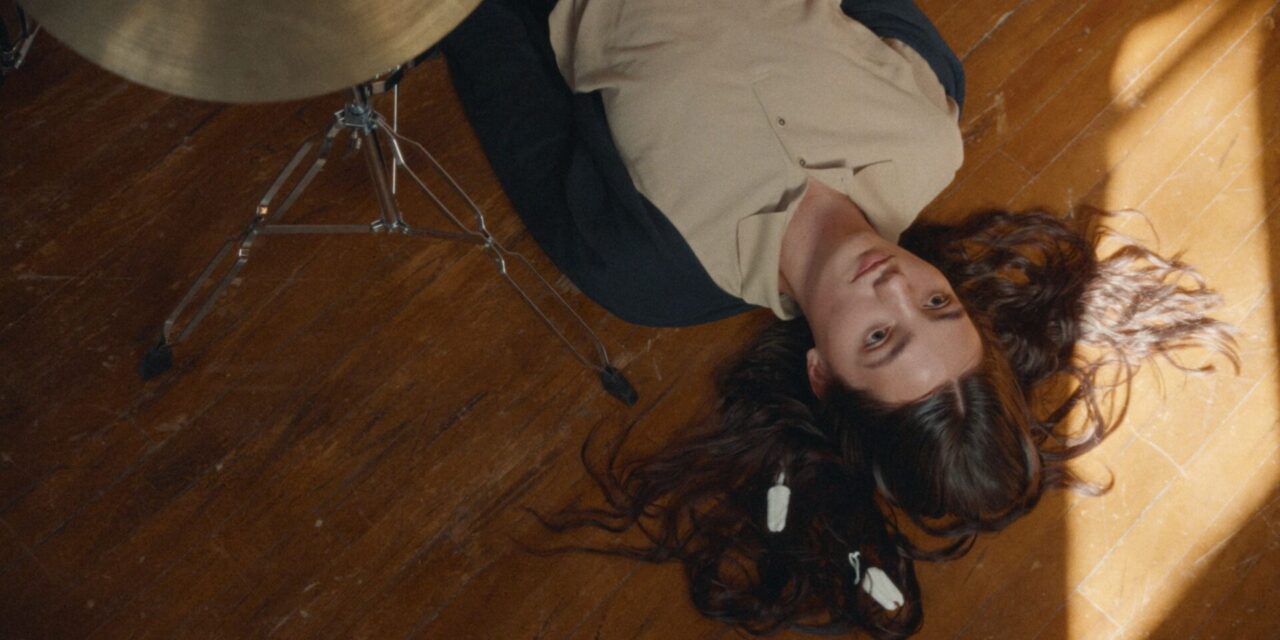
What are the key ingredients to a good coming-of-age comedy? Well, you have to have laughs, relatable characters, growing pains, and a few epiphanies to bring it home. Maybe you weren’t as uncool as you thought you were. Perhaps, amid all the extensive pressures of being a teenager, you were more of a trendsetter than you thought.
“Edie Arnold Is A Loser” is born out of an eccentric love for films with the style of 2010’s “Scott Pilgrim Vs. The World” and the buddy hijinks of 2007’s “Superbad,” with its own unique flavor. Edie Arnold (Adi Madden Cabrera) is an all-girls catholic school student who’s trying to figure some things out. When she’s not goofing around with her energetic best friend Frances (McKenna Tuckett), much to the chagrin of the strict nun facility, she’s battling with the resident, catty, popular girl Kati Vidal (Alana Mei Kern), and not trying to worry her social appearance-focused mother (Cherish Rodriguez). Not to mention, Edie has a crush on not-so-innocent altar boy Walter (Lucas Van Orden), but he doesn’t know she exists.
One night, Frances convinces Edie to go to a local punk show. Out of that infusion of excitement and spontaneous rebellion, they decide to start their own band called the Nundead. Are they the best band? No. Is it cool that they started it anyway? Very much yes.
What Edie represents is born out of a story from writer/co-director Megan Rico’s own teenage life, first written ten years ago. As a feature film developed with co-director Kade Atwood, which premiered at the 2026 iteration of SXSW, the themes are universal, no matter the timeline of creation. In the craziness of life, you need good friends to be there for you and bring out new sides of you that you never would have thought of. Life will get weird and hectic, but sometimes, you have to jump into the deep side of the pool and hope for the best.
Substream spoke with Megan, Kade, Adi, and McKenna about their experiences working together on this first-time experience for all parties and why they want it to inspire you to go “do the thing.”
The following interview has been edited and condensed for clarity and length.
Substream: The initial origins of “Edie Arnold Was A Loser” began ten years ago, while you were attending an all-girls Catholic school. It’s common for first features to take a while to come into fruition. I wonder how you feel about this story now, seeing it a decade later and turned into a full-length feature film.
Megan Rico: “I think the assumption that has come up is that people think I wrote the film 10 years ago and have been trying to make it ever since. The reality is, I wrote it, thought, “That was my first movie, I bet it’s trash,” put it in a drawer, and moved on to the next thing.
When Cade and I were looking for a script that we thought would be affordable and something we could direct ourselves, I dug it out and sent it to him. I asked Gabe to give it a read, and thought, “This is probably not good.” Gabe was the one who convinced me and said, “No, you need to re-read this. It’s a lot better than you think.”I found myself feeling proud of my 22-year-old creative self. I said, “Wow, she’s pretty funny.” On an emotional level, I said, “Oh, she’s really working through some stuff that I don’t think she knew she was working through when she wrote this.”
Kade Atwood: “The script was amazing. I read it in one sitting. The story really resonated with me in a way that I wasn’t expecting. We hopped on a call, and I said, “Hey, what if we make this in three months?” Megan said, “That’s insane. I don’t know. Sure?” Then, we made it like four months later. It’s crazy.”
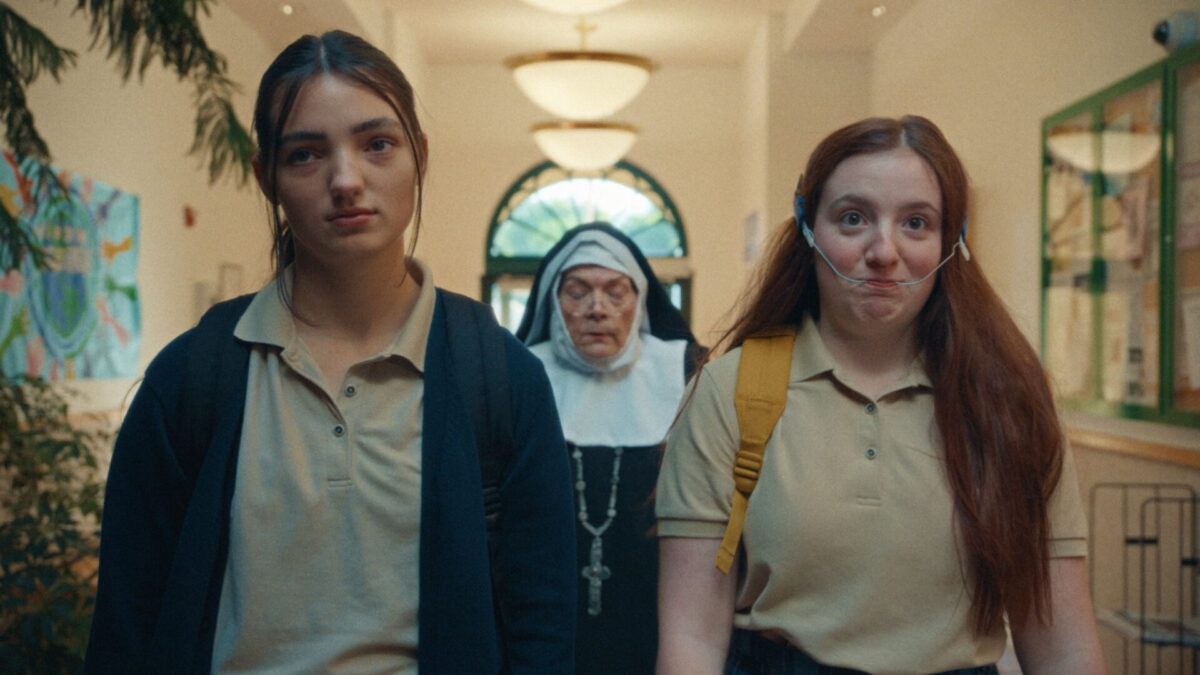
“Edie Arnold Is A Loser”: Credit: Courtesy of Infigo Films
Edie and Frances’s friendship has a fun dynamic in how they balance one another’s personalities. Where Edie needs to be braver, Frances is there to push her. When Frances needs to be grounded, Edie is the anchor. With being first time actors, how was it like coming together and developing that chemistry?
McKenna Tuckett: “We had an initial callback where everyone worked together and did chemistry reads. Everyone knew one another from the Utah film scene. When I came in, I remember seeing Adi sitting in the corner. When I walked up, she was very friendly and smiley. I felt a cliquey, high-school-y vibe, but I thought Adi was a delight. Throughout the day, she was always in the room. And I was like, “Hmm, I think they found their Edie.”
When we finally got a chance to work together, we were doing the scene where Edie and Frances were improvising a song. The character Iggy yells, “Boner.” We instinctively looked at each other like, “What just happened?” From there, it was a little buzz of magic. After our first rehearsal, we talked outside for two hours, and it just felt like we had always been friends.”
Adi Madden Cabrera: Exactly! Those were the things I was going to say as well.
Much of Edie and Frances’s dialogue with each other comes off so natural that it feels like Adi and McKenna had been friends long before working together. Was there room for a lot of improvisation in the script?
Rico: “Because the shoot was so fast and we had so little time to shoot each scene, we didn’t have much time for improvisation. I don’t leave a lot of space for it because I feel like Kade and I like jokes that are very tight with a certain rhythm – set up, punch, set up, punch. At one point, Kade pulled out a metronome, and we had everybody rehearse on beat. The fact that the actors were able to take that and perform it in a way that felt so off-the-cuff and so natural is just a testament to their comedic instincts.”
The story and some of the comedic timing draw from buddy-comedy films like “Superbad” and “Booksmart.” Yet “Edie” has something unique to say about the power of friendship and how it can alter how we see ourselves for the better. Did any of you draw from personal relationships in the making of this film?
Cabrera: “I have a best friend whom I also met in high school, and our friendship has felt like the easiest friendship in my life. There’s an element where we genuinely celebrate each other’s successes, grieve together, and support each other in every way, regardless of how we’re feeling. For me, that was where I drew the most inspiration for Edie – especially with her dynamic with Frances. It made me feel lucky that I have the same friendship in real life to draw from.”
Atwood: “I was a theater kid growing up, and I felt like there was a lot of media that I resonated with when I was a kid. But I felt like there was teen media that didn’t accurately represent them. They didn’t necessarily accurately represent teenagers. I had so many friends who were like this, and I had never seen that kind of representation on the screen before. I was excited to put these characters out into the world because they’re a little weird, kooky, and a little horny, and that’s okay. That’s totally fine. It’s part of being a teenager.”
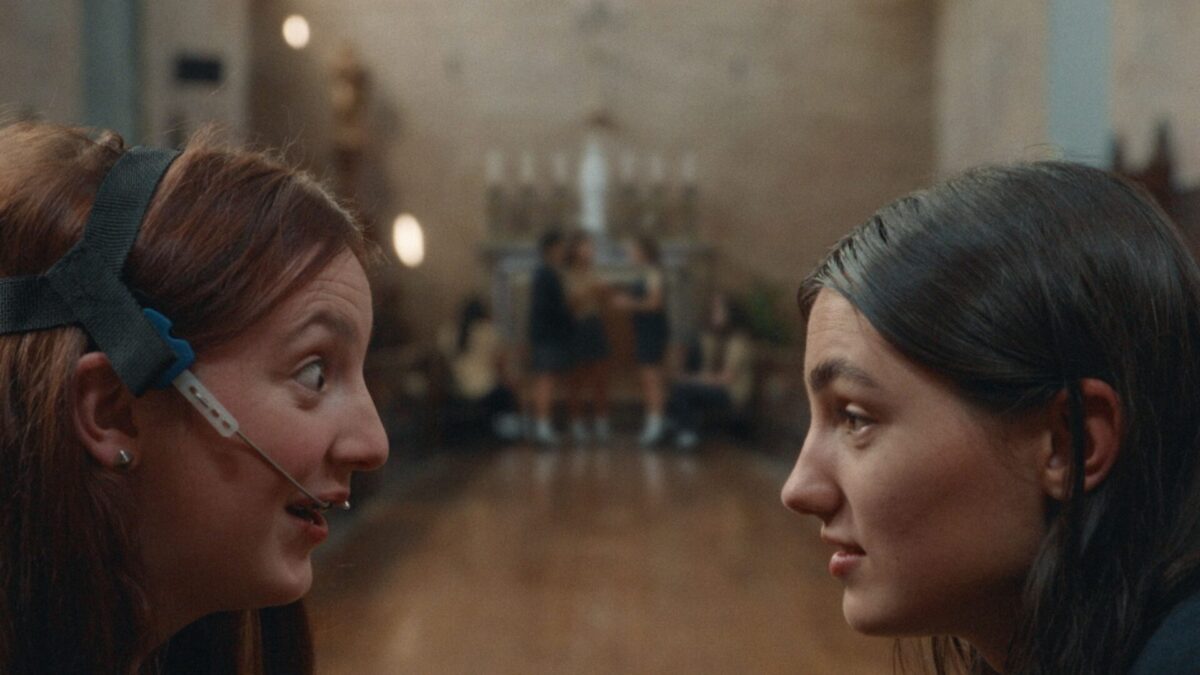
“Edie Arnold Is A Loser”: Credit: Courtesy of Infigo Films
When I watched this film, I couldn’t help but think that the anxieties about appearance, social media, and perception have made us more cautious about looking silly and having fun in the open. There’s a spirit you feel inside the film where it seems like all caution was thrown to the wind with a “why not?” attitude. You have to start that punk band or ask that person out.
Rico: “There’s a line when the group sings an improvised song at the pizza place. Frances sings these crappy lyrics or whatever, and then Iggy says, “Whoa, that sucked.” Frances then says, “Yeah, but it exists.” I feel like that’s the ethos of this film and what we hope people take away from it in the future. You have to do stuff. You have to just like do things out loud in like a messy way and not be afraid to fail, visibly, because that’s like how you grow. That’s how you make art and connections; it’s the point of life.”
Tuckett: “There are a lot of firsts in this movie. For Addie and me, this is our first film credit, and for Megan and Kade, this is their first feature film. There’s a level of “Oh, I’m not good enough yet, or I don’t have the credentials yet.” You find there are a thousand reasons to say no, not try, or give up. This movie is a testament to how just trying and giving it a go can actually work out in your favor. You’re never gonna get experience until you start making things.”
Cabrera: “I remember my perspective shifting in a way. I told Megan, “I’m so proud of this film.” If this is the only thing I ever do, I can live with that because I feel so fulfilled working on this project. But also, I did the thing, I did something that I was afraid of. Anytime someone tells me, “I want to write a movie,” I say, “Write it.” If nothing comes of it, at least you wrote it, and that will help you feel fulfilled. Do the thing because it will heal something in you, even if it doesn’t become anything else.
Atwood: “We kind of semi-joked going into this, saying to ourselves, ‘we’re going to get into film festivals, and this is gonna be a huge success.” In reality, like, we never expected anything. We didn’t expect anyone to see this movie. We just thought this would be something we would make with our friends, and then that would be it. Had we not set out to make it and accept one of those thousands of reasons not to make the movie, none of this would have happened. It’s incredible what happens when you go out and make the thing.”