
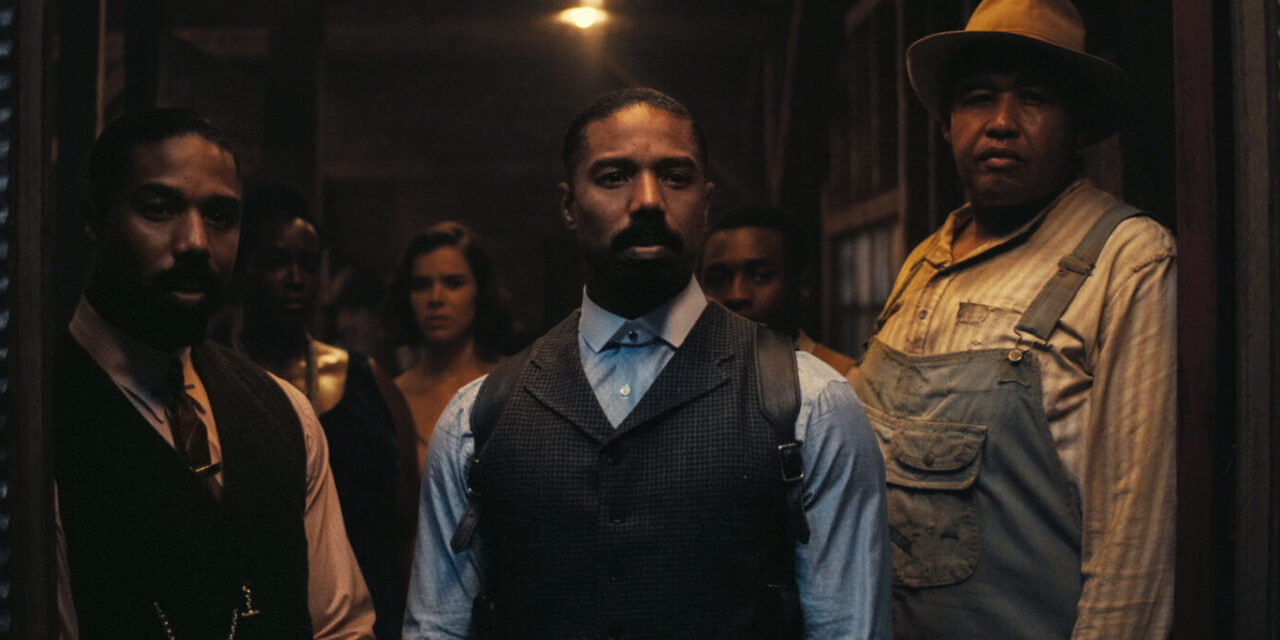
When Michael B. Jordan walked onto the stage at the Academy Awards to accept the Best Actor Oscar, the moment felt larger than a typical awards-show victory.
Jordan’s electrifying performance in the film Sinners earned him his first Academy Award, placing him among a small but influential group of Black actors who have won Hollywood’s most prestigious acting prize. For decades, the Best Actor category reflected an industry where opportunities for Black performers were limited. Each breakthrough win changed the narrative.
Jordan’s victory not only celebrated his career-defining role—it also honored the legacy of the pioneers who came before him and opened doors for the next generation of actors.
The night ultimately became one of the most memorable in recent Oscar history, with Sinners emerging as one of the ceremony’s most decorated films.
The Performance That Defined a Career
In Sinners, Jordan delivered what many critics have called the most ambitious performance of his career. The film required him to portray twin brothers navigating a violent and morally complex world in the American South.
Pulling off dual roles in a single film is a technical and emotional challenge that only a handful of actors have mastered successfully. Jordan managed to make each character feel fully realized, with distinct personalities, motivations, and emotional arcs.
The result was a performance that captivated audiences and awards voters alike.
Longtime collaborators also helped elevate the film. Jordan reunited with director Ryan Coogler, whose creative partnership with the actor has produced some of the most culturally influential films of the past decade.
Their collaboration dates back to Fruitvale Station, continued with the blockbuster success of Creed, and reached global prominence with the Marvel phenomenon Black Panther.
With Sinners, the duo once again proved that their creative chemistry can produce powerful storytelling that resonates with both critics and mainstream audiences.
The Long Road to Oscar Gold
Before winning the Academy Award, Jordan had already built one of the most impressive filmographies of his generation.
He first gained national attention through television roles in series like The Wire and Friday Night Lights, where his charisma and emotional depth quickly stood out.
Jordan’s breakout film performance came in the 2013 drama Fruitvale Station, where he portrayed Oscar Grant, a young man whose tragic death at the hands of police sparked national outrage.
The film earned widespread critical acclaim and launched Jordan into the upper tier of Hollywood actors.
Over the next decade, he continued to build his reputation through major roles in films like:
-
Creed
-
Creed II
-
Creed III
-
Black Panther
By the time Sinners arrived, Jordan had already proven himself as both a blockbuster star and a serious dramatic actor.
The Oscar win solidified that legacy.
The History of Black Best Actor Winners
Jordan’s victory places him in an exclusive group of Black performers whose Oscar wins helped reshape Hollywood’s perception of leading men.
Sidney Poitier – A Groundbreaking First
In 1964, Poitier became the first Black man to win the Best Actor Oscar for his performance in Lilies of the Field.
At a time when segregation still existed across much of the United States, Poitier’s victory represented a seismic cultural moment.
Hollywood had rarely cast Black actors as leading men in major films, but Poitier’s dignified performances challenged those limitations.
His success proved that audiences were ready to embrace diverse stories.
Denzel Washington – Redefining the Antihero
Nearly four decades later, Washington won Best Actor for his intense performance in Training Day.
Washington’s portrayal of corrupt detective Alonzo Harris was bold, unpredictable, and unforgettable.
The role shattered expectations of how Black characters were traditionally portrayed on screen.
It also reinforced Washington’s reputation as one of the greatest actors of his generation.
Jamie Foxx – A Transformational Performance
Foxx won the Best Actor Oscar for his stunning portrayal of music legend Ray Charles in the biographical drama Ray.
The performance required Foxx to embody Charles both physically and musically, delivering a portrayal that critics widely praised as one of the most authentic musician biopics ever made.
Foxx’s victory further proved that Black actors could dominate the awards circuit with transformative performances.
Forest Whitaker – A Chilling Historical Role
Whitaker won the Oscar for his haunting portrayal of Ugandan dictator Idi Amin in The Last King of Scotland.
His performance was widely recognized for its emotional intensity and psychological depth.
Whitaker’s win demonstrated that Black actors could excel in complex historical roles that required both nuance and commanding screen presence.
Will Smith – A Cultural Moment
Smith earned the Best Actor Oscar for portraying Richard Williams in King Richard, the father of tennis icons Serena Williams and Venus Williams.
The role celebrated perseverance, family, and determination—qualities that resonated with audiences worldwide.
Smith’s victory became one of the most talked-about moments in recent Oscar history.
Michael B. Jordan – Carrying the Torch Forward
Jordan now joins this lineage of trailblazing actors.
Each of these winners represents a different era of Hollywood, and each helped expand the possibilities for Black performers in leading roles.
Jordan’s win continues that legacy.
The Cultural Impact of Jordan’s Oscar Victory
Representation matters in entertainment, especially when it comes to awards that shape industry recognition.
Jordan’s Oscar win carries several powerful implications for Hollywood.
Expanding Leading Roles
Black actors today are increasingly cast in diverse roles across genres, from superhero epics to psychological thrillers.
Jordan’s performance in Sinners reinforces the idea that compelling stories featuring Black leads can thrive both critically and commercially.
Inspiring the Next Generation
Young actors watching the ceremony witnessed a modern Hollywood superstar reach the industry’s highest honor.
Moments like this inspire emerging performers to pursue careers in film, theater, and television.
Changing Industry Perceptions
For decades, Black actors were often confined to supporting roles.
Wins like Jordan’s demonstrate that audiences and awards voters alike are embracing more diverse storytelling.
The Winning Streak of Sinners at the Oscars
While Jordan’s Best Actor victory became the emotional centerpiece of the night, Sinners enjoyed a strong showing across several categories.
The film entered the ceremony with one of the highest nomination totals of the year, signaling widespread support from the Academy.
By the end of the evening, the film walked away with multiple awards.
Oscar Wins for Sinners
• Best Actor – Michael B. Jordan
• Best Original Screenplay – Ryan Coogler
• Best Original Score – Ludwig Göransson
• Best Cinematography – Autumn Durald Arkapaw
Each win highlighted a different aspect of the film’s artistic achievements, from storytelling to music to visual style.
Although the film did not win Best Picture, it still emerged as one of the night’s most celebrated productions.
Why Sinners Became One of the Year’s Most Important Films
Beyond awards recognition, Sinners resonated with audiences for its bold storytelling and powerful performances.
The film blended elements of drama, suspense, and supernatural storytelling, creating a cinematic experience that stood apart from many traditional awards contenders.
Jordan’s dual performance became the emotional core of the story, while Coogler’s direction delivered a visually striking and thematically rich film.
Together, they created a project that will likely be remembered as one of the defining films of the decade.
A Historic Night That Will Inspire the Future
Oscar wins are often remembered for the speeches, the glamour, and the trophies. But sometimes they represent something bigger.
Michael B. Jordan’s victory represents the continued evolution of Hollywood.
From the groundbreaking achievement of Sidney Poitier in the 1960s to the modern success of actors like Denzel Washington, Jamie Foxx, Forest Whitaker, and Will Smith, each milestone has helped push the industry toward greater inclusion.
Jordan’s win is the latest chapter in that story.
For aspiring actors watching around the world, the message is powerful:
The path to the Oscars is no longer defined by limitations—it’s defined by possibility.
And with Sinners now firmly etched into Academy Awards history, Michael B. Jordan has secured his place among the legends who helped change Hollywood forever.