There’s a particular frequency to a casino floor. It’s not just the ringing of slots or the clatter of chips. It’s an engineered atmosphere. Over the years, the music that flows through those spaces has been as carefully measured as the odds on the roulette table. The only thing they were trying to do was keep the players playing.
But the music of the casino didn’t stay on the floor. It seeped out. It evolved into something of a cultural landmark. From simple background noise, it has evolved into a genre of its own, representing the glitz, the grime, and the risks of the casino lifestyle. Now, you hear it everywhere not only in Vegas, but in the earbuds of a person who is playing an app on a Tuesday morning commute.
The Chairman of the Board and the Birth of “Cool”
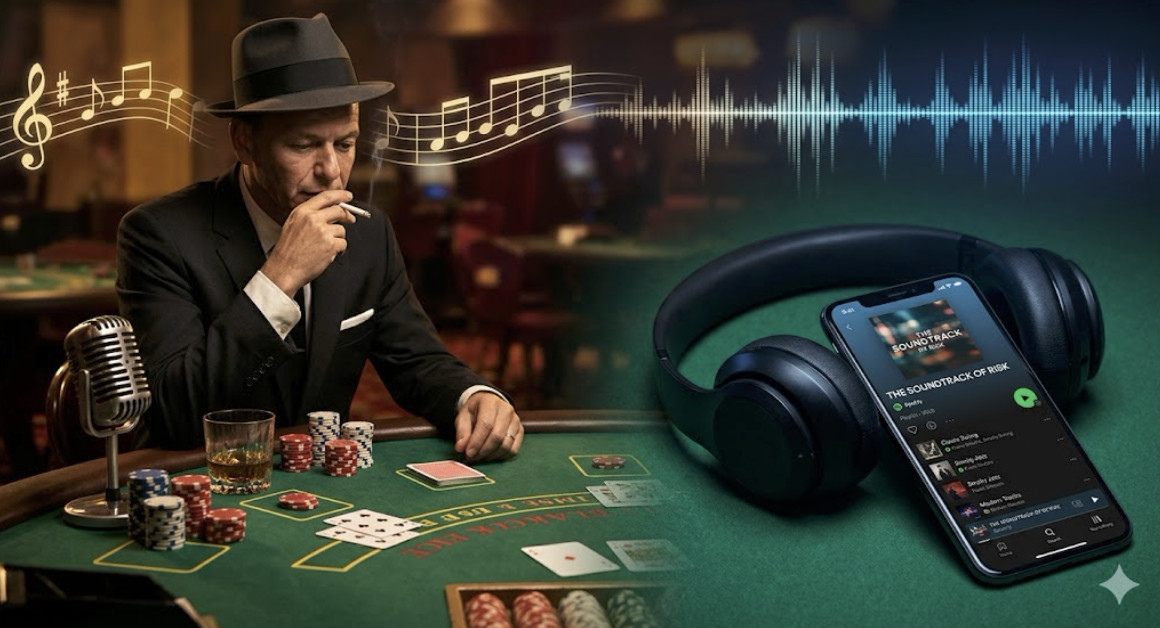
Imagine vintage Vegas. The image is immediate. Suits, smoke, martinis, and the Rat Pack. Frank Sinatra wasn’t just performing at casinos; he embodied the casino. His music was swinging, confident, cool as a breeze, and was the unofficial soundtrack for high-stakes living.
Aside from being catchy, songs such as “Luck Be a Lady” were not just catchy. The song that they had written was an anthem of risk. They mythologized the gambler. There was something about the big band arrangements, the swelling brass, the way Sinatra phrased it, that was a kind of aspiration all around. It said to the listener that it wasn’t all about money. It was about style. It was a matter of smashing the house down with a smile on your face.
This period of time established an important connection. Casino music wasn’t simply the music that played while you were playing. You were feeling like a gambler, even if you were hundreds of miles from a felt table; it was the music that made you feel that way. It projected an aura. You weren’t a degenerate; you were a player.
The Shift: From Glamour to the Grind
The “Rat Pack” days passed, and casinos adapted. Vegas got a new energy with corporatization. Music needed to evolve. The widespread orchestras were replaced by something synthesized, relentless, and pulsating.
The strategy changed in the real casinos. The music had to be lively enough to keep the action going, upbeat, and not so loud as to interfere with the games. It’s aural wallpaper, set to hide the passage of time. Casinos don’t have any clocks, and the music is created to help you forget that you ever wanted one.
Meanwhile, the general public’s genre of music began to portray a different aspect of the gambling story. The romance was taken out of their stories. Consider Kenny Rogers’ “The Gambler. It isn’t champagne, it’s survival. It is a gritty, narrative song with a focus on the realities of life and the wisdom gained through struggle. It recognized the grind.
For a long time, this duality has been the essence of casino-themed music. The dreamy “Vegas cool” and the cold, hard reality of the odds existed on both sides. Artists delved into the agony, the exultation of the victory, and the burden of the defeat. The casino was a powerful symbol of life’s perils.
The Digital Deal: Soundtracking the Virtual Casino
Then it all went online. This is where evolution gets interesting. Music doesn’t have to fill a cavernous space when the casino is in your pocket. It just needs to be in your headphones.
The online platform had a special challenge. They had to bring the same energy and excitement of a real casino to the virtual setting, minus the physical cues. The need to think about sound design arose. Those pleasant digital chip sounds, the rising volume before a major success – these were all carefully designed sounds.
But the music too had changed, only not physically; the music itself. Today’s player is not listening to Sinatra as they search for casino bonus offers on the web. It’s a different atmosphere. It’s more personalized.
Developers started composing bespoke tracks for different games. The sound of an ancient Egypt-themed slot is vastly different from that of a futuristic-themed heist slot. The music is used to enhance immersion. It’s not a background; it’s a part of the gameplay experience.
That change ushered in a democratization of the “casino sound. No longer was it necessary to have a 50-piece orchestra. You required a producer who knew how to build up the pace and tension.
The Playlist Era: Curating the Vibe
We are now firmly in the streaming era. The casino sound is not limited to the games. It’s gone from being a mood to a curated Spotify and Apple Music experience.
Search for “casino playlist.” Not only will you find classic swing. The algorithm serves up a weird and wonderful assortment. You’ll find Sinatra, yes. Some cool hip-hop beats talk about the extravagant life they live. Powerful, fast-paced EDM with an adrenaline rush feel. If you’re the chilled-out grind player, you may also come across lo-fi beats.
What is considered “casino music” has broken apart. No longer a single genre. It’s a term that can be used for any music that gives a feeling. Feeling that is risky. It’s anticipation.
Modern gamblers’ tunes tend to be solo songs. It’s not about the shared energy in a craps table; it’s about dialing in, paying attention to the screen, and controlling the bankroll. This is reflected in the playlists. They tend to be instrumental, driving, and repetitive, and are created for flow state.
It’s a strange mental phenomenon. The music isn’t pushing a fantasy of a tuxedo and a martini anymore. It’s attempting to fine-tune your concentration. It’s not about the glitz, it’s about the bustle.
The Resonance of the Roulette Wheel
It’s a long way from the Sands Hotel to a customized algorithmic playlist. Reflects the changes in our relationship with gambling and the culture that has developed around it.
The main part is still the same, though. Music can touch our emotions especially. It can make a victory more exciting and can make a defeat less painful. It can be the raucous noise of a big band or the bass drop that has been synthesized in an EDM song, but the idea is to make it loud.
The casino floor might be virtual these days. The drinks may not be free, and the event may only take place in your home. However, the basic principles of risk and reward remain the same. And while people are prepared to take a chance, there is always a musical that accompanies them, encouraging them to spin again. The frequency has changed, but the signal remains clear.