In today’s media landscape, the line between sports and entertainment culture is thinner than ever. For audiences who move seamlessly between streaming platforms, music releases, and live events, sports have become just another layer of a broader digital lifestyle.
This shift is especially visible among younger fans, who don’t just tune in for the game—they engage with it across multiple screens, platforms, and communities. From live tweeting plays to checking stats in real time, the modern sports experience is deeply interactive.
The Rise of Second-Screen Culture
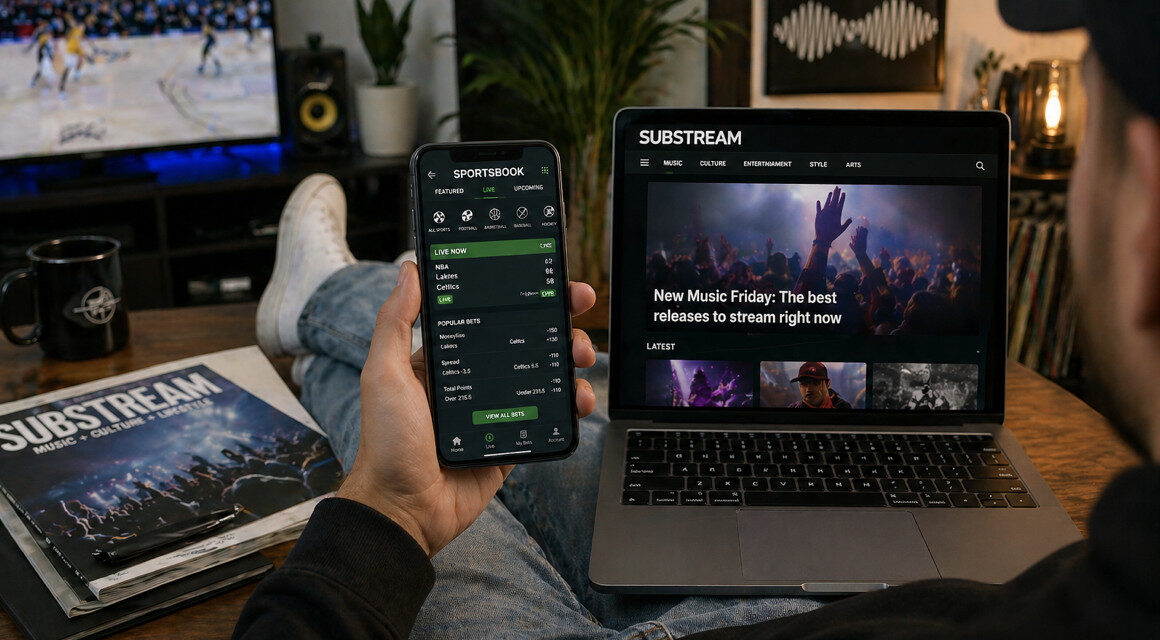
Second-screen behavior has become a defining trait of how people consume content today. Whether it’s watching a concert livestream while scrolling through fan reactions or following a game while tracking stats on a phone, audiences expect more than passive viewing.
Sports, in particular, have adapted quickly to this trend. Fans now supplement live broadcasts with apps, social media feeds, and digital tools that provide deeper context. For those exploring this growing ecosystem, platforms that compare top betting sites are increasingly part of how users navigate the digital side of sports engagement.
Where Music, Media, and Sports Collide
Substream readers are no strangers to the convergence of culture. The same audience following an indie band’s tour or a viral TikTok artist is also likely keeping up with major sporting events. This overlap has created new opportunities for brands and creators to connect across verticals.
Soundtracks, halftime shows, athlete playlists, and collaborations between musicians and sports franchises are becoming more common. These intersections highlight how sports are no longer isolated—they’re embedded in the same cultural ecosystem as music and digital media.
Data, Access, and Personalization
Another key factor shaping this evolution is access to information. Fans today expect instant updates, personalized content, and deeper insights. Platforms that deliver real-time stats, performance analytics, and expert commentary are no longer niche—they’re essential.
Major outlets like The Athletic have built entire models around in-depth storytelling and analysis, catering to fans who want more than just headlines. This reflects a broader trend: audiences are willing to invest time in content that enhances their understanding of the game.
The Experience Is the Product
Ultimately, what’s changing isn’t just how fans watch sports—it’s how they define the experience itself. It’s no longer limited to the final score or even the live broadcast. It includes everything from pre-game hype on social media to post-game breakdowns and ongoing conversations.
For a generation raised on streaming and constant connectivity, this all-in-one experience feels natural. Sports are no longer just events; they’re ongoing narratives that unfold across platforms.
And as digital culture continues to evolve, one thing is clear: the future of sports engagement will look a lot more like the rest of the entertainment world—fast, interactive, and always on.