
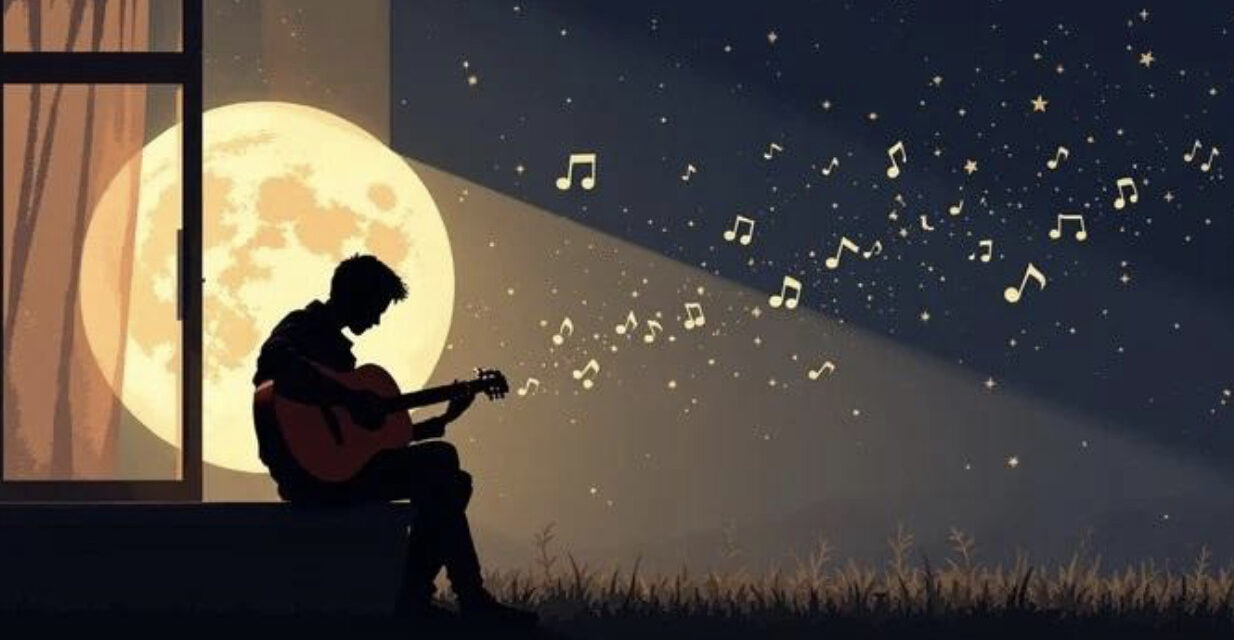
The 2026 Blood Moon is more than a celestial event. To many observers, it is a spellbinding cosmic moment that has inspired poets, storytellers, and musicians across cultures and eras.
In this article, we explore how lunar eclipses—especially dramatic red moons—have influenced music throughout history and how this specific astronomical phenomenon resonates with both ancient lore and modern creative expression.
When a total lunar eclipse happens, Earth casts its shadow on the Moon, and the lunar surface takes on a deep reddish hue.
This phenomenon is often called a Blood Moon because of its color, a hue that evokes visceral reactions in humans.
Across history, that reaction has taken artistic form, particularly in music, where rhythm and metaphor converge to capture human curiosity and awe.
Ancient Lore: Moon Songs Before Recording
Long before modern telescopes, before recorded sound, and long before the notion of “top games you can play on GameZone” existed as a snippet of modern culture, civilizations watched the skies and found meaning.
The Babylonians, Mayans, Greeks, Chinese, and indigenous peoples saw lunar eclipses as portents. Music was inseparable from ritual.
Drums, flutes, and chants were used to ward off spirits believed to be devouring the Moon or to honor deities associated with lunar cycles.
In Mesopotamia, the Moon god Sin was central to temple music. Ritual songs accompanied festivals that corresponded to lunar phases.
These ancient compositions were not preserved in notation the way Western classical music is, but the tradition of singing to the Moon persisted. Such practices formed a foundation for humanity’s ongoing musical relationship with celestial phenomena.
In China, eclipses were historically understood as dragons consuming the Moon. The ancient court musicians would perform specific ceremonial music to “scare away” the dragon, a sonic counterattack meant to restore cosmic balance.
Even though today we understand the astrophysics of a Blood Moon, the concept of a dragon devouring the Moon has endured in folklore and artistic interpretations throughout East Asia.
Medieval and Renaissance Echoes
During the European Middle Ages and the Renaissance, lunar eclipses carried superstitious weight but also inspired metaphors in scriptural songs and choral works.
The Moon, as a symbol of mystery and reflection, featured in madrigals and early vocal music. Composers used lunar imagery to explore themes of love, loss, and spiritual longing.
The shift from strictly religious music to forms reflecting human emotion in the Renaissance brought lunar symbolism into secular compositions. Poets wrote verses comparing pale lovers to the Moon; musicians set these verses to music.
Although not always directly tied to eclipses, these works carried forward the Moon’s emotional resonance into the early modern musical canon.
Romanticism and the Moon’s Musical Pull
By the 19th century, the Moon had become a central figure in Romantic art. Composers such as Beethoven, Chopin, and Debussy wrote pieces explicitly inspired by moonlight and the night sky.
Beethoven’s “Moonlight Sonata” paints an atmospheric, contemplative soundscape. Chopin’s nocturnes evoke quiet reflection, and Debussy’s “Clair de Lune” reaches for the luminous serenity of moonlit nights.
Although these works were not composed for an eclipse, they express the emotional and symbolic weight the Moon carried in Romantic thought.
The Blood Moon’s scarlet shift would have been understood in Romantic terms as a dramatic twist in an already potent symbol.
For artists of that age, an eclipse could easily have been a dramatic backdrop for both sacred and secular music.
Modern Music Under the Blood Moon
Fast forward to the 20th and 21st centuries, and the Moon continues to inspire songwriters across genres.
Jazz, rock, folk, pop, and electronic musicians use lunar imagery to explore themes ranging from introspection to cosmic wonder.
One of the most recognizable modern lunar songs is “Blue Moon,” a jazz standard that has been covered by countless artists. Although its title calls it “blue,” many listeners associate the song with any rare lunar event, including Blood Moons.
Artists like David Bowie, with “Space Oddity,” and Pink Floyd, with the echoing sounds of space in “Dark Side of the Moon,” tap into cosmic and lunar fascination even if they do not reference eclipses by name.
In contemporary folk and indie music, references to eclipses and lunar phases often symbolize change, hidden truths, or transformation.
The Blood Moon’s dramatic color becomes a metaphor for shifting perspective or emotional states.
Some electronic and ambient musicians create albums timed with lunar cycles, using the rising and setting of the Moon as a structural element in their compositions or live performances.
The Blood Moon of 2026 has already sparked playlists and themed concerts. Artists schedule performances to coincide with lunar events, creating immersive experiences that connect the sky with sound.
This blending of astronomy and music festivals reflects the public’s longstanding desire to tether the vastness above to human expression below.
Cultural Layers: Ritual, Pop, and Personal Soundtracks
Across cultures today, lunar eclipses are celebrated, observed, and musically honored in different ways. Some communities host night vigils with live music.
Others hold drum circles aimed at synchronizing human rhythm with the slow pace of lunar transition. These gatherings echo ancient traditions but are adapted for modern tastes.
In pop culture, lunar eclipses often serve as plot devices in movies and television shows. The link between celestial events and dramatic music cues in storytelling has reinforced a psychological association between the Moon and mood.
Soundtracks frequently employ minor keys, atmospheric textures, and rising crescendos to mirror the mysterious visuals of a Blood Moon.
Even on gaming platforms, moonlit settings and eclipses inspire sound design that conveys mood and atmosphere.
Whether or not the player is searching for quests, composers craft soundscapes that reflect lunar influence in subtle audio cues.
Looking Up and Listening
The Blood Moon of 2026 is, in a sense, a global listening event as much as an astronomical one.
While eyes turn skyward to witness a celestial dance of shadows and color, our ears are attuned to the music that has always accompanied human fascination with the night sky.
From the ancient chants meant to echo into the heavens to today’s evolving soundtracks inspired by the Moon, our musical heritage remains tethered to lunar cycles.
If you find yourself beneath the red glow of the 2026 Blood Moon, take a moment to listen as well as look. You are part of a long human tradition of hearing history in the harmony between Earth and sky.