Even discussing the infamous 1978 mondo horror film “Faces of Death” now feels like an electric current running through both morbid curiosity and apprehension. The enticement of director John Alan Schwartz’s faux shockumentary is that it was something you couldn’t see easily, and the mere existence of it was whispered like a foreboding legend – contained to a grainy VHS tape in the “adult section” of the video store. But the heart of this film’s enduring legacy is a magic trick and the scarcity, imploring people to seek it out. Many of the “death” sequences were elaborate hoaxes built with special effects. However, legitimate news footage was mixed in, and for a long time, it muddied the perception of reality and fiction.
There was a time when it felt as though our inner compass had an off-switch, a boiling point, or a tug at the collar to snap back into the actualized world. Viewing media like “Faces of Death” and even the now-defunct Rotten.com felt like putting your hand on a hot stove. Video tapes and stores are (mostly) long gone, and our hands are occupied by devices where the pull away becomes more diluted in time. No matter where you are, the typical person has unlimited access to bear witness to the world’s atrocities and barbarism. The algorithm has a bottomless appetite – feasting on attention spans and activating a feralness within our DNA – leaving us desensitized and frantic to duplicate what a gamed formula sees as successful.
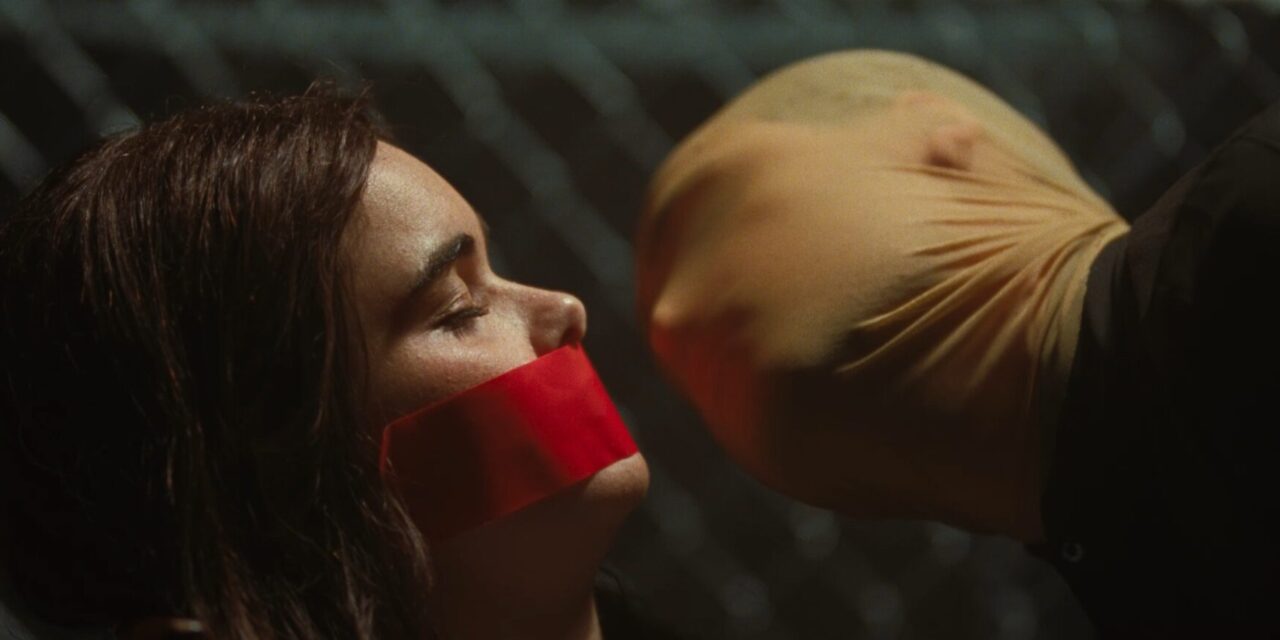
Barbie Ferreira in Daniel Goldhaber’s FACES OF DEATH. Courtesy of Brian Roedel An Independent Film Company and Shudder Release.
The effectiveness of Daniel Goldhaber’s 2026 “Faces of Death” remake lies in knowing that the shock value Schwartz’s film strove to impart is not only the new normal, but the tech powers that be encourage it to be duplicated. Hitting the digital jackpot of “stardom” comes with a cost, whether you are willing to pay it or not. The film’s main protagonist, Margo (Barbie Ferreira), is mired in a self-imposed digital exile after an accidental, tragic incident involving her late sister. She carries around a vintage flip phone, but out in public, people recognize her as “that girl from that TikTok.” Not ideal to be constantly reminded of the worst time of your life, even when you made all efforts to lock yourself away from the actual footage of it.
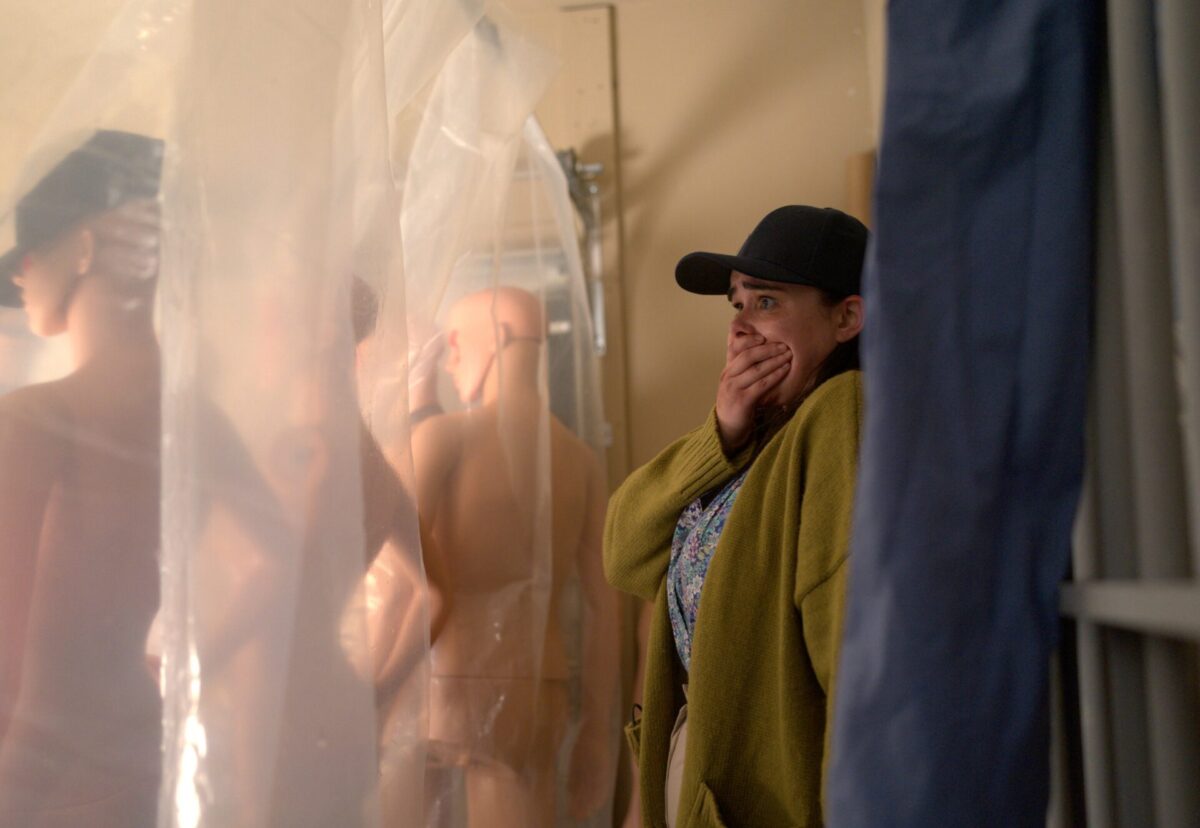
Margo works as a content moderator for a fictional video app named Kino, and company standards are a bit wonky, to say the least. Any sexual education style video is flagged for removal, but more violent clips are more of a toss-up. It pays the bills, but there’s a sad irony in Margo having to sit at a desk and acting as the stopgap between us and the internet’s worst-of-the-worst clips. Goldhaber literally saps the color out of her surroundings in the non-decorative, sterile office setup.
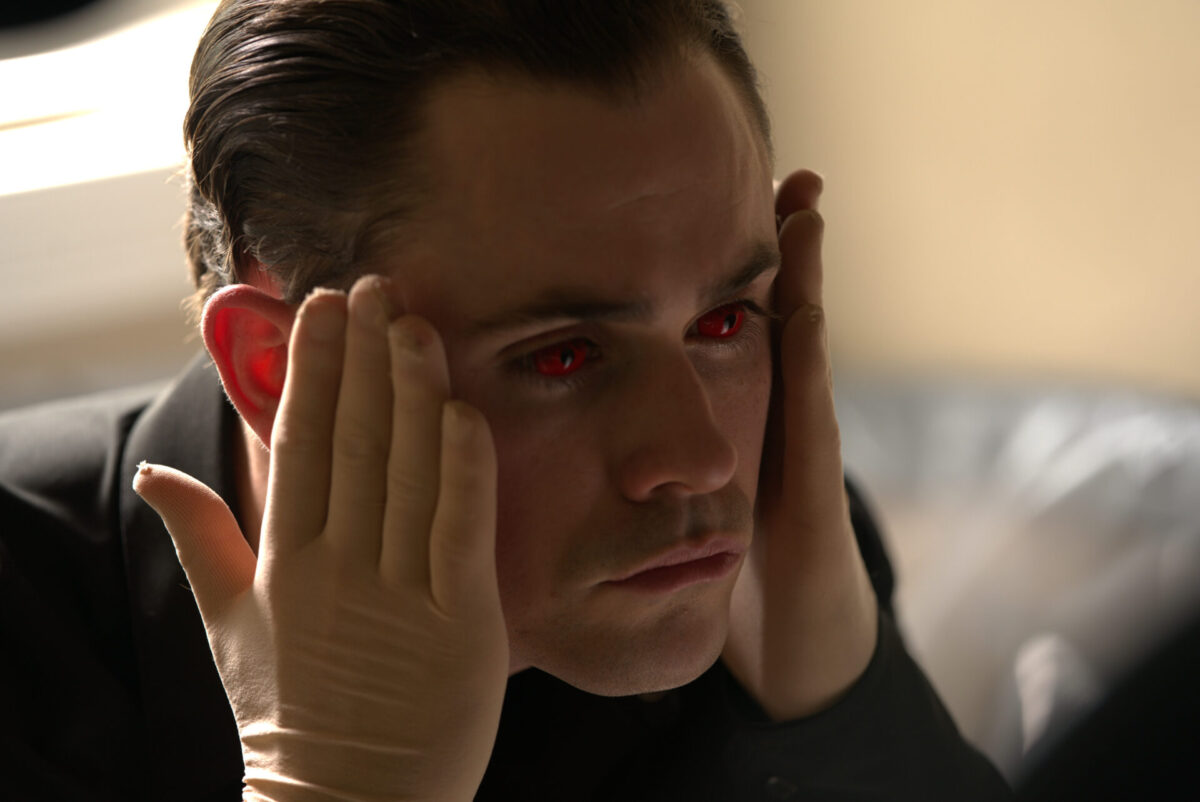
Dacre Montgomery in Daniel Goldhaber’s FACES OF DEATH. Courtesy of Brian Roedel
An Independent Film Company and Shudder Release.
One day, Margo comes across a video that depicts a beheading in a studio setting (with a voiceover from fake pathologist Francis B. Gröss from the 1978 film). To Margo, it feels too good to be true, and she marks it for approval. The next day, another execution-style video comes through, and Margo’s spidey sense is on full alert. Other than her best friend and roommate, Ryan (Aaron Holliday), and prescription drugs, Margo doesn’t have an outlet to numb her pain. Thus, Goldhaber and co-writer Isa Mazzei are placed in a job where she can make an impact. If the internet is going to hurt Margo continually, she’s going to damn sure make it her mission to remove the possibility for anybody else.
Our distraught protagonist runs into two particular problems. One is the overall indifference from her boss, Josh (Jermaine Fowler), and his mantra of “give the people what they want. If users are into what the company considers “DIY horror,” then who are they to police it? (Isn’t that what content moderation does?) The other, more evil incarnation is a man named Arthur (Dacre Montgomery), an employee of a cell phone company who uses customers’ personal data to find his next victims.
His murders are controlled, but extravagantly staged videos of recreations of “Faces of Death” skits. If that wasn’t enough, Arthur’s motivations are inhibited by the need for dopamine. He, too, has his own wounds of inadequacy that settled like gangrene within his emotional wounds. Now, he roams the earth as a sociopathic zombie reacting to notifications as a Pavlovian response.
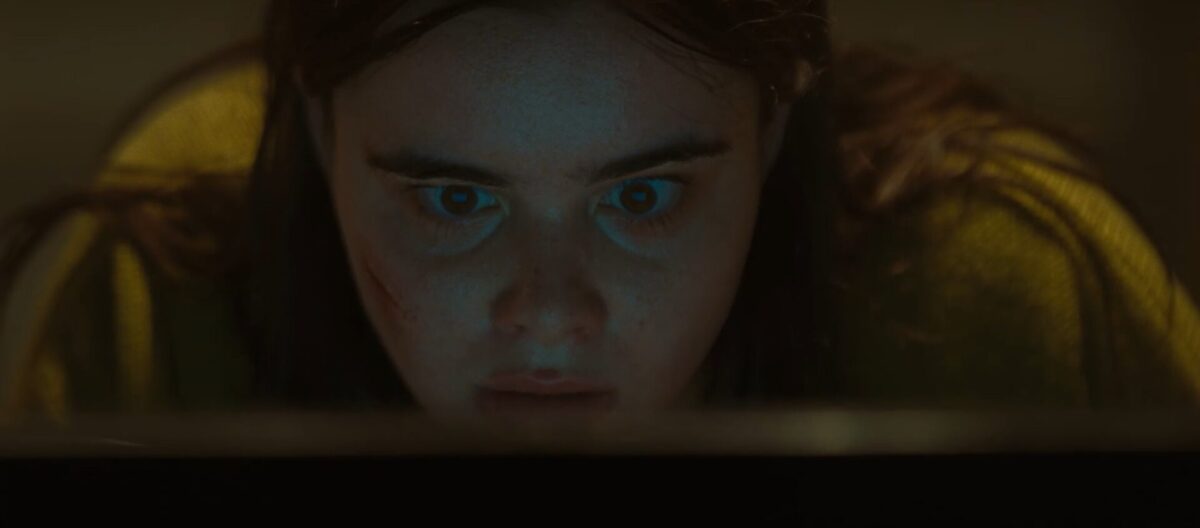
Barbie Ferreira in Daniel Goldhaber’s FACES OF DEATH.
Courtesy of Independent Film Company and Shudder. An Independent Film Company and
Shudder Release.
Goldhaber’s film, to its credit, is not out to recreate the hysteria of the 1976 version. It can’t in this day and age. The film was initially completed in 2023, so it didn’t anticipate the current implosion of AI-related imagery messing with what we consider reality. The 2026 “Faces of Death” speaks to the depths of virality, where it’s not rooted in any morality. There’s a mechanism at play where tech companies set the price of the social currency jackpot, and the user base will discard any hesitation about joining the insidious, spectator community.
Much of “Faces of Death” practices restraint on the explicit gory details until the last part of the third act. Barbie Ferreira’s Margo screams to be believed in a world that has accepted violence as normal. The film works on a surface level of a race against a serial killer, but also a question of identity once the world has decided it for you. Ferreira’s desperation plays well against Montgomery’s stoic, sometimes Hannibal Lecter-esque lash-outs. A small part from Charli XCX is meant to hint at Margo’s dissolution with the world’s consumption habits at large, but the film already does this in its premise. There’s also the allusion to the tables being turned in terms of viral recognition, which may be a little far-fetched, given the root character motivations.
If the 1976 version of “Faces of Death” is the first viral video, we had mechanisms to turn it off. Before the internet, you had to return that tape (and you probably didn’t want to keep it in the first place). The scariest thing, I feel, about Goldhaber’s take is not so much that he shows us how our attention and rage are tools turned against us. We’ve concluded that social media networks are destructive. It’s that we can’t look away and are gleeful participants in our own destruction.