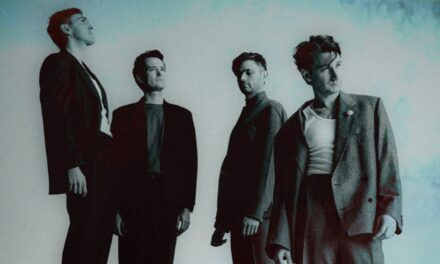

Role Model, whose real name is Tucker Harrington Pillsbury, is a new breed of artist defined by the internet age. His career evolved in an environment where there is always an intersection of music and digital culture and lifestyle content. Audiences today rarely consume one form of entertainment at a time. Rather, they move freely between playlists, social platforms, and casual online experiences.
This is similar to how people search for low-commitment digital offers, such as when users look for deposit 1 dollar get free spins promos. These are appealing because they reduce the risk and make exploration easier. They give the user a chance to sample new games without making a big investment. The focus is on curiosity, accessibility, and emotional payoff as opposed to long-term loyalty.
The same way works for music discovery. Listeners listen to songs in a short period of time, form a connection with the song on an emotional level, and determine whether they are going to stay or not. Role Model’s rise fits in perfectly with this ecosystem. His music doesn’t require genre knowledge or cultural capital to get the listener listen to his music (which makes it easy to engage and hard to forget).
Why Role Model Cannot Be Restricted to One Genre
From the beginning, Role Model’s music has been difficult to categorize. Early in his career, he dropped tracks that were inspired by SoundCloud rap, lo-fi hip-hop, and bedroom pop. These songs were simple, intimate, and emotionally to the point. They were more on feeling than form.
This instinct towards blending influences is a part of wider digital trends. Just like how iOS users love to play on Apple Pay casino sites or apps. Not only do they get frictionless deposits, but also an array of games that aren’t tied to a single genre. Apple Pay itself has grown in popularity due to the fact that it allows for fast and secure payments without the need for users to constantly enter personal/financial information.
As his songwriting began to evolve, he gradually started to distance himself from rap cadences. Melodies were given more prominence. Acoustic guitars and organic instrumentation took over. Still, his use of lyrics was the same. He wrote about insecurity, yearning, and self-reflection with little emotional armor.
This continuity is key. While the sound changed, the emotional framework did not. That is why it is often not easy for the listeners to say his genre.
Genre Labels and Why They Don’t Go Far
Industry labels have often succumbed to using the term alternative pop or indie pop to define Role Model. These terms are not wrong but they don’t do him justice. The former are more marketing shortcuts than artistic explanations.
His debut album Rx had some elements of pop, alternative, and hip-hop-inspired phrasing. Meanwhile, his work with Kansas Anymore led in the direction of folk, Americana, and subtle country influences without becoming completely committed to any of them. Genre tags break down in this case because they assume stability. Role Model’s catalog is characterized by notions.
Movement Between Musical Spaces
Each project was a transition rather than a reinvention. Early EPs had a preference for lo-fi aesthetics as well as emotional immediacy. Rx had brought cleaner production with it and the broader melodies. Kansas Anymore was geared toward narrating stories, regional imagery, and warmer hues.
This evolution reflects the listening habits of today’s audiences, who don’t shun emotional consistency for stylistic purity.
Music in the Digitally Broken World

Role Model’s music has cross-platform appeal because it is emotionally relatable. Songs like “Sally, When the Wine Runs Out” took off through short videos, videos from live recordings, and fan-shared moments instead of the traditional form of promotion.
The way in which his songs are structured allows them to work in fragments. A single lyric or melody can have meaning all by itself. This makes his music malleable for TikTok, Instagram, playlists, and intimate live performances.
Mood as the Primary Currency
In the digital world, attention doesn’t last long. Mood communicates faster than complexity. The atmosphere is set immediately by Role Model’s music. Soft instruments. Clear vocal delivery. Direct emotional cues. This efficiency aids in helping his songs travel from platform to platform without losing their impact.
Emotional Priority to Genre Rules
A Role Model’s defining attribute is emotional exposure. His lyrics are often more like private conversations rather than performances. He is not exaggerating in dealing with attachment, fear of loss, emotional dependence, and self-doubt.
Importantly, he avoids irony. There is not a great distance between the narrator and the feeling that is being expressed. That sincerity separates him in a landscape that is often marked with detachment.
Fans do not often describe his music in technical terms. Instead, they speak of comfort, recognition, and honesty. This response implies that it is more important to be emotionally clear than to be stylistic.
For Role Model, genre is a tool and not a destination.
Production as Emotional Reinforcement
Early releases favoured minimum production. Vocals were intimate and unprocessed, and instrumentals were limited. This helped to increase the feeling of intimacy. Later projects maximized the value of the production without losing a sense of any close proximity. The mixes became clean, but never crowded.
Supporting the Core Message
Production choices are always in the service of the lyrics. The instruments would rarely dominate vocal. Silence and space are used by design. This restraint helps to focus the listener on the emotional content rather than the spectacle of sonics.
Cultural Context and Connection to Audience
Role Model is especially appealing to Gen Z and younger millennials. Gen Z listeners have been raised in online spaces where authenticity is valued. This is the audience that is suspicious of polish and touchy about emotional honesty.
His openness about uncertainty and vulnerability makes him connect with a generation navigating instability, identity, and connection in public digital spaces.
Position in Indie and Alt-Pop Culture
Within the larger sphere of alternative and indie-pop, Role Model strikes a position defined by sincerity rather than experimentation. He stands beside the artists who believe in the emotional truth rather than in aesthetic branding. He even released a song dedicated to his female friends, coworkers, and fans to honor them.
His work is a manifestation of a cultural change from genre loyalty to emotional reliability.
Seeing Role Model as a Spectrum, Not A Category
Role Model’s sound is best referred to as a continuum. He moves in indie pop, folk, alternative, and singer-songwriter traditions and has a consistent emotional identity.
His evolution reflects the way modern-day music works in a fragmented digital-first world. The listeners do not need a label to make connections. They need to feel understood.
In contemporary alternative music, the importance of Role Model is not so much his place, but the sentiment of the people around him. That emotional clarity may be his lasting touch.