There’s a portal in the transition between the end of high school and the end of college years. Friends promise each other that little will change. They try to keep in touch and immerse themselves in particular customs before the split happens. But nothing really ever stays the same. The needs of life and the ambitions it requires make most of us strangers. Alexander Ullom’s debut, “It Ends,” serves as both a ubiquitous metaphor and a blunt realization of how scary the phrase “what do you want to do with the rest of your life” really is.
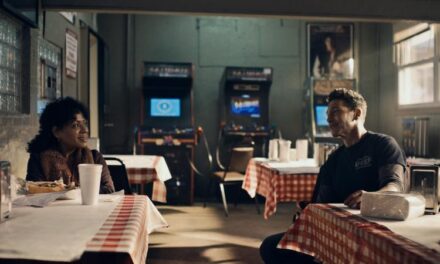
The film’s setting is mainly confined to one endless scenario, with wrinkles here and there that mean different things to each of its four protagonists. James (Phinehas Yoon), Day (Akira Jackson), Fisher (Noah Toth), and Tyler (Mitchell Cole) have been friends for a while, but it’s clear things are changing between them. Tyler is the only person in the group who enlisted in the military and works as an HVAC repairman. James, Day, and Fisher are all college graduates, but Day and Fisher aren’t really clear about what they are going to do next. James feels like he has it all figured out. He has a job and rattles a bunch of life steps in a somewhat pretentious manner to his friends as if it’s a rehearsed mechanism.
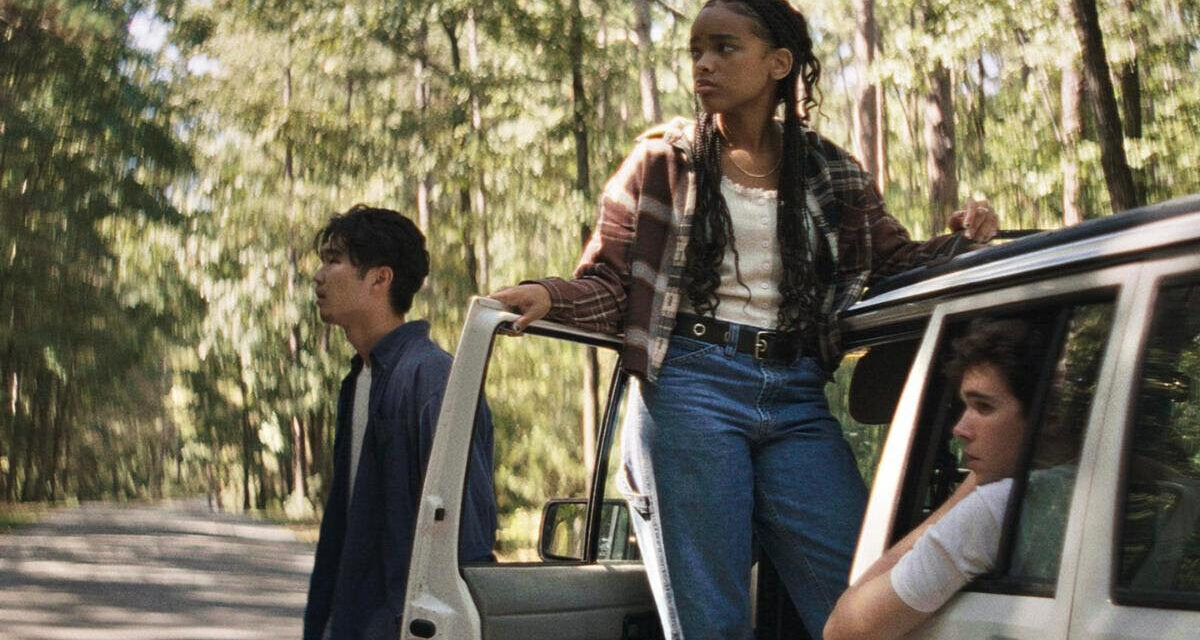
Despite James’s complete commitment to striving for anything and everything, it doesn’t stop him from playing a hypothetical game of “would 50 hawks beat one man with a rifle” with Fisher. They all go out for a bite to eat until something goes wrong. They hit an endless stretch of road surrounded by woods on both sides that doesn’t go anywhere. If they stop for a certain amount of time, a horde of screaming young people run to the car, pleading for help, and looking to take it themselves. Tyler notices he never took a turn while driving his Jeep Cherokee, which leaves the group in a panic. Are they dead, and is this some purgatory? Have they done something wrong, and this loop is their punishment?
These four friends have to come together and find a way out. But it’s the cleverness in how Ullom introduces the characters that shows it won’t be easy. It’s clear they have each evolved in their own ways, and this “test” will push those new boundaries to the limit. A strong current of sadness and longing runs through “It Ends” brand of conceptual horror. College is the last gasp of young adulthood before responsibilities inundate you. It will often take you down different pathways than the ones you started your journey on. Ullom doesn’t give his characters that choice. In the “Groundhog Day” like monotony of the film, the foursome pose hard questions amongst one another within the silliness of their routine. At one point, Tyler contemplates “what happens after the panic is gone?” and if living for a set amount of time to figure it out is worth it.
Usually, a small premise like this would fall apart, but the cast elevates it by making the relationships feel lived-in. When Ullom introduces us to James, Tyler, Fisher, and Day, it’s as if the audience is eavesdropping on people catching up. However, the demands of society and its tendency to make us look ahead rather than what’s in front of us wears on them. The journey of figuring out their predicament only serves to break down the bonds further — the real tragedy in this story. While outdoors, “It Ends” is akin to a stage play. Evan Draper and Jazleana Jones try to use the contrast between the day and nighttime as a play on time and to mess with the viewer’s sense of safety. “It Ends” doesn’t call for distinct visual flair as much of the film takes place within a car or in conversations.
Ullom doesn’t divulge much about what comprises this place or how we got here. Every once in a while, the narrative introduces a new incidental element to freshen up the routine. While that can prove frustrating because we are inclined to search for answers, the characterization does the work, particularly between the extremes of how James and Tyler feel and operate. Do you remember being young and moving into the world with a sense of wonder and endless possibility? That’s until you step one foot on the hamster wheel. From that point, you can elect to keep running or give yourself over to the eventual exhaustion of striving for achievements.
“It Ends” feels that understanding the journey into adulthood comes at a cost. In thinking about the many memories and people you had to jettison to reach what we are told is happiness, you’ll question why you had to in the first place.